
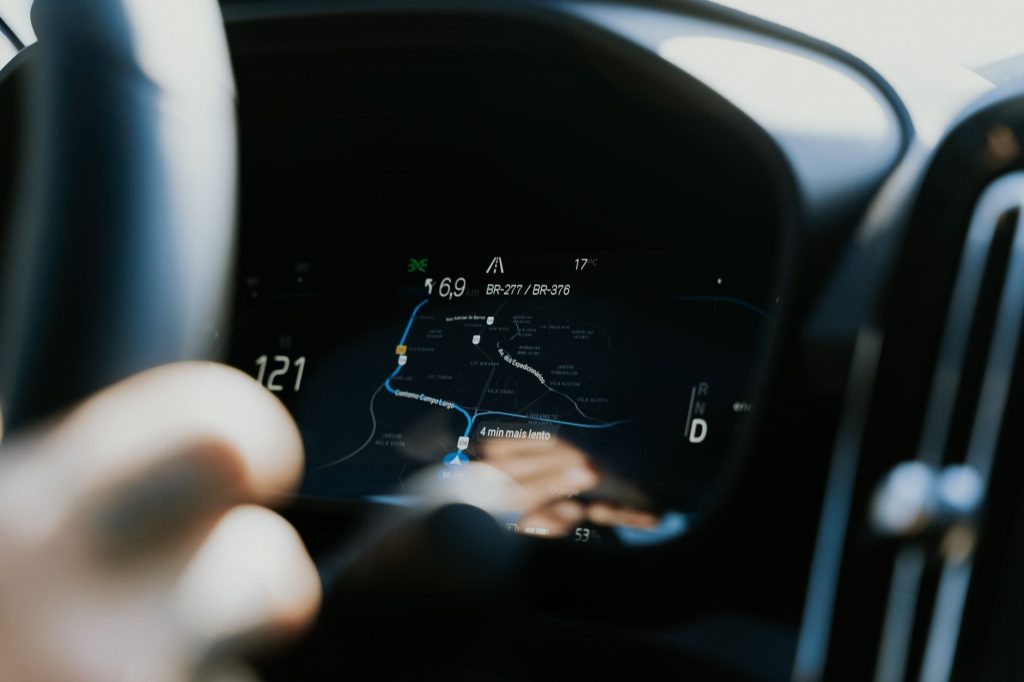
The modern Audi is less a mechanical machine than a networked argument between silicon and physics. Every time a Q7 eases into a parallel spot or an A6 maintains its lane through a rain-slicked bend, the vehicle is executing a series of split-second negotiations with its environment. And at the center of that conversation is a family of sensors that most owners will never see and few technicians fully appreciate.
For the independent shop, understanding how these sensors actually work — the pressure differentials, the temperature coefficients, the radar pulse timing — is no longer optional. As Audi’s model line moves deeper into electrified and semi-autonomous territory, the sensor array has become the diagnostic frontier. If you can’t read the signals, you can’t fix the car. This is the terrain we’re exploring today.
The Physics of Measurement: How Audi Sensors Convert Reality into Data
Let’s start with the fundamental question: what does a sensor actually do? In the most basic terms, it translates a physical quantity — pressure, temperature, distance, height — into an electrical signal that the engine control unit (ECU) or a dedicated control module can interpret. Audi uses two primary signal architectures: analog voltage and digital pulse-width modulation (PWM). The distinction matters because it changes how you diagnose them with a multimeter or oscilloscope.
Pressure Sensors: Strain Gauges and Piezoresistive Elements
Audi’s tire pressure monitoring systems (TPMS) and many of its fuel-rail pressure sensors rely on piezoresistive technology. Inside the sensor housing, a thin silicon diaphragm is bonded with resistors arranged in a Wheatstone bridge configuration. When pressure deforms the diaphragm, the resistors change their electrical resistance proportionally. The bridge converts that resistance change into a small voltage difference — typically a few millivolts — which is then amplified and sent to the ECU as a signal ranging from 0.5 to 4.5 volts.
Here’s the practical takeaway for the tech: this signal is linear but not absolute. A fuel pressure sensor reading 2.5 volts at idle doesn’t mean 50 bar; it means the sensor is at roughly the midpoint of its calibrated range. Without the factory spec for that specific sensor, you’re guessing. That’s why pulling live data from the ECU rather than trusting raw voltage is the correct diagnostic path on any Audi from the last two decades.
Temperature Sensors: NTC Thermistors and the Nonlinear Curve
Temperature sensing in Audi vehicles — whether for intake air, coolant, or ambient measurement — almost always uses negative temperature coefficient (NTC) thermistors. The name explains the behavior: as temperature rises, electrical resistance falls. The relationship is steeply nonlinear, following an exponential decay curve. A coolant sensor might read 2.5 kilohms at 20°C, but only 300 ohms at 90°C.
The ECU doesn’t measure resistance directly. It sends a regulated current through the thermistor and measures the voltage drop across it. What matters for diagnosis is that the nonlinearity means a small voltage change at the top of the range represents a much larger temperature swing than the same voltage change at the bottom. If you’re testing with a multimeter and a temperature chart, you must be precise. A two-degree error in resistance reading can translate to a ten-degree error in computed temperature.
Height Sensors: Hall Effect and Inductive Measurement
Audi’s adaptive air suspension uses ride-height sensors — and here the physics shifts to magnetic fields. The most common implementation is a Hall effect sensor paired with a rotating magnet attached to the suspension linkage. As the arm rotates, the magnetic flux through the Hall element changes, and the sensor outputs a voltage proportional to the angle. That angle maps directly to ride height.
The signal is typically a 0.5 to 4.5-volt analog output, or in newer models, a PWM signal where the duty cycle encodes the height. This is a point where many techs stumble: checking the sensor with the suspension at full extension and expecting a 0-volt reading. That’s not how it works. At full extension, you’ll see either the low end of the voltage range or a minimum duty cycle — not zero. Zero volts on a Hall sensor usually means a wiring fault or a dead sensor, not a valid measurement.
Radar Sensors: Frequency Modulation and the Doppler Shift
The parking sensors on vehicles like the Audi Q7 — and the OS-PASA004 we’ll get to shortly — use ultrasonic transducers, but the newer long-range radar units for adaptive cruise control operate on a different principle entirely. Radar sensors emit a continuous wave frequency-modulated signal, typically in the 76-77 GHz band. The sensor measures two things: the frequency shift caused by the Doppler effect (which gives relative velocity) and the time delay between transmission and reception (which gives distance).
The signal processing is done entirely onboard the sensor module. The raw radar data is converted into object lists — targets with position, velocity, and size — and transmitted over a CAN bus to the driver assistance control module. What this means for diagnostics is that you can’t scope a radar sensor like you would a Hall effect height sensor. You’re looking for CAN traffic and plausibility errors. If the sensor reports a fixed object that isn’t there, it’s not a wiring issue; it’s either a dirty sensor face, a misaligned bracket, or a failing internal component.
The OS-PASA004 in Context: Ultrasonic Measurement and Signal Verification
Now let’s get specific about parking sensors, because this is where the rubber meets the road for the aftermarket. The OS-PASA004 OSRAM Parking Sensor for Audi is a replacement for the OE part 7H0919275D, and it operates on the ultrasonic principle. Here’s how that works in practice:
The sensor contains a piezoelectric crystal that is excited by an electrical pulse. When the pulse hits the crystal, it deforms and emits a sound wave at approximately 40 kHz — above the range of human hearing but well within the range of what a dog would find annoying. The wave travels outward in a cone-shaped pattern. When it strikes an object, it reflects back to the sensor, where the same crystal — now operating as a microphone — detects the returning echo.
The sensor’s microcontroller measures the time between emission and reception. Sound travels at roughly 343 meters per second in air, so the distance calculation is straightforward: distance equals time multiplied by speed of sound, divided by two (for the round trip). A 40 kHz wave reflecting off a curb 40 centimeters away returns in about 2.3 milliseconds.
Here’s where the signal type matters for installation. The sensor outputs a digital signal to the parking control module — typically a pulse train where the width (duty cycle) encodes the distance. It doesn’t output an analog voltage proportional to distance. That distinction is critical because it means you cannot test the sensor with a simple multimeter set to DC voltage. You need either a scan tool with bidirectional controls or an oscilloscope to verify the pulse pattern is present and changing as an object moves closer.
Common Mistakes in Parking Sensor Diagnosis
- Testing the sensor in isolation without the control module: the module provides the excitation pulse; without it, the sensor is inert.
- Confusing the parking sensor with the backup camera: they share the same bumper but are entirely separate systems.
- Replacing the sensor without checking the wiring harness for chafing: Audi’s rear bumper harnesses are a known failure point on older models, and a shorted wire will kill the new sensor just as quickly as the old one.
- Using a sensor from a different manufacturer without cross-referencing the frequency: not all 40 kHz sensors are tuned identically, and a mismatch in acoustic impedance will produce false readings or no readings at all.
Pro Tip: Before condemning the sensor, put the vehicle in reverse with the ignition on and place your hand over the sensor face. You should feel a faint vibration — the pulse firing. If you don’t feel it and the scan tool reports no communication from that sensor, the issue is upstream: wiring, connector, or control module. If you do feel it but the scan tool still shows a fault, the sensor itself is the culprit.
Aftermarket Considerations and Real-World Fitment
The decision between OE and aftermarket parking sensors is more nuanced than it first appears. Audi’s factory sensors are manufactured by a small set of OEM suppliers, and the aftermarket has closed the quality gap substantially over the past five years. The OS-PASA004 is an OSRAM product — a brand with genuine manufacturing pedigree in automotive lighting and electronics — which is a better bet than a no-name sensor that costs half as much.
What matters most in fitment is the sensor’s acoustic profile. A parking sensor isn’t just a transducer; it’s a tuned resonator. The housing shape, the mounting depth, and the paint thickness on the bumper all affect the sensor’s ability to send and receive echoes. An aftermarket sensor that is dimensionally identical to the OE part will generally perform correctly because the acoustic cavity is defined by the bumper design, not the sensor internals. That said, if the bumper has been repainted with a heavy aftermarket coating, even a new OE sensor might struggle. The sensor needs a clean, unpainted face — or paint of minimal and consistent thickness — to operate within its calibrated range.
For the independent shop, the practical advice is to keep one of these in stock. The 7H0919275D application covers a surprising number of Audi models from the mid-2000s through the early 2010s, including the Q7, A6, and A8. It’s a high-failure item because the sensors sit low on the bumper, exposed to water, salt, and road debris day after day. Seals degrade, moisture ingress corrodes the piezoelectric element, and the sensor dies a slow, intermittent death — working in the morning and silent by the afternoon.
When you’re quoting a customer, don’t just quote the part. Quote the diagnosis. The 15 minutes you spend verifying that the wiring is clean and the control module is communicating will save you a comeback visit and the customer a second labor charge. And if you’re replacing one sensor, recommend inspecting the others. They were installed at the same time, and they’ve been exposed to the same environment. Replace them in pairs if the budget allows.
The bottom line for buyers: If you’re managing a fleet of European vehicles or you own an older Audi with intermittent parking assist faults, the OS-PASA004 is a solid, cost-effective replacement. It’s the correct acoustic profile, it’s backed by a VAG-compatible connector, and it uses the same digital pulse interface as the original — no adapter harnesses, no coding required. For the shop, it’s a reliable stock item. For the DIY owner, it’s a straightforward swap that requires nothing more than a trim tool and a careful hand.
The broader takeaway is that sensor technology isn’t magic — it’s applied physics with a communication protocol attached. Understand the measurement principle, verify the signal type, and you’ll diagnose faster and replace less. That’s the difference between a parts swapper and a technician. Audi’s sensor network is complex, but it’s also logical. Learn the logic, and the cars stop being intimidating.

Recommended Part: OS-PASA004 – OE-quality aftermarket part, ready to ship.