
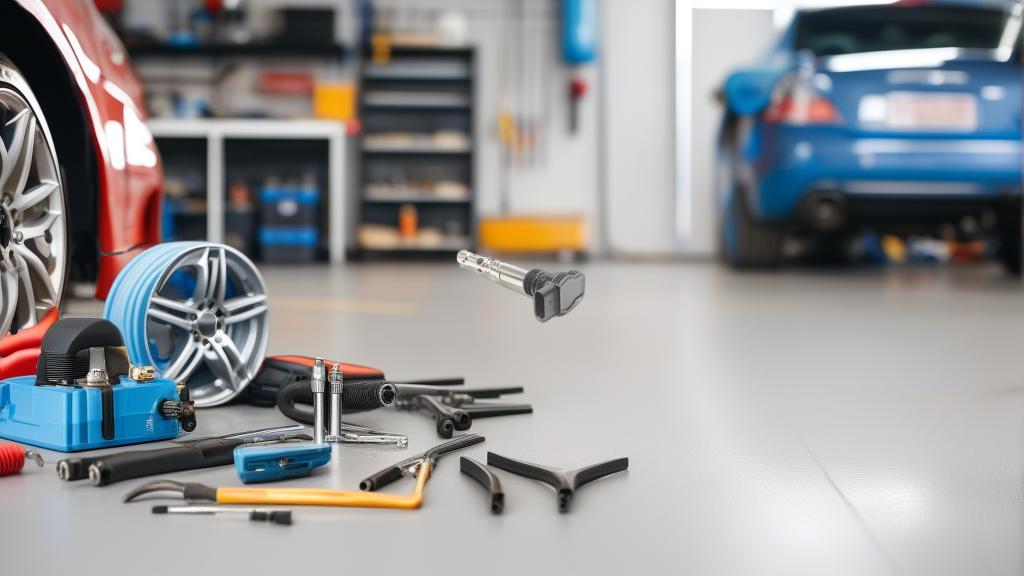
Volkswagen’s 1.8T and 2.0T engine family has been a staple of the brand’s lineup for over two decades, and that longevity creates a peculiar problem for parts suppliers and DIY owners alike: which ignition coil actually fits your specific model year? The answer isn’t always as straightforward as the parts catalog suggests, especially when you’re dealing with a coil that carries two different OE numbers — 06B905115R and 06A905115D — and claims compatibility with four distinct VW applications.
The OS1020 from OSRAM sits at the intersection of that confusion. It’s a coil that looks deceptively simple but requires a bit of homework to verify fitment correctly. Here’s what you need to know before you click “buy.”
The Two-OE-Number Problem
VW parts numbering is notoriously specific, but the aftermarket has learned to consolidate. The 06A905115D was the original coil used on early 1.8T engines — think Mk4 Golf GTI, Jetta GLX, and Passat models from the late 1990s through the early 2000s. The 06B905115R superseded it, technically, but the physical differences between the two are minimal: same connector, same mounting flange, same coil-on-plug design.
The OS1020 bridges both numbers, which is convenient for warehouses but potentially confusing for buyers. If you’ve got a 2001 Audi A4 1.8T, your parts system might show the 06B suffix. If you’ve got a 1999 VW Passat, it might show the 06A. Both will work with the OS1020, but you need to confirm your engine code — not just the model year — because VW used the 1.8T across a wide range of chassis with slightly different ignition systems.
Key Specs at a Glance
| Specification | OS1020 / OSRAM |
|---|---|
| OE Cross-Reference | 06B905115R, 06A905115D |
| Coil Type | Coil-on-Plug (COP) |
| Connector | 3-pin, pencil-style |
| Compatible Engine Family | 1.8T (AEB, AWM, AWP, BEA, etc.) |
| VW Applications | 4 verified chassis |
| Brand | OSRAM (OE-tier German supplier) |
| Typical Lifespan | 60,000–80,000 miles depending on plugs |
How to Verify Fitment Before You Buy
Here’s the practical part. You cannot rely on model year alone. VW changed coil suppliers and design revisions mid-cycle, and a 2003 Jetta 1.8T might take a different coil than a 2004 Jetta 1.8T — even though both are “Mk4.” The engine code is printed on the timing belt cover or in the vehicle’s VIN sticker in the service manual. Write it down. It’s the single most reliable way to cross-check compatibility.
Second, look at your current coil’s connector orientation. The OS1020 has a straight 3-pin connector. Some VW coils from the same era use a right-angled connector. If you force a straight connector into a boot that’s angled, you’ll get a poor seal, and water intrusion becomes a real risk — a leading cause of premature coil failure.
Third, check the boot length. The 1.8T uses a long-reach spark plug, and the coil boot needs to extend fully down to seat the spring contact firmly on the plug terminal. A slightly shorter boot might still click into place but can cause intermittent misfires under load, especially at high RPM.
Pro Tip: If you’re replacing coils on a 1.8T, replace all four at once — or at minimum, carry a spare in the trunk. These coils are known for intermittent failure where they test fine cold but misfire once the engine bay heats up. The OS1020’s price point makes a full set of four a reasonable investment compared to being stranded.
The OSRAM Advantage (and One Caveat)
OSRAM is a name most people associate with headlight bulbs, but they’re also a Tier-1 electronics supplier with serious manufacturing chops. The OS1020 is built with a reinforced epoxy housing and a gold-plated spring contact — two details that address the common failure modes of OEM VW coils: cracking due to heat cycling, and corrosion at the plug-to-coil interface.
The caveat? The OS1020 doesn’t include the spark plug boot as a separate service item. The boot is permanently molded into the coil body. On OEM VW coils, you can sometimes replace just the boot if it tears. With the OS1020, you’re replacing the entire unit. That’s fine for most owners, but it’s worth knowing if you’re the type who likes to salvage parts.
Real-World Fitment Notes
From the shop floor perspective, the OS1020 fits the following VW platforms without modification:
- Mk4 Golf/Jetta (1999–2005) with 1.8T — direct bolt-on, no adapter needed
- Mk4 Passat (1998–2005) with 1.8T — same mounting pattern, verify coil pack harness routing
- New Beetle Turbo (1999–2010) — fits, but engine bay access is tight; remove the intake duct first
- Audi TT (2000–2006) with 1.8T — shares the same coil design, though not listed in all catalogs
One thing to watch: some early 1.8T engines (specifically the AEB code, 1997–1999) used a different ignition coil module wiring scheme. If your harness has a separate power transistor module mounted on the coil pack, the OS1020 will work as a replacement coil, but you’ll need to keep that module. Later engines (AWM, AWP) integrated the transistor into the coil body, and the OS1020 handles those directly.
Bottom Line: Is the OS1020 Right for Your VW?
If you own a 1.8T VW from the late 1990s through the mid-2000s, the OS1020 OSRAM ignition coil is a solid drop-in replacement that respects both OE part numbers. Verify your engine code first, check your connector orientation, and you’re good to go. It’s not the cheapest coil on the market, but it’s dramatically cheaper than dealer OEM pricing — and the heat resistance is genuinely better than the original VW parts from that era.
Skip it if you’re working on a 2.0L or VR6 engine — different coil design entirely. And if your coil is already misfiring, don’t just replace one and call it done. You’ve been warned.

Recommended Part: OS1020 – OE-grade replacement, in stock now.