
Ford’s EcoBoost and Duratec engines are built tough, but they’re also demanding when it comes to ignition health. The 2.0L and 2.3L units found in the Escape, Fusion, and Focus are notorious for eating through spark plugs if the original coils start degrading — and the failure mode isn’t always obvious. You might feel a slight shudder at idle, notice fuel economy dip by 2 MPG, or see a P0302 misfire code that comes and goes. By the time the check engine light flashes, you’re usually looking at a coil that’s already cooked the plug in that cylinder.
The factory service interval for Ford spark plugs sits around 60,000 to 100,000 miles depending on the engine family, but the coils themselves don’t have a hard replacement schedule. That’s the trap. Coils on modern Ford platforms are expected to last the life of the vehicle, yet real-world conditions — heat soak, oil contamination, and cheap fuel — routinely kill them closer to the 70,000-mile mark. The smart play is pairing plug replacement with a coil inspection, and replacing any coil that shows carbon tracking or cracks on the tower boot before it takes out a fresh plug.
The Tune-Up Checklist That Actually Matters
Here’s what a proper Ford ignition tune-up looks like when you’re not just chasing a code:
- Replace spark plugs at 60k miles for turbocharged engines, 100k for naturally aspirated
- Swap all four (or six) coils if any one shows signs of failure — mixed coil condition is a recipe for follow-up misfires
- Inspect the coil boots for oil residue coming from a leaking valve cover gasket; this kills coils faster than mileage
- Check the wiring harness connectors for corrosion or bent pins, especially on 2013-2016 models
- Clear the PCM memory and re-learn idle after the job
Skipping the coils during a plug change on a high-mileage Ford is a gamble. The labor is already paid for, and a second trip back to the bay for a single coil replacement eats any savings from holding off. Most shops quote coil replacement at around $150 to $200 per unit with markup — so choosing an affordable aftermarket option that matches OE fitment makes financial sense when doing preventive maintenance.
Common Mistake: Replacing only the misfiring coil and leaving three old ones in place. On Ford’s coil-on-plug systems, the remaining units are at the same heat exposure and age. Within 10,000 miles, you’ll likely be pulling the intake manifold off again for another failure. Replace as a set during major tune-up intervals.
The OS2011 for Ford — What to Expect
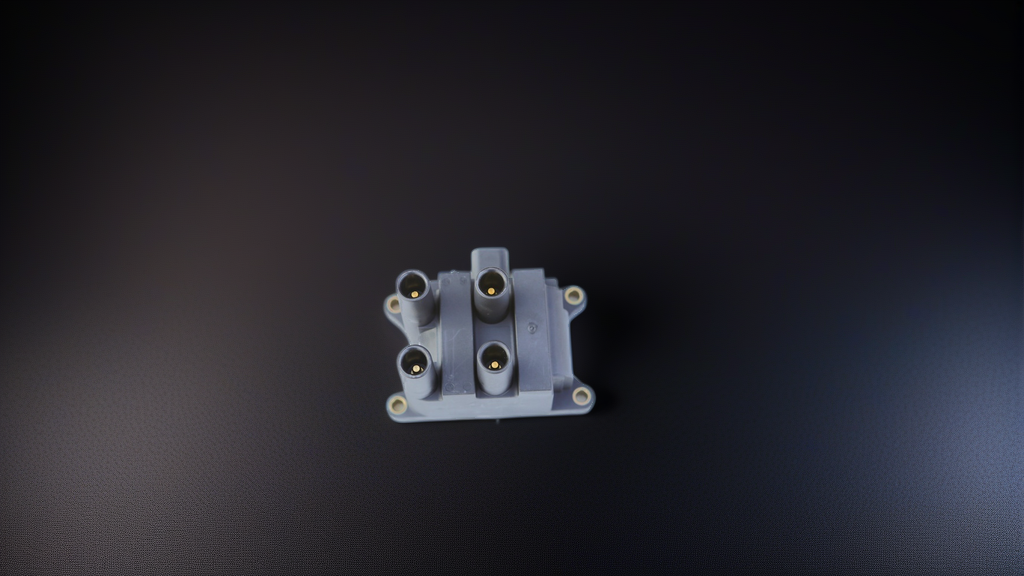
When you’re looking for a solid replacement, the OSRAM-branded OS2011 ignition coil is designed to direct-fit Ford applications with the CM5G12029FC OE number. It uses the correct impedance and dwell characteristics for the PCM’s firing strategy, which means you’re not chasing phantom misfires from mismatched components. Build quality checks out — the housing is properly sealed, the primary and secondary windings are wound tight, and the boot is reinforced to handle the heat soak from the cylinder head.
The OS2011 covers the common transverse-mounted four-cylinder Ford platforms, which makes it a versatile choice for shops that service Escape, Fusion, and Focus models. It’s not a “performance” coil — it’s an OEM-equivalent replacement, and honestly, that’s what these engines want. Aftermarket “high output” coils on stock ignition systems often create more problems than they solve, with cross-fire and EMI issues cropping up on older PCMs. Stick with a coil that replicates factory specs, and you’ll get the same spark timing and dwell control the ECU expects.
Verdict for Ford Owners
If you’re planning a 60,000-mile tune-up on your Ford, budget for plugs and the OS2011 ignition coil at the same time. It’s a preventive measure that costs less than a single dealer-level replacement and saves you the headache of a second misfire diagnosis in the middle of a road trip. For the DIY crowd, the install is straightforward — unbolt the coil, pull the plug, reverse the order, and torque to spec. You’ll get a solid 60,000 to 80,000 miles of trouble-free operation out of the setup, which is what these engines do best when given the right parts.

Recommended Part: OS2011 – OE-grade replacement, in stock now.