
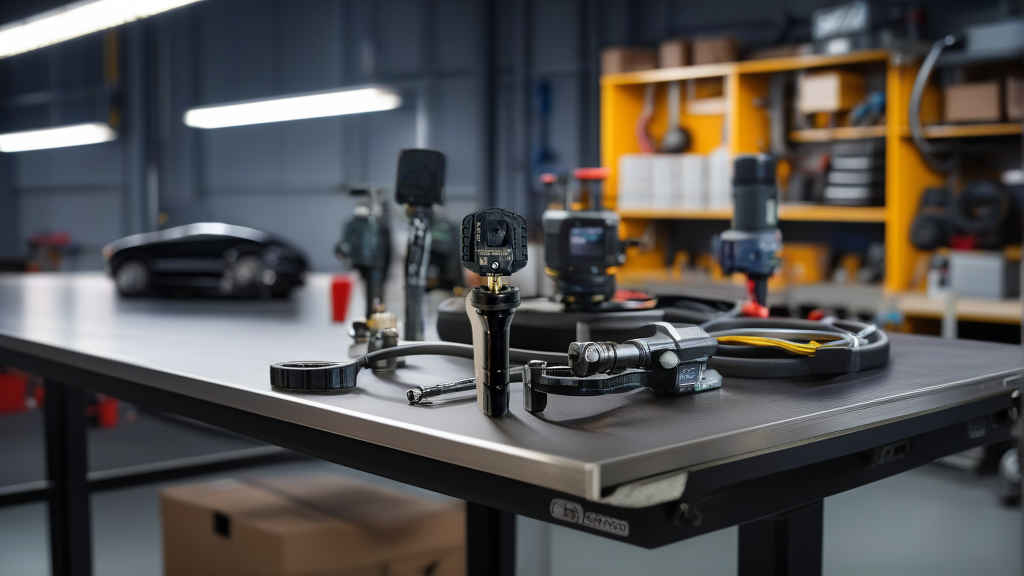
The TPMS sensor on your E爱丽舍 isn’t just a black box with a valve stem. Behind that 433MHz frequency and IP rating lies a set of engineering decisions that determine whether you’re replacing it once or every other tire rotation. Let’s break down what matters and what doesn’t.
The Frequency Question: 433MHz vs. 315MHz
E爱丽舍 vehicles predominantly use 433MHz sensors, though some late-model variants and certain export configurations run 315MHz. This isn’t interchangeable — your vehicle’s receiver is tuned to one band, and mixing them means no signal, no warning light, and a quiet failure until a tire goes flat.
The BL-ST-037 operates at 433MHz, which covers the vast majority of Fukang and Honda-compatible applications. If you’re diagnosing a car with intermittent TPMS warnings, check the frequency first. A sensor from the wrong band won’t throw a code — it just won’t communicate.
IP Rating: More Than Marketing
IP67 doesn’t mean “waterproof forever.” It means dust-tight (the 6) and protected against temporary immersion up to 1 meter for 30 minutes (the 7). In practice, this handles puddles, car washes, and rain. What kills sensors isn’t water ingress — it’s the valve core corroding from road salt and brake dust.
The BL-ST-037 uses a sealed housing rated to IP67, but the real longevity comes from the nickel-plated valve stem. If you’re in a salt-belt state, tell your customer to expect 5-7 years regardless of the IP rating. The seal is only as good as the environment it sits in.
Clamp-In vs. Snap-In: Why It Matters
Clamp-in sensors like this one use a metal valve stem secured by a nut from inside the wheel. Snap-in sensors push through the valve hole with a rubber grommet. Clamp-in is standard on E爱丽舍 because it handles higher speeds and centrifugal force better — the sensor body stays put at 160 km/h instead of flexing.
This also means you need a torque wrench for installation. Most TPMS failures I see in the shop are from overtightened or undertightened clamp-in nuts. Spec is 4.0 Nm. If you’re guessing, you’re doing it wrong.
Pre-Programmed vs. Programmable
The BL-ST-037 ships pre-programmed, which cuts install time significantly. You mount it, trigger it with a TPMS tool, and it transmits immediately. No cloning, no OBD programming session, no chasing down security codes.
The trade-off? You’re locked to the frequencies and protocols this sensor supports — specifically the 433MHz band used across Fukang and Honda applications. For a shop that works on multiple brands, this is fine. For a dealer-level operation, you might want the programmable version instead.
Voltage Range and Battery Life
Standard TPMS sensors operate from about 2.0V to 3.6V, with the battery stepping down from 3V nominal. The BL-ST-037’s internal battery is rated for 5-7 years of typical driving. But here’s the catch: if the vehicle sits for weeks at a time, the sensor goes into sleep mode and wakes periodically. That extends battery life. If the customer drives short trips daily, the sensor wakes more often and drains faster.
There’s no way to test remaining battery life without dismounting the tire. If a sensor is over 5 years old and showing intermittent readings, replace it proactively. The $30 part is cheaper than the tow bill.
Common Mistakes
Pro Tip: Never reuse the valve core, gasket, or nut from an old TPMS sensor. These crush-washers are one-time-use. Reusing them is the #1 cause of slow leaks after tire service. The BL-ST-037 comes with fresh hardware — use it.
Also, don’t mix sensor types across axles. If you have a programmable sensor on the left front and a pre-programmed on the right front, the vehicle’s receiver may not handle the mixed protocol gracefully. Keep it uniform.
Final Recommendation
For E爱丽舍 owners running aftermarket wheels or replacing failed OE sensors, the BL-ST-037 | BH-Sens 433MHz TPMS Tire Pressure Sensor | Fits Fukang, Honda | OE# 4275333W, ZQ01162780 is a solid, cost-effective option. It fits 5 dedicated OE applications, ships pre-programmed, and the 433MHz band covers the vast majority of the platform. If your car is still on original sensors and you’re approaching 80,000 km, replace all four at once — you’ll save labor and avoid the “one goes, three follow” pattern that plagues this system.
The spec sheet doesn’t tell you everything. But knowing what each number means — and what it doesn’t — keeps you from chasing ghosts and coming back for warranty claims. Buy once, torque it right, and forget about it.

Recommended Part: BL-ST-037 – OE-grade replacement, in stock now.