
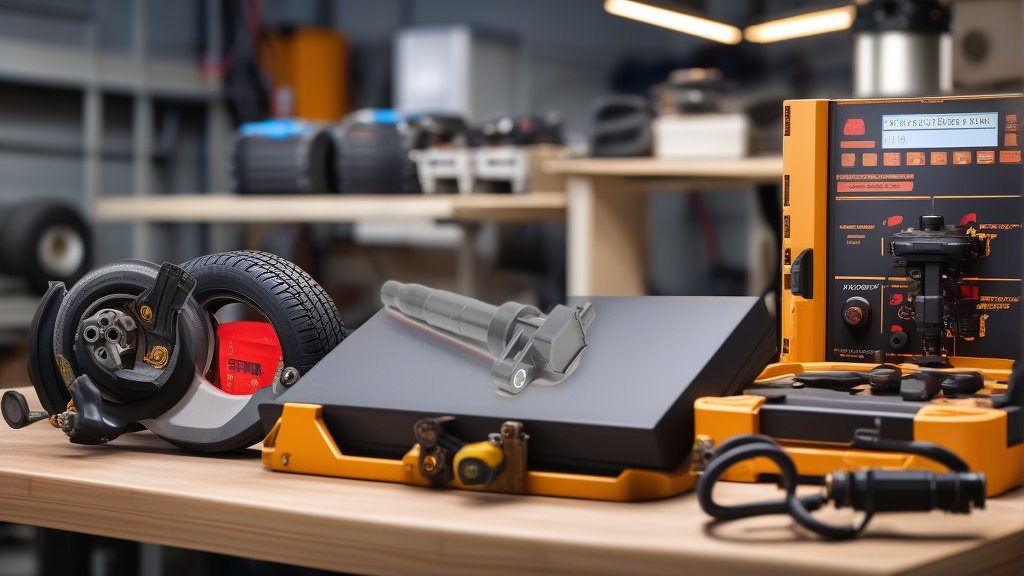
The phone call comes in at least twice a week at any serious parts distributor: a shop ordered a Hyundai ignition coil, the part arrived, and it doesn’t fit. The customer is angry. The return shipping is ugly. The profit margin on that job just evaporated.
Here’s the uncomfortable truth about Hyundai ignition coil sourcing: the problem isn’t usually the part. It’s the ordering process. Hyundai’s engine lineup has shifted dramatically over the past decade, and the coil that fits a 2015 Sonata 2.4L won’t touch a 2021 Sonata 1.6T. The Theta, Gamma, Kappa, and Smartstream families all use different coil architectures, and pinout variations exist even within the same engine generation.
If you’re buying ignition coils in bulk for resale or fleet maintenance, the mistakes are amplified. One wrong SKU across 50 units means 50 dead returns. Let’s walk through what actually matters before you hit that purchase order button.
The Three-Step Pre-Order Verification That Saves Your Margin
First, verify the engine family, not just the model year. Hyundai has a nasty habit of offering the same vehicle name with completely different powertrains across markets. A 2019 Tucson in the US market typically uses the 2.0L or 2.4L Theta II. The same year in Europe? Likely a 1.6T Gamma. The ignition coil part numbers don’t overlap.
Second, check the connector orientation. This is the silent killer of aftermarket Hyundai coil orders. The OS1205 uses a specific connector housing that fits certain coil-on-plug configurations. If you’re replacing a coil on a Theta II engine, the connector latch position matters. Forcing a visually similar coil with a slightly rotated connector is a guaranteed misfire code P0301 through P0304 and a returned part.
Third, confirm the OE cross-reference. For the OS1205, the OEM numbers are 273013C000 and 273013C010. If your customer’s VIN decodes to a different OE number, stop. Don’t sell them this coil. The physical dimensions may be identical, but the internal circuitry or primary resistance values could differ, which triggers misfire codes at idle or under load.
OE vs. Aftermarket: The Bulk Buyer’s Reality Check
Let’s be direct: genuine Hyundai coils are expensive, and they fail. The OEM failure rate on certain Theta II coils is well documented in service bulletins. But that doesn’t mean you should blindly stock the cheapest alternative.
When buying aftermarket in bulk, you’re betting on consistency. The OSRAM OS1205 is built to a specific spec—copper winding, epoxy-sealed casing, and a connector that matches the Hyundai housing precisely. For a B2B buyer, the question isn’t “does this work in one car?” It’s “will all 100 units work across 100 different cars with the same engine code?”
The answer requires batch testing. If your supplier won’t provide sample units for bench testing before you commit to a bulk order, walk away. A proper test rig checks primary resistance (typically 0.5–1.0 ohms), secondary resistance (6–12 kΩ depending on the coil), and spark duration under load. You also want to check the dwell time response—Hyundai ECUs are picky about coil charge time.
Price Analysis: Where the Real Cost Hides
The unit price on an aftermarket Hyundai coil can range from $18 to $60. The OS1205 sits in a reasonable mid-tier position, which is where smart bulk buyers should be looking. Bottom-tier coils often use thinner copper wire and cheaper epoxy, leading to internal shorts after 20,000 miles. Premium-tier pricing often buys you a brand name, not necessarily a better internal design.
Calculate your true cost per unit, including:
- Unit price + freight (especially if importing)
- Expected return rate (under 2% is good for quality aftermarket)
- Cost of processing a return (labor, shipping, customer friction)
- Lost future sales if the customer’s car misfires again in 6 months
A $22 coil that fails 5% of the time is more expensive than a $35 coil that fails 0.5% of the time. That’s not a guess—that’s the arithmetic of warranty claims and reputation.
The Fitment Trap: “It Fits” Is Not Enough
Here’s where most aftermarket coil listings mislead you. A listing might say “Fits Hyundai” and list 40 applications. But the OS1205 specifically fits one application—the Theta II engines that use the 273013C000/273013C010 OE design. That’s intentional. This coil is not a universal Hyundai coil. It’s a specific coil for specific engines.
When you order in bulk, verify the application list against your actual fleet or customer base. If you’re servicing a mix of Hyundai models, you need multiple SKUs on your shelf, not one “universal” coil that actually fits nothing perfectly.
Pro Tip for B2B Buyers: Always order one sample unit first. Test it on a known vehicle with a confirmed misfire. If it clears the code and runs clean under load for 50 miles, then scale your order. This costs you one unit of freight and 30 minutes of labor. It saves you from a pallet of wrong parts.
The Checklist Before You Commit
Run this before any bulk ignition coil PO goes out:
- [ ] Confirm the engine family (Theta, Gamma, Kappa, Smartstream, etc.) from the VIN or engine code
- [ ] Verify the OE part number stamped on the old coil
- [ ] Check connector type and latch position against the replacement
- [ ] Measure primary and secondary resistance on a sample unit
- [ ] Confirm the supplier’s return policy for wrong application orders
- [ ] Test one unit in a real vehicle before committing to bulk quantity
- [ ] Compare your total landed cost per functional unit, not just the shelf price
Bottom Line
Bulk buying Hyundai ignition coils doesn’t have to be a gamble. The OS1205 from OSRAM covers a specific, high-volume Theta II application, and it does so with consistent build quality. But the part number alone won’t save you—your verification process will. Know the engine family, check the OE number, test a sample, and only then scale your order. That’s the difference between a healthy margin and a warehouse full of returns.
For the Theta II applications that match the 273013C000/273013C010 spec, the OS1205 OSRAM coil is worth a spot on your bench. Test it against the old unit, verify the connector, and it’ll perform like it belongs there—because it does.

Recommended Part: OS1205 – OE-grade replacement, in stock now.