
The phone rings at 4:45 PM on a Friday. A 2017 Audi A4 Quattro is sitting in bay three, coolant streaming onto the shop floor, and the customer wants the car back by Monday. The scan tool shows P2181 — cooling system performance. The original sensor has a hairline crack at the connector housing. You pull up the part catalog and stare at a list of eight different coolant temperature sensors that supposedly fit this generation of EA888 engine. Which one is actually correct?
This is the reality of modern European repair. Audi’s parts numbering system looks like bureaucratic chaos, but it’s actually a highly structured language. Once you learn to read it, you stop guessing — and you stop ordering the wrong part.
Decoding the Audi OE Numbering System
Audi’s genuine part numbers follow a predictable format: 8K0 919 525 A. Let’s break that down.
The first three characters (8K0) identify the vehicle platform or model line. This is your starting filter — an 8K0 number belongs to the B8 Audi A4 chassis, while a 4H0 belongs to the D4 A8. If the platform code doesn’t match your customer’s vehicle, stop right there. The middle three digits (919) indicate the functional group. For temperature sensors, you’ll see 919, 919A, or similar variations — this is the sensor family. The final three digits plus the suffix letter (525 A) are the specific part identifier, with the suffix letter denoting revision level. An “A” suffix supersedes the original no-letter version. A “B” supersedes “A.”
Here’s the trap: the physical connector might be identical across revisions, but the resistance curve can change. An early 2013 sensor and a late 2015 sensor for the same engine code may not be electrically interchangeable, even though they screw into the same coolant flange.
Why Cross-Reference Matters More Than Brand Loyalty
The OE number isn’t just for ordering from the dealer. It’s your gateway to finding equivalent parts from quality aftermarket manufacturers. When you search by OE number (not by vehicle model), you open up the full cross-reference database. That’s how you discover that the OSRAM-branded sensor with OE number L06L919525 fits not one, but four distinct Audi applications across different model lines.
The “L” prefix in that number is worth paying attention to. In Audi’s system, the L prefix historically indicates a replacement/service part — the updated version of the original. When you see that, you know you’re looking at the current revision, not a part that’s been superseded twice.
Cross-brand equivalents work because reputable manufacturers — OSRAM, Bosch, Continental, VDO — build to the OEM specification, then license the tooling or reverse-engineer the component within factory tolerances. The sensor body, the thread pitch, the connector pinout, and the resistance curve all match the Audi original. What changes is the price and the box it ships in.
The Four Audi Applications You Need to Know
The OS-WTA002 from OSRAM covers a specific but critical set of Audi vehicles. The fitment list includes:
| Platform | Engine | Model Years | Notes |
|---|---|---|---|
| 8V (A3/S3) | 1.8T / 2.0T EA888 Gen 3 | 2015–2020 | Common failure at 60–80k miles |
| 8V (A3/S3) | 2.0T EA888 Gen 3 | 2015–2020 | Same sensor, different harness routing |
| 4G (A6/A7) | 2.0T / 3.0T | 2012–2018 | Accessible but tight against firewall |
| 5G (Q3) | 1.4T / 2.0T | 2015–2019 | Requires cooling system bleed after install |
What’s notable here is the common thread: all four applications use the EA888 or EA288 engine family. If you’re a shop that sees a steady stream of Audi’s volume sellers — the A3, Q3, and A6 — this single SKU covers a meaningful percentage of your coolant sensor failures.
How to Verify Fitment Without a Crystal Ball
Here’s the professional workflow. First, confirm the engine code from the vehicle’s build sticker (look in the service booklet or under the spare tire floor). Engine codes matter more than model year. A 2016 A3 with engine code CZPB uses the same sensor as a 2017 A6 with CGWC — different cars, same component.
Second, cross-reference the old part number on the sensor itself. The plastic housing is usually stamped with a VW/Audi part number. Write it down before you toss the old part in the bin.
Third, check the connector color and pin count. Audi uses green, black, and brown connectors for various temperature sensors. Getting this wrong means a 20-minute job turns into a 2-hour harness repair.
The Parts Shelf Decision
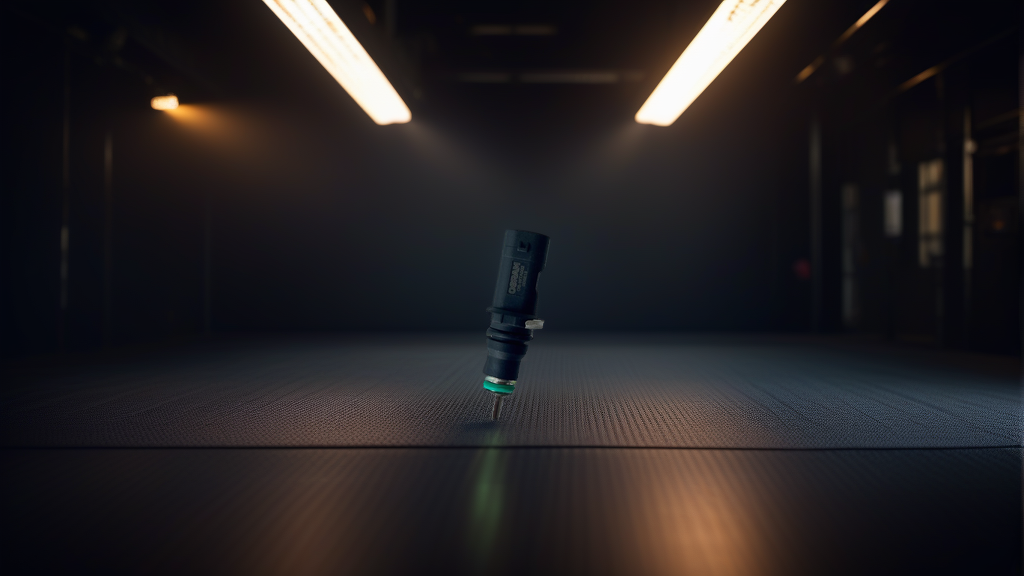
For shop inventory, the math is simple. One SKU, four applications, and the most common failure modes on three of Audi’s best-selling models. The OS-WTA002 from OSRAM — available through Longwei Parts — replaces the factory L06L919525 sensor with the same fitment and thermal response characteristics at a fraction of dealer pricing.
Pro Tip: When replacing a coolant temperature sensor on any EA888 engine, always replace the quick-connect coolant flange at the same time. The plastic flange degrades at the same rate as the sensor, and they typically fail within months of each other. The customer will thank you later.
The aftermarket for Audi temperature sensors has matured significantly. OE-number lookup is no longer a luxury — it’s the difference between a first-pass fix and a comeback. For shops carrying stock, the OS-WTA002 covers the breadth you need without tying up shelf space in eight different boxes.
If you’re still ordering by “2016 Audi A3 coolant sensor” without a part number, you’re gambling with your bay time. Learn the number system, use the cross-reference, and stock the parts that actually move. Your Monday morning schedule will thank you.

Recommended Part: OS-WTA002 – OE-grade replacement, in stock now.