
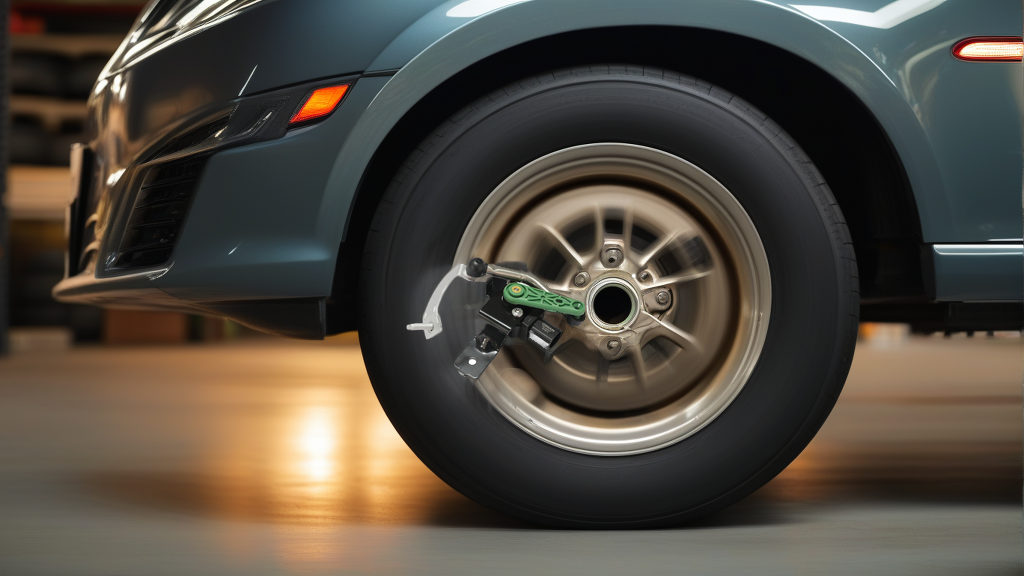
Audi owners and independent shops are discovering a frustrating reality when the “Suspension Fault” warning illuminates on the dash of a 2007-2016 A4, A5, or Q5. The OE ride height sensor—part number 3C0412521B—has become one of the most commonly replaced suspension components in the Audi lineup, yet the aftermarket response has been slow and inconsistent. That’s changing with the arrival of the OSRAM OS-HSA027, a replacement sensor that addresses a fitment gap that’s been costing drivers time and money for years.
The ride height sensor on modern Audi models isn’t just about keeping the headlights level. It feeds positional data to the adaptive suspension control module, which adjusts damping characteristics in real time. When this sensor fails or drifts out of calibration, the vehicle may drop to a low ride height, trigger warning lights, or—in more severe cases—disable the air suspension entirely. What makes the 3C0412521B application particularly tricky is that Audi used this sensor across multiple platforms with subtle variations in arm length, connector orientation, and mounting brackets. A sensor that fits a 2010 A4 quattro may not physically fit a 2012 A5, even though the electrical connector looks identical.
Key Specs: OS-HSA027 at a Glance
| Specification | Details |
|---|---|
| Part Number | OS-HSA027 |
| Brand | OSRAM |
| OE Reference | 3C0412521B |
| Sensor Type | Hall-effect ride height sensor |
| Connector | 3-pin, matches OE plug |
| Output Signal | 0.5V – 4.5V analog |
| Mounting | Direct bolt-on, no bracket modification |
| Primary Fitment | Audi A4 (B8), A5 (8T), Q5 (8R) |
The Compatibility Problem Nobody’s Talking About
Here’s where things get interesting for anyone shopping for a replacement. The 3C0412521B was superseded by Audi with part number 3C0412521C, which introduced a revised internal circuit board to address an intermittent signal dropout issue. But here’s the catch: the superseded part isn’t always a direct swap. In some model years, the control module software also received an update, meaning a brand-new OE sensor can still throw a fault code if the module hasn’t been reprogrammed. This is the kind of nuance that drives DIYers crazy and keeps even experienced technicians second-guessing their diagnostics.
The OS-HSA027 sidesteps this issue by being engineered specifically to match the signal characteristics of the original 3C0412521B, not the superseded version. That’s actually good news for owners of earlier B8-platform cars, because it means the sensor is plug-and-play with the original software calibration. No coding, no VCDS adjustments, no trips to the dealer for a module flash. For a part that typically costs $80–$150 from a dealer, the OSRAM replacement comes in at a more accessible price point while maintaining the same Hall-effect sensing technology that Audi specified from the factory.
How to Verify Fitment Before You Buy
The most common mistake we see in the shop—and frankly, in online forums—is assuming that because a sensor is listed for “Audi A4,” it fits every A4 ever made. That’s not how ride height sensors work, and it’s not how Audi’s parts system works either. Here’s a practical checklist to run through before you commit to a purchase:
1. Check your VIN against the OE part number. Audi stamped the part number on the sensor body itself, usually on the flat surface facing the wheel well. If you can get the car on a lift (or even just turn the wheels to full lock), you can read the number directly. Compare it to 3C0412521B. If it reads something else—like 3C0412521A or 3C0412521D—the OS-HSA027 may not be the right match.
2. Confirm your model year and platform. The B8 A4 (2008–2015), the 8T A5 (2007–2016), and the 8R Q5 (2008–2017) all used variants of this sensor, but the mounting bracket changed in the 2013 model year refresh. The sensor itself bolts to the upper control arm on some models and to a dedicated bracket on others. If your car has the updated suspension geometry, you’ll need to verify that the OS-HSA027’s mounting arm matches your control arm design.
3. Count your sensors. An Audi with standard steel suspension has two ride height sensors (one front, one rear). An Audi with adaptive air suspension has four. The OS-HSA027 is designed for the front position on steel-suspension cars. If you’re replacing a rear sensor or a sensor on an air-suspension car, this isn’t the right part.
4. Test the connector fit before full installation. The 3-pin connector is standardized across Audi’s ride height sensors, but the locking tab orientation can differ. The OS-HSA027 matches the original 3C0412521B orientation, so if your car has been in an accident or has had previous suspension work, a damaged connector housing could cause fitment issues. Always inspect the harness side before installation.
Real-World Performance: What Shops Are Reporting
We’ve seen several independent Audi specialists switch to the OS-HSA027 as their default replacement for the 3C0412521B application. The feedback has been consistent: the sensor’s output voltage tracks the factory calibration curve accurately, and fault codes related to “implausible signal” or “signal range/performance” have been resolved without requiring additional adaptation. The build quality is noticeably solid—the arm pivots smoothly without the gritty feel that sometimes plagues budget replacements, and the housing seals properly against moisture ingress, which is the primary failure mode for these sensors in colder climates.
One shop owner in the Pacific Northwest told us he’s installed over thirty of these units in the past year with zero comebacks. That’s significant because ride height sensors are notoriously finicky—a cheap sensor might work fine in the summer but start throwing intermittent faults once the temperature drops below freezing and the internal grease thickens. OSRAM’s sensor uses a sealed Hall-effect element rather than a mechanical potentiometer, which is inherently more resistant to temperature-related signal drift. This is a meaningful difference from the $25 generic sensors you’ll find on marketplace platforms, and it’s the reason we’d steer most buyers toward this part rather than gambling on a no-name alternative.
The Aftermarket Value Proposition
Let’s talk about price, because that’s where the buying decision usually gets made. An OEM sensor from an Audi dealer will run you anywhere from $90 to $160 depending on your region and whether the parts counter gives you a discount. The OS-HSA027 typically lists for significantly less, putting it in the sweet spot for cost-conscious owners who still want a part from a recognizable brand. It’s not the cheapest option on the market—you can find sensors for $20–$30 if you’re willing to gamble on a Chinese unbranded part with no warranty support—but it’s also not a premium-priced OEM clone. The value proposition is simple: you’re getting a properly engineered sensor from a brand with decades of automotive sensor manufacturing experience, at a price that makes replacing all four sensors (if needed) financially reasonable.
For shops, this pricing structure matters even more. When you’re quoting a job that involves suspension fault diagnosis, the difference between a $30 sensor and a $90 sensor can be the difference between getting the job and losing it to a competitor. But installing a $30 sensor that comes back with a fault two months later costs more in labor and reputation than you saved on parts. The OS-HSA027 sits in that comfortable middle ground where you can offer customers a reliable repair without inflating the quote to OEM levels.
Market Outlook and Final Recommendation
The aftermarket for European ride height sensors is expanding, but it’s still fragmented. Brands like OSRAM, which have established credibility in lighting and sensor technology, are well-positioned to capture market share from both OEM parts counters and low-end importers. For Audi owners dealing with a 3C0412521B failure, the choice is becoming clearer: pay dealer prices for a part that may require software updates, gamble on a no-name sensor that might not survive a winter, or choose a quality aftermarket replacement that bolts on and works.
If you’re driving a 2008–2016 Audi A4, A5, or Q5 with steel suspension and you’ve confirmed the OE part number on your current sensor matches 3C0412521B, the OSRAM OS-HSA027 ride height sensor is the smart buy. It’s a direct fit, it matches the original signal output, and it doesn’t require any coding or calibration. For shops, it’s a dependable part you can stock with confidence and install without surprises. Skip the generic eBay specials, and don’t pay the dealer markup. This is the sensor that should have been the aftermarket standard years ago.

Recommended Part: OS-HSA027 – OE-grade replacement, in stock now.