
Toyota’s reputation for reliability is built on components that outlast their competitors—but even the most durable ignition system has a breaking point. The 2.5L and 3.5L engines found in Camrys, RAV4s, and Tacomas run hot and demand precise timing, and when the coil pack or spark plugs start to degrade, the first symptom is often a subtle hesitation during acceleration. By the time the check engine light flashes with a P0301 or P0303 code, the damage is already done. The good news? With proper interval planning, most Toyota owners can avoid the tow truck entirely.
The 60,000-Mile Rule That Most Owners Ignore
Toyota officially recommends spark plug replacement every 30,000 to 60,000 miles depending on the engine generation, with iridium plugs stretching toward the higher end. However, the ignition coil—the transformer that steps up battery voltage to fire the plug—is a “lifetime” part in theory. In practice, heat soak from the exhaust manifold and constant voltage cycling cause the internal epoxy to break down around the 80,000-mile mark. This is particularly true for the 2GR-FE V6, where the rear coil pack sits close to the firewall and cooks silently.
A common mistake is replacing only the spark plugs while leaving the original coils in place. The new plugs create a lower resistance path, which forces the old coils to work harder, accelerating their failure. The result is a comeback visit two weeks later, this time with a coil that’s shorted internally. Seasoned technicians recommend pairing plug changes with a coil inspection, and replacing any coil showing signs of carbon tracking or hairline cracks—even if it hasn’t misfired yet.
Signs Your Ignition Components Are Failing
Most drivers notice a rough idle before anything else. The engine shudders at stoplights, and fuel economy drops by 2-3 mpg without explanation. Cold-start misfires are another red flag, especially in humid climates where moisture condenses on aged coil boots. A failing coil can also produce an odd electrical smell, similar to burnt plastic, as the internal insulation melts. When one coil fails on a Toyota, the others are typically close behind—replacement should be done as a full set of three or six, depending on the engine layout.
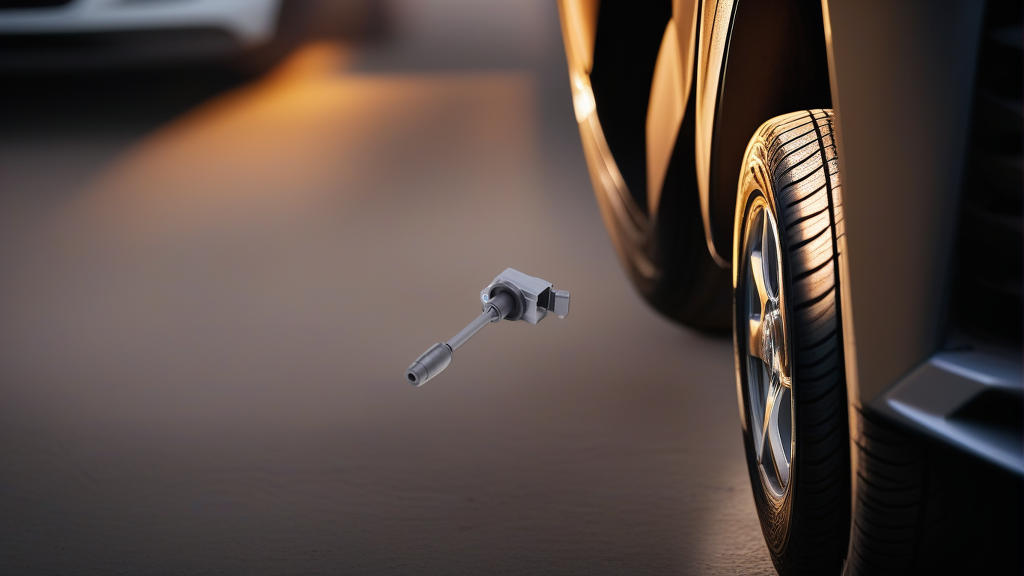
Here’s where the aftermarket shines. The OSRAM OS1041 ignition coil matches the OE Toyota part number 9091902272 at roughly half the dealership price, with a denser copper winding that runs cooler under load. It’s a direct swap for the 2.7L 2TR-FE and 3.5L 2GR-FE engines, and installation takes about 20 minutes per coil. For a DIY owner with basic hand tools, this is one of the most satisfying jobs on a Toyota—the parts cost less than a single dealership labor hour.
The Tune-Up Checklist That Covers All Bases
A complete Toyota ignition refresh goes beyond just coils and plugs. Start by inspecting the ignition coil connector for corrosion, especially on vehicles in salt-belt states. Clean the terminal with dielectric grease before reinstalling. Next, check the plug gap—even though iridium plugs come pre-gapped, the gap can close slightly during shipping. Use a wire gauge and adjust carefully, never by bending the center electrode. Finally, verify the engine ground strap, usually located between the engine block and chassis. A loose ground can cause intermittent misfires that mimic a bad coil.
One professional tip: apply a thin film of anti-seize compound to the spark plug threads, but keep it off the electrode tip. This prevents galling in the aluminum cylinder head, a common issue when plugs are left in place for 60,000+ miles. Torque the plugs to spec—typically 13-18 ft-lbs for Toyota—and use a torque wrench. Over-tightening a plug in a hot aluminum head is a rookie mistake that leads to thread repair bills.
Pro Tip: If you’re replacing coils on a V6, mark each coil with its cylinder number before removal. They’re identical parts, and mixing them up during installation causes confusion if a misfire code appears later.
The Verdict on Replacement Strategy
The most cost-effective approach for high-mileage Toyota owners is a “preventative pair” strategy: replace spark plugs at 60,000 miles and install a new set of coils at the same time, even if the originals still pass resistance tests. This adds roughly $150 in parts cost but eliminates the most common source of mid-life breakdowns. For those on a budget, replacing only failed coils is acceptable, but expect to revisit the job within a year as the remaining units age out.
For the OS1041 specifically, the build quality holds up well in real-world conditions. The OSRAM unit features a reinforced housing that resists vibration, and the boot material is more flexible than the OEM version, making installation easier in tight engine bays. If you’re doing a full tune-up on a 2012-2018 RAV4 or 2010-2017 Camry, the OS1041 is a solid choice that delivers OEM-grade performance without the dealership markup. Pair it with fresh iridium plugs and your Toyota will feel like it just rolled off the line—for a fraction of the cost.

Recommended Part: OS1041 – OE-grade replacement, in stock now.