
The check-engine light is on, the air suspension warning is glowing amber, and the ride height on that Audi Q7 is sitting noticeably lower on the driver’s side. You’ve got the part in hand — or maybe you’ve got a catalog page open — and there’s that string of characters staring back at you: 7L0616214C. The question is, does that number actually mean what you think it means?
For anyone working on Audi’s air suspension systems, the OE number is the single most important piece of information you’ll verify before spending money. Get it wrong, and you’re not just out the cost of the part — you’re out the labor, the alignment, and the hours of diagnostic time it took to get there. Here’s how to decode what you’re looking at and make sure the part you’re buying is the part you actually need.
What Those Numbers Actually Tell You
Audi uses a 9-character OE numbering system that’s been consistent across the Volkswagen Group for decades. The format breaks down into three segments: a four-digit prefix, a three-digit middle section, and a single suffix letter. For the ride height sensor on the Q7 and Touareg platform, you’re looking at 7L0 616 214 C.
The prefix “7L0” identifies the vehicle platform — in this case, the original Touareg/Q7/Cayenne architecture from the mid-2000s. The middle digits “616” point to the component group, and in VW Group’s system, 616 designates ride height sensors specifically. The “214” narrows it further to the exact sensor variant, and the trailing letter — in this case “C” — is the revision level. That letter matters more than most people realize. A “C” suffix can mean updated internal components, a recalibrated output curve, or simply a manufacturing change. It’s not always interchangeable with an “A” or “B” revision, even if the connector looks identical.
Here’s the thing about Audi’s numbering: it’s not universal across models. A ride height sensor from an A6 Allroad will have a completely different prefix and middle digits, even though the sensor performs a similar function. The A6 C5 platform uses 4Z7 616 001, for example. So when someone tells you “it’s the same sensor,” don’t believe it until you’ve verified the OE number against your vehicle’s VIN.
Cross-Reference Is a Minefield — Here’s Why
Audi didn’t build these sensors in isolation. The 7L0 616 214 series was used across the Volkswagen Touareg, Porsche Cayenne, and Audi Q7 from roughly 2003 through 2010. That cross-brand compatibility is both a blessing and a curse.
The blessing is availability — you can often find NOS (new old stock) sensors from any of the three brands that fit your Audi. The curse is that not all of those cross-referenced parts are true equivalents. Porsche used slightly different calibration on some variants of the same sensor, and Volkswagen occasionally sourced from different suppliers than Audi did. The physical connector might match, and the mounting holes might line up, but the output voltage curve could be off by enough to trigger a fault code.
A real-world example: the 7L0 616 214 B was superseded by the 214 C, and that C revision is what you’ll find on late-model Q7s and the current aftermarket replacements. The B revision had a known issue with moisture ingress through the seal — not a catastrophic failure, but enough to cause intermittent readings that drive you crazy during diagnosis. The C revision addressed that with an improved seal. If you find a “deal” on a used B revision, you’re buying someone else’s problem.
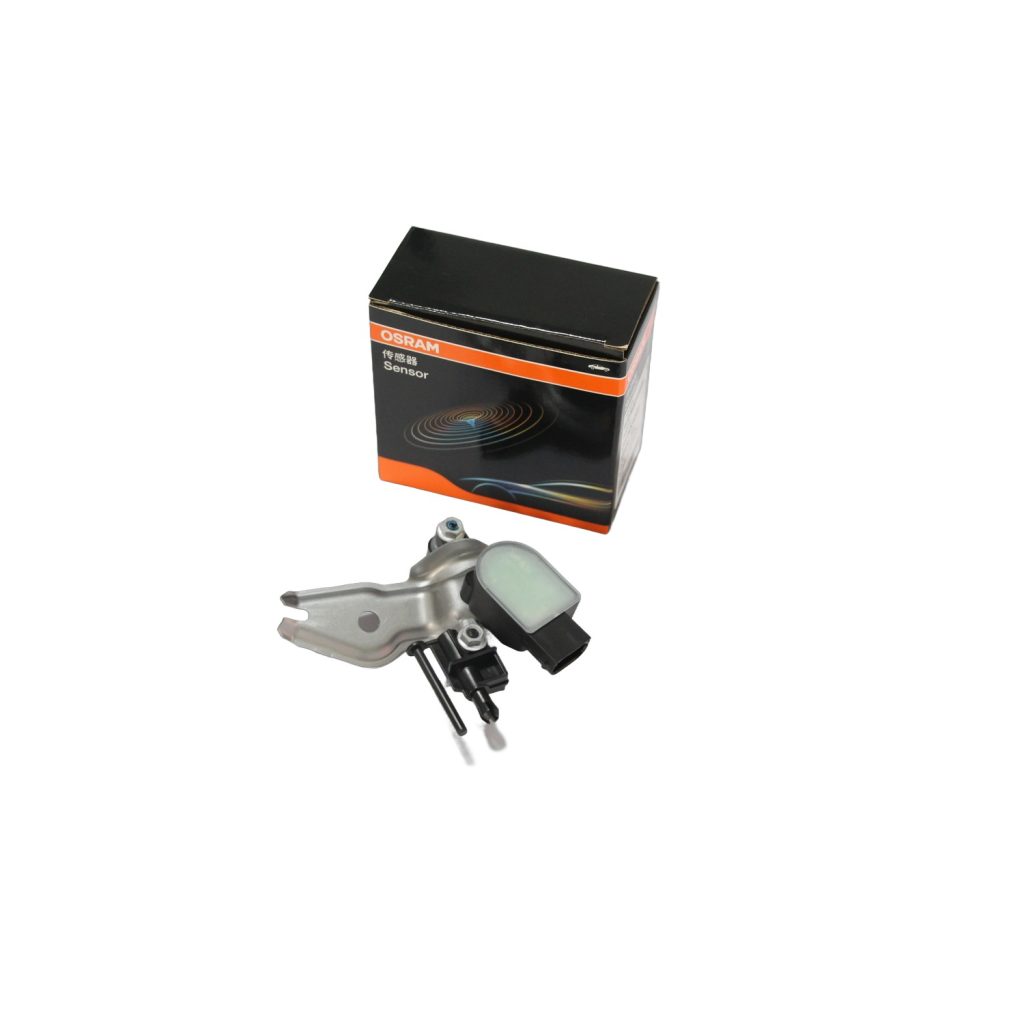
The same logic applies to the OS-HSA003 from OSRAM, which is a direct aftermarket replacement for the 7L0616214C. It’s built to the current revision spec, not the old one. That’s the detail that separates a proper cross-reference from a “it might work” gamble.
How to Verify Before You Hit “Buy”
You’ve got three ways to confirm you’re buying the right sensor, and they’re not all created equal.
First, the VIN lookup. Every Audi dealer and most parts websites can decode your VIN to specific OE part numbers. This is the gold standard because it accounts for production date, optional equipment, and running changes that don’t always show up in aftermarket catalogs. If your Q7 was built in May 2007 and the sensor on the passenger side is different from the driver’s side, a VIN lookup will tell you that.
Second, pull the old sensor and read the number stamped on the housing. This is the most direct method, but it assumes the previous owner or shop installed the correct part. If you’re chasing a problem that’s been “fixed” before, the number on the old sensor might be the wrong revision — and that’s your clue that someone cut corners earlier.
Third, use an OE cross-reference tool that lists multiple equivalent numbers. A good listing will show the original OE number, the supersession history, and the compatible brands. The OS-HSA003, for instance, crosses directly to 7L0616214C, which superseded the earlier 7L0616214B. If a listing only shows one number and it doesn’t match your vehicle’s actual part, walk away.
The Aftermarket Advantage — and the Risk
Here’s where the decision gets interesting. Genuine Audi sensors run anywhere from $120 to $200 depending on the dealer and the current pricing. Aftermarket replacements like the OSRAM sensor typically land in the $50 to $90 range. That’s a meaningful difference, especially if you’re doing all four corners.
But the aftermarket has a reputation problem, and it’s partly earned. There are cheap sensors out there that use the same connector and housing but lack the internal shielding or the proper calibration. They’ll read “correctly” at static height but drift when the vehicle is moving, or they’ll throw a fault after 500 miles of real driving. That’s not a risk you want to take with a system that controls a two-ton vehicle at highway speed.
The good news is that reputable aftermarket brands have stepped up their game. OSRAM, which most people know for lighting, has been expanding into automotive sensors with an emphasis on matching OEM specifications. The OS-HSA003 | OSRAM Ride Height Sensor | Fits Audi | OE# 7L0616214C is built to the current 7L0616214C specification, not a generic “works for Audi” compromise. The difference is in the details: proper seal design, correct output curve, and materials that hold up to road salt and moisture.
What to Check Before You Order
Before you commit to any sensor purchase, run through this list:
- Verify the OE number on your current sensor — don’t rely on memory or a previous repair invoice.
- Check the suffix letter — if your sensor has a “B” and the replacement is a “C,” confirm it’s a supersession, not a different part entirely.
- Confirm your vehicle’s production date — Audi made running changes mid-platform, and a 2008 Q7 might use a different sensor than a 2006.
- Look at the connector — the 7L0616214C uses a specific 3-pin connector. If your harness has 2 pins or a different shape, you’ve got the wrong sensor family.
- Check the mounting orientation — the sensor arm needs to be positioned correctly relative to the suspension link. Some aftermarket sensors have a different arm angle, which can cause incorrect readings even if everything else matches.
The Bottom Line on OE Numbers
The OE number isn’t just a parts reference — it’s a communication tool between you, the vehicle, and the person who designed the system. Audi’s numbering convention tells you the platform, the component group, the specific variant, and the revision level. Learn to read it, and you’ll stop guessing.
For the Q7 ride height sensor, the 7L0616214C is the current revision, and it’s widely available through both OEM and aftermarket channels. When you’re comparing options, look for a sensor that specifically lists that OE number as its cross-reference, not one that vaguely claims “fits Audi Q7.”
The OS-HSA003 from OSRAM is one of those parts that does the job right. It’s built to the current specification, it’s priced reasonably, and it eliminates the uncertainty of used or unknown-origin sensors. If you’re replacing a ride height sensor on an Audi Q7 or a related platform, that’s the one to order.
One last piece of advice: replace the sensor in pairs if you can afford it. Air suspension systems age together, and if one corner is failing, the others aren’t far behind. You’ll save yourself a second round of labor, and you’ll keep the ride height consistent across the axle. That’s the kind of thinking that separates a satisfied customer from a repeat complaint.

Recommended Part: OS-HSA003 – OE-grade replacement, in stock now.