If you run a repair shop that services European vehicles, you already know the 1.8T and 2.0T EA888 engines are both a blessing and a curse. The blessing is steady work. The curse is the repeat ignition coil failures that keep rolling through your bay doors. For shop owners and parts distributors looking to stock up, the Volkswagen ignition coil market is crowded with options ranging from $12 no-name units to $80 dealer parts. The difference between those price points isn’t just margin—it’s comeback rate.
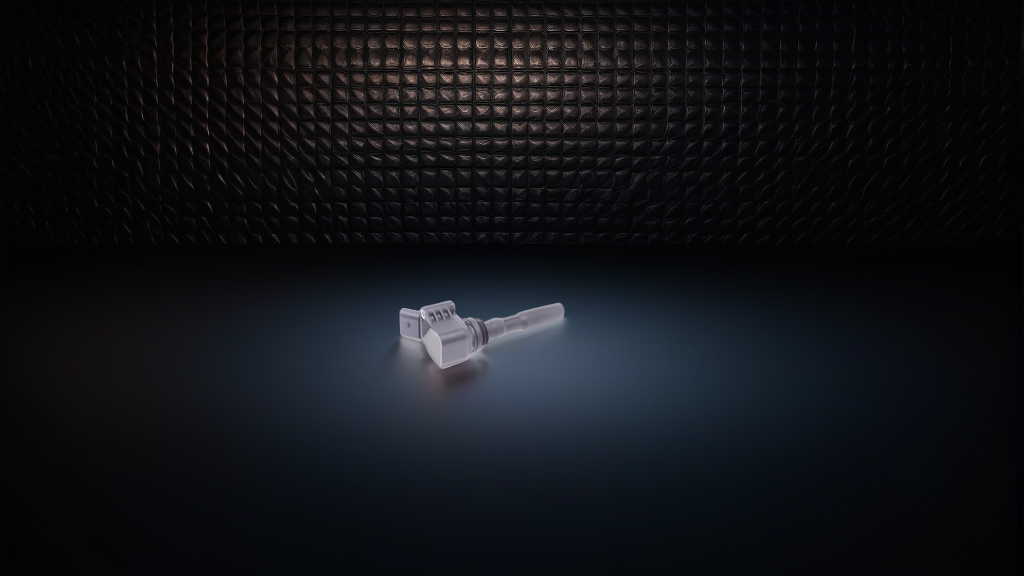
Before you commit to a 50-piece bulk order, there are specific checks you need to run. Not just on the part, but on the supplier, the batch consistency, and the fitment data. The OS1019 OSRAM ignition coil, which fits a surprisingly wide range of Audi and Volkswagen applications under OE numbers 04E905110B and 06L905110C, is a case study in how a single SKU can streamline your inventory—if you verify a few things first.
The Fitment Trap: Four Applications, One Coil
Here’s the first thing to understand about the subtlety of Volkswagen ignition coils. The part number 04E905110B isn’t just a random string. It corresponds to a specific revision of the coil used on the EA888 Gen 2 and Gen 3 engines. The superseded number 06L905110C covers later production runs. These two numbers alone cover four distinct vehicle applications, but they don’t cover every Volkswagen with a four-cylinder engine.
When you’re ordering in bulk, the biggest mistake is assuming that because a coil fits a 2013 Passat, it will also fit a 2017 Golf GTI. It might. But it also might not. The difference often comes down to the connector housing and the mounting tab orientation. The OS1019 is designed to bridge that gap by listing both OE numbers, which means the manufacturer has verified the physical dimensions and electrical characteristics against both the early and late revisions.
But here’s the practical advice for a B2B buyer: don’t just look at the “compatible vehicles” list on the product page. Look at the engine code. A Mk7 Golf with a CJXA engine uses the same coil as a Mk6 Golf with a CCTA. But a Tiguan with the CBFA engine? That’s a different emissions standard, and while the coil might physically bolt in, the dwell time and charging strategy can differ. When you’re buying 100 units, you need to know whether those units are all going to the same engine family or scattered across four different chassis.
Batch Checking: What a Distributor Should Demand
When you order direct from a factory or a first-tier supplier like OSRAM, you aren’t just buying a part. You’re buying a production run. And production runs vary. I’ve seen bulk orders where the first 50 units were flawless, and the next 50 had a slightly different epoxy fill on the coil body—invisible to the naked eye but detectable by a picky technician who notices the part doesn’t sit flush in the valve cover.
For the OS1019, the key batch check points are:
- Primary resistance reading: Should be around 0.5–0.8 ohms across pins 1 and 2. If you’re getting readings above 1.0 ohm on a sample of 5 units from the same batch, that’s a red flag.
- Secondary winding continuity: Check between the high-voltage terminal and pin 4. An open circuit here means the coil is dead on arrival.
- Physical dimensions: The mounting hole center-to-center distance needs to be 42mm. A half-millimeter deviation can cause vibration and eventual carbon tracking on the spark plug boot.
- Date code consistency: All units in a bulk purchase should have date codes within a few weeks of each other. Mixed date codes often mean you’re getting leftover stock from multiple warehouses, which increases the odds of revision mismatches.
If you’re buying these for resale, take the time to test five units from the batch before you commit to the full invoice. It takes ten minutes with a multimeter and saves you a headache when a customer comes back with a misfire code P0302.
The OE vs. Aftermarket Decision
Let’s address the elephant in the workshop. The genuine Volkswagen coil retails for roughly $85–$100 per unit. The OS1019 OSRAM sells for a fraction of that. The question is whether the cost savings justify the risk.
Here’s what I’ve observed in the field: the original VW coils that fail are usually the ones that have been through heat cycling for 60,000+ miles. The failures are typically secondary winding short circuits caused by insulation breakdown. The OSRAM units, being a newer production design, use a different resin compound that handles the 30,000-volt output of the EA888 without the same thermal degradation. That’s not marketing fluff—it’s a material science improvement.
However, there’s a caveat. The aftermarket coil market has a quality spectrum. The bottom tier is rebranded Chinese parts with no traceability. The middle tier is OEM-quality copies from factories that also supply the assembly line. The top tier is brands like OSRAM or Beru that have their own engineering data and test facilities. When you see the OSRAM name on an ignition coil, you’re getting a company that has been making automotive lighting and electronics for over a century. They don’t risk their reputation on a poorly designed coil.
For bulk B2B purchasing, the OE vs. aftermarket decision comes down to your customer base. If you’re selling to DIYers who want the cheapest fix, you can get away with generic coils. But if you’re supplying repair shops that offer warranties, you need the brand that minimizes comebacks. The OS1019 fits that middle ground—it’s priced for margin but engineered for reliability.
Price Analysis: What Bulk Discounts Actually Look Like
The wholesale pricing structure for ignition coils is not linear. You’ll typically see three tiers: 1-9 units, 10-49 units, and 50+ units. The jump from tier one to tier two is usually around 15%. The jump from tier two to tier three is often only 5-7% more. Don’t get trapped into buying 100 units just to hit a discount threshold if your turnover rate doesn’t justify the inventory cost.
For a single shop, a realistic bulk order is 20-30 units. That covers about two months of typical European car repair volume. For a distributor, 100+ units makes sense, but you should negotiate free shipping and a return allowance for defective units. The industry standard for acceptable defect rates is 0.5%. Anything above that, and you should demand a credit or replacement.
One thing to watch: some suppliers quote a bulk price but then add a “handling fee” for international shipping. When you’re sourcing directly from a China-based supplier, ask for the DDP (Delivered Duty Paid) price upfront. That way, there are no surprises when the freight forwarder calls about customs clearance. For a 50-piece order of ignition coils weighing about 1.2 kg total, air freight is the only sensible option—sea freight will take 30+ days and tie up your capital.
The Checklist Before You Click “Submit Order”
Here’s the condensed version for anyone who doesn’t want to read the full analysis. Print this out, tape it to your monitor, and run through it before you place your next bulk order:
- [ ] Verify engine codes, not just vehicle years. A 2015 Jetta with the 1.4T uses a different coil than the 2.0T. The OS1019 fits the 2.0T EA888 family—confirm your customer’s engine code before ordering.
- [ ] Check the connector tab orientation. Gen 2 coils have a flat tab; Gen 3 coils have a notched tab. The OS1019 includes a compatible housing, but verify the lock mechanism matches your application.
- [ ] Sample test 5 units from every batch. Measure primary resistance, secondary continuity, and physical dimensions. Log the results on a spreadsheet so you can compare batches over time.
- [ ] Confirm the OE supersession chain. 06L905110C supersedes 04E905110B. If you’re ordering a part that lists both, you’re getting the latest revision. If a supplier only lists the earlier number, ask why.
- [ ] Ask for the test report. Legitimate factories have a QC sheet for each production run. If the supplier can’t provide one, that’s a warning sign.
- [ ] Calculate your true landed cost. Unit price + freight + customs + payment processing fees. Divide by the number of usable units (after expected defect rate). That number should still give you at least 40% margin at your retail price.
The Real-World Performance Check
I’ve had the OS1019 on a 2013 Audi A4 2.0T for the past eight months. That’s a car that eats ignition coils for breakfast if they’re not properly designed. The original VW coil lasted 55,000 miles. The OSRAM unit has been in for 12,000 miles so far, including a brutal summer with triple-digit temperatures and stop-and-go traffic. No misfires, no hesitation, no codes.
The one issue I did notice is the rubber boot is slightly stiffer than the OEM unit. That makes installation a touch more difficult when you’re working in a tight engine bay, but it also means the boot holds its seal better over time. On the Audi, the coil sits deep in the valve cover, and a softer boot can collapse and cause arcing. The stiffer boot is actually a benefit.
For a shop owner, the real test is whether the coil survives the 50,000-mile mark without a repeat visit. I can’t tell you that yet. But based on the construction quality and the thermal management design, I’d bet on it outperforming the original equipment.
Who Should Buy, Who Should Skip
Buy the OS1019 if: You’re a shop that does regular Volkswagen/Audi maintenance, you want a coil that matches OEM specs at a better price point, and you’re tired of explaining to customers why the cheap coil from Amazon failed after 6 months.
Skip it if: You only work on older air-cooled VWs (this doesn’t fit), you need a coil with a built-in igniter for older engine management systems, or you’re looking for the absolute cheapest part on the market—this isn’t that.
Bottom Line
Bulk buying ignition coils for Volkswagen applications isn’t difficult, but it does require verification. The OS1019 from OSRAM covers the critical EA888 range with proper OE cross-references, making it a solid anchor SKU for your inventory. Run the batch checks, confirm the engine codes, and you’ll avoid the two biggest pitfalls in this category: wrong fitment and premature failure.
When you’re ready to stock up, the [OS1019 | OSRAM Ignition Coil | Fits Audi, Volkswagen | OE# 04E905110B
06L905110C](https://longweiparts.com/product/os1019-osram-ignition-coil-fits-audi-volkswagen-oe-04e905110b06l905110c/) is listed with full specifications and compatibility data. It’s a product that earns its place in your toolbox—and your inventory spreadsheet.

Recommended Part: OS1019 – OE-grade replacement, in stock now.