
The Maserati Quattroporte has always been a study in contradictions—a four-door luxury sedan that handles like a sports car, wrapped in Italian leather and powered by engines that make grown men weep. But for all its mechanical poetry, the Quattroporte shares a mundane vulnerability with every modern vehicle: tire pressure monitoring. And as 2026 model-year inventory rolls into dealerships, the aftermarket is quietly reshaping how owners and independent shops approach this overlooked system.
The Signal Chain: From Valve Stem to Dashboard
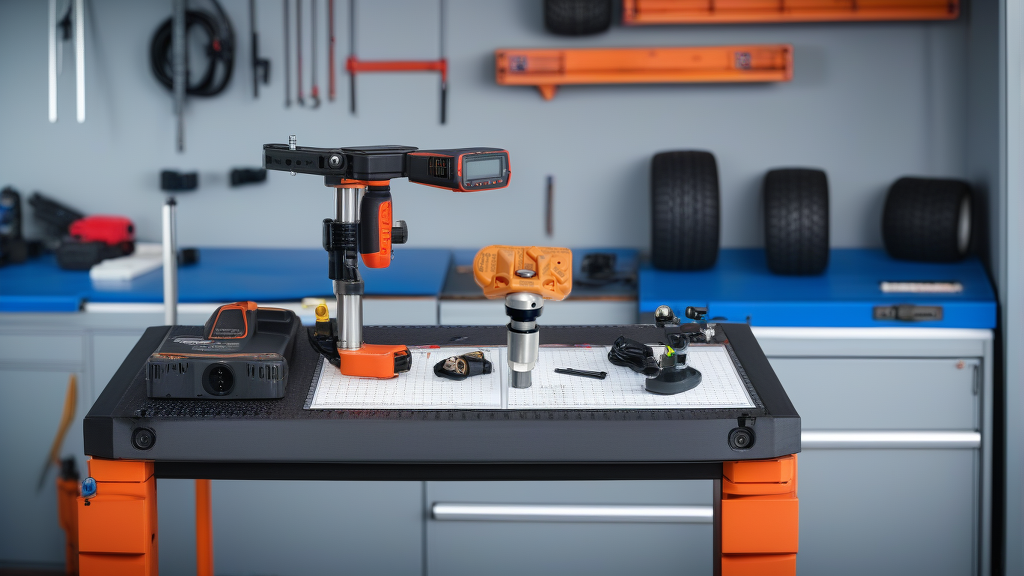
Here’s what actually happens when you start a Quattroporte. Each wheel-mounted sensor—typically secured by a metal clamp band around the drop center of the rim—housings a micro-electromechanical system (MEMS) pressure transducer and a temperature thermistor. The pressure element is a silicon diaphragm that deflects under load, changing resistance across a Wheatstone bridge. That analog signal gets digitized by an onboard ASIC, then transmitted as a 433MHz radio burst.
The protocol is where things get interesting. Quattroporte systems use a proprietary frame format that encodes pressure in 0.5 psi increments, temperature in 1°C steps, plus a unique 32-bit sensor ID. The RF transmission lasts roughly 15 milliseconds, repeated at rolling intervals that vary based on whether the car is stationary or moving. The body control module listens for these bursts, validates the ID against learned positions, and displays pressure on the instrument cluster only after two consecutive valid frames.
Why the 433MHz Standard Still Dominates
European and Asian manufacturers largely standardized on 433MHz for TPMS—a happy accident of spectrum allocation that now gives aftermarket suppliers a single frequency to target. The RDE048V21 from BH-Sens (Baolong Technology) operates squarely in this band, pre-programmed with 85 vehicle applications covering 13 brands. For a Quattroporte owner, that means a direct replacement that doesn’t require cloning tools or dealer-level programming.
The unit uses a clamp-in design, which is worth noting. Some Quattroporte years shipped with snap-in sensors; if your car has clamp-in, the valve stem assembly bolts through the wheel and seals with a rubber grommet. It’s more robust than snap-in, especially on high-speed runs where centrifugal force can distort softer seals.
Sensor Failure Modes You’ll Actually See
Let’s talk about what kills TPMS sensors in real-world Quattroporte ownership. Battery depletion is the big one—lithium cells inside these units are rated for 5-7 years, but extreme heat cycles from repeated hard braking (this is a 4,700-pound sedan that can hit 60 mph in 4.3 seconds) accelerate chemical degradation. You’ll notice it as intermittent signals before full failure, often flagged as “sensor not detected” on the cluster.
The second failure mode is more insidious: corrosion at the valve stem base. Road salt, pressure washing, and the aggressive cleaning solvents some detailers use all attack the aluminum housing. The sensor itself may remain functional, but the antenna path degrades, reducing range. A sensor that should broadcast 10+ meters might only reach 3 meters—enough to trigger a warning light every time you park near another vehicle with a 433MHz transmitter.
Market Outlook
The TPMS aftermarket for premium European sedans is consolidating around a few key suppliers, with Baolong’s BH-Sens line emerging as a volume leader. For shops servicing Quattroportes, carrying a single SKU that covers multiple brands reduces inventory carrying costs significantly—one part number for Aston Martin, Audi, BMW, Bentley, Bugatti, Maserati, and nine more marques is compelling math.
The RDE048V21 is pre-programmed, which eliminates the need for a TPMS tool to write sensor IDs. That’s a genuine time-saver on a service bay, especially when the Quattroporte owner is watching the clock and the hourly rate. Pair it with a relearn procedure via the car’s diagnostic port, and you’re done in under 20 minutes.
For the 2026 model year, expect sensor prices to hold steady while programmability shifts further toward plug-and-play. If you’re ordering parts for a Quattroporte TPMS replacement, the RDE048V21 is worth a serious look—it ticks the compatibility box across nearly every European luxury brand in your lot, and it’s built to survive the heat that Italian engines generate just idling in traffic.

Recommended Part: RDE048V21 – OE-grade replacement, in stock now.