
The aftermarket has spent years chasing the mirage of a truly universal TPMS sensor. Most “multi-fit” claims collapse under the weight of frequency mismatches, protocol differences, or programming headaches. But the Chinese OEM supply chain has quietly solved a large chunk of that problem—not through clever software, but through platform sharing. And no brand illustrates this better than Hongqi.
Hongqi, FAW’s flagship luxury division, doesn’t build its TPMS systems in a vacuum. The sensors used on Hongqi models are largely shared across the broader FAW family—Bestune, Hongqi, and select FAW commercial lines. That’s not an accident. It’s a deliberate engineering choice that keeps costs down at the factory and creates a golden opportunity for independent shops and DIY owners who know where to look.
The Platform-Sharing Reality
When a sensor fits a Hongqi HS5 and a Bestune T77, it’s not a coincidence. FAW has consolidated its electronic architecture across multiple nameplates. The TPMS receiver module, the antenna layout, and the sensor communication protocol are standardized across vehicles built on the same platform generation. This means the OE part number—3602100FD or 3778080DB01A—appears in multiple service manuals, even if the badge on the grille is different.
For the aftermarket, this collapses inventory complexity. Instead of stocking separate sensors for every Hongqi trim level, a shop can carry one part number that covers the vast majority of FAW-family vehicles. The BL-ST-040 | BH-Sens 433MHz TPMS Tire Pressure Sensor | Fits Bestune, FAW, Hongqi | OE# 3602100FD, 3602100FDA, 3778080DB01A conversation is really a conversation about the entire FAW ecosystem.
Inside the BL-ST-040
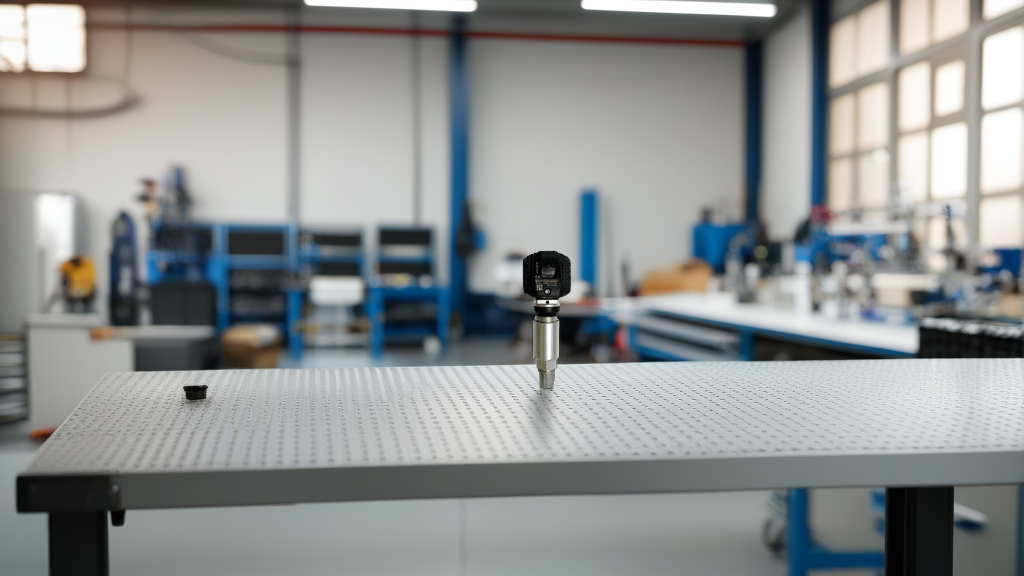
The BH-Sens BL-ST-040 is a clamp-in, pre-programmed unit running at 433MHz—the standard frequency for Chinese domestic market vehicles. It’s manufactured by Baolong Technology, a major OE supplier that has been feeding assembly lines for years. That pedigree matters because it means the sensor uses the same internal components, the same battery chemistry, and the same sealing strategy as the factory units.
| Spec | Detail |
|---|---|
| Brand | BH-Sens (Baolong Technology) |
| SKU | BL-ST-040 |
| Frequency | 433MHz |
| Type | Clamp-in, pre-programmed |
| Compatible Brands | Bestune, FAW, Hongqi |
| Vehicle Applications | 37 OE fitments |
| Weight | ~1 oz |
The pre-programmed aspect is the real time-saver. Many aftermarket sensors require a programming tool to clone the original sensor ID before installation. The BL-ST-040 skips that step for the 37 listed applications—it arrives ready to pair with the vehicle’s receiver. For a shop that sees multiple FAW-family vehicles in a week, that’s not just convenient; it’s a labor-cost reduction that shows up on the invoice.
Real-World Fitment Notes
The 37 applications span the Hongqi H5, HS5, H9, and E-HS9, along with Bestune models like the T77, T99, and X40. In practice, the sensor swaps directly into the factory wheel positions. The clamp-in design matches the original valve stem geometry, so there’s no adapter hassle. Torque spec remains the standard 4.5 Nm for the valve nut—nothing exotic.
One thing worth noting: the BL-ST-040 is not a universal sensor in the sense that it works on every car ever made. It’s a platform-specific unit that happens to cover a wide range of FAW vehicles. That’s actually better than a generic universal sensor because the signal timing and data frame structure match the FAW receiver exactly. No signal-strength issues, no intermittent dropouts, no warning-light flicker.
What Mechanics Should Watch For
The most common mistake with FAW-family TPMS service is assuming a sensor failure means the battery died. In many cases, it’s actually corrosion at the valve stem base or damage from improper tire mounting. Before condemning the sensor, inspect the stem and the sealing washer. The BL-ST-040 uses a standard rubber gasket, so if the original was leaking from the gasket area, the replacement will fix it.
Pro Tip: When replacing a clamp-in sensor, always replace the valve core and cap. These are wear items that cost pennies but cause slow leaks that mimic sensor failure. Also, check the torque on the retaining nut after 50 miles—vibration can loosen it on aluminum wheels.
Another point: the pre-programmed feature means the sensor broadcasts a factory-assigned ID. If the vehicle’s receiver is already paired to the old sensor ID, the new sensor needs to be learned. On most Hongqi and Bestune models, this can be done with a TPMS tool or through the vehicle’s diagnostic menu. It’s a two-minute job, but some techs skip it and then complain the sensor “doesn’t work.”
Market Outlook for FAW TPMS Coverage
Hongqi’s sales growth has been aggressive, particularly in the domestic Chinese market and in export markets like Russia and the Middle East. As these vehicles age out of factory warranty, the aftermarket will see a steady stream of TPMS service demand. The platform-sharing approach means that demand can be met with a small inventory footprint.
For parts distributors, carrying the BL-ST-040 makes sense because it consolidates what would otherwise be a dozen SKUs into one. For independent shops, it simplifies ordering and reduces the risk of stocking the wrong part. For owners, it means the replacement cost stays reasonable—well below what a dealer would charge for the same functionality in OEM packaging.
The BL-ST-040 sensor is the kind of product that doesn’t make headlines but makes service work easier. It’s OEM-quality internals, pre-programmed convenience, and broad FAW-family coverage in a single part. If you’re servicing Hongqi or Bestune vehicles, this is the one to stock.
Who Should Choose This Sensor
Any shop that sees FAW-family vehicles—Hongqi, Bestune, or FAW commercial—should have the BL-ST-040 on the shelf. DIY owners with a Hongqi in the driveway will find it straightforward to install, provided they have a basic TPMS learning tool. The only people who should skip it are those working on vehicles outside the FAW platform family, where a different frequency or protocol would be required.
The sensor’s 433MHz frequency is standard for the Chinese domestic market, but it’s worth confirming the vehicle was built for that market. Export models to North America or Europe may use different frequencies depending on the regional regulations. When in doubt, check the OE part number against the vehicle’s service records.
Bottom Line
The BL-ST-040 is a textbook example of how platform sharing benefits the aftermarket. One sensor, 37 applications, factory-grade reliability. For Hongqi and Bestune service, it’s the smart choice.

Recommended Part: BL-ST-040 – OE-grade replacement, in stock now.