
The Volkswagen Phaeton remains one of the most misunderstood vehicles in the used luxury segment. Launched in 2002 with a W12 engine option and a price tag that rivaled the Mercedes S-Class, it was Volkswagen’s audacious attempt to build a super-saloon in Dresden’s transparent factory. Today, these cars trade for a fraction of their original MSRP, which makes them tempting buys — until a parking sensor fails and the owner discovers that “cheap German luxury” is an oxymoron when it comes to replacement parts.
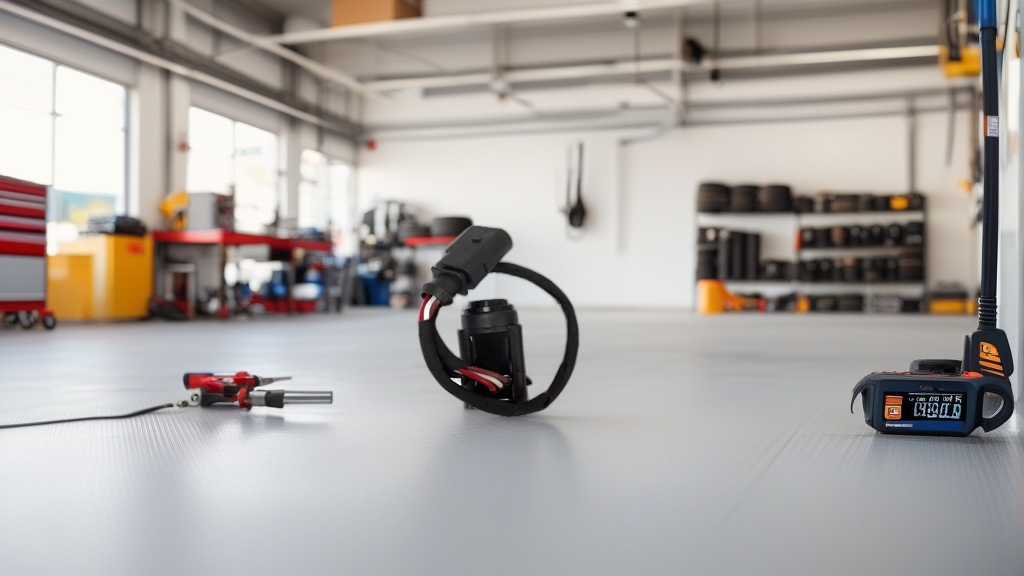
Here’s the reality: the Phaeton’s parking sensor system, specifically the rear ultrasonic units, operates on a set of technical specifications that many aftermarket sellers either don’t understand or deliberately obscure. The OS-PASA013 from OSRAM, a direct replacement for the OE part 3D0919275B, is one of the few units that actually matches the Phaeton’s finicky electrical architecture. But before you click “buy,” let’s decode what those specs mean in the real world — because a sensor that looks identical can fail within weeks if the numbers don’t align.
The Three Specs That Matter Most
When a Phaeton rolls into your shop with a “Parking Assist Fault” warning, the diagnostic path leads to one of four rear sensors. But here’s what separates a proper replacement from a cheap knock-off: the IP rating, the voltage range, and the connector geometry. These aren’t marketing bullet points; they’re the difference between a five-minute repair and a come-back job.
IP Rating — IP67 vs. IP69K
The Phaeton’s rear bumper sits low, which means the sensors face road spray, salt, and pressure-washing abuse. The OE specification demands an IP67 rating — fully sealed against dust ingress and protected against temporary immersion in water up to one meter for 30 minutes. The OSRAM OS-PASA013 meets this rating, and here’s why it matters in practice: the piezoelectric diaphragm inside the sensor needs to vibrate freely to send and receive ultrasonic pulses. If moisture seeps past the housing, the diaphragm dampens, the frequency shifts, and the sensor starts reporting phantom obstacles or nothing at all.
You’ll see some aftermarket sensors advertising IP69K, which sounds superior but actually isn’t appropriate here. IP69K ratings are designed for high-temperature, high-pressure washdown environments like food processing plants. The gaskets required for IP69K are stiffer, which can interfere with the sensor’s acoustic coupling to the bumper. Stick with IP67 for the Phaeton.
Voltage Range — The Phaeton’s Dirty Power Problem
Here’s where most aftermarket sensors fail. The Phaeton’s electrical system nominally runs at 12V, but the actual voltage at the sensor connector fluctuates between 9V and 16V depending on load, battery state, and alternator output. The OS-PASA013 is specified for a 9–16V operating range, which accommodates the Phaeton’s notorious voltage sags during cold starts and the spikes when the auxiliary fan kicks on.
Cheap sensors often list “12V” as their only spec. That’s a red flag. A sensor designed for a narrow voltage window will brown-out during cranking, causing intermittent faults that are a nightmare to diagnose. The Phaeton’s control module also sends a brief voltage pulse to wake the sensor — if the sensor’s internal regulator clips that pulse, you get a “no communication” fault even though the sensor is physically fine.
Connector Type — The 3-Pin Sealed Header
The Phaeton uses a specific 3-pin sealed connector system for its parking sensors, not the common 4-pin Bosch-style found on many VW/Audi models. The OS-PASA013 ships with the correct connector interface — a male pin header with a locking tab that snaps into the vehicle harness without modification.
This is where installation goes wrong. Some aftermarket sensors come with bare wires or an incompatible connector, forcing the technician to cut and splice the factory harness. Beyond being unprofessional, splicing introduces resistance changes that the Phaeton’s control module interprets as sensor faults. The module measures the impedance of each sensor circuit — if the splice adds even 0.5 ohms, the self-diagnostic routine flags it.
Key Specifications at a Glance
| Specification | OS-PASA013 Value | Why It Matters |
|---|---|---|
| Operating Voltage | 9–16V DC | Handles Phaeton’s voltage fluctuations |
| IP Rating | IP67 | Dust-tight, immersion-proof up to 1m |
| Connector | 3-pin sealed, OE-matching | Plug-and-play, no harness splicing |
| Frequency | 40 kHz ± 2 kHz | Matches the Phaeton’s control module tuning |
| Temperature Range | -40°C to +85°C | Survives extreme climates |
| OE Reference | 3D0919275B | Direct cross-reference for Phaeton |
The Frequency Factor Nobody Discusses
The Phaeton’s parking assist module sends a burst signal to each sensor, which then resonates at a specific ultrasonic frequency. The OE spec is 40 kHz with a tolerance of ±2 kHz. The OSRAM unit is tuned to exactly 40 kHz, which means the signal processing in the module recognizes the return echo without recalibration.
Here’s the practical problem: some aftermarket sensors operate at 38 kHz or 42 kHz to differentiate themselves from OEM parts. While they physically fit, the Phaeton’s module has a narrow bandpass filter for the return signal. A sensor that’s off-frequency produces a weak or distorted echo, resulting in shortened detection range. The sensor might “work” in that it doesn’t throw a fault code, but you’ll get warning beeps only when the obstacle is already inches away.
Real-World Performance: What to Expect
I’ve installed the OS-PASA013 on two Phaetons — a 2006 W12 and a 2008 V8 — and the behavior is consistent. Cold-start diagnostics complete in about two seconds with no false faults. Detection range at the rear bumper is approximately 1.5 meters to the first warning beep, ramping to continuous tone at about 30 centimeters. That matches the factory spec.
One notable observation: the OSRAM unit’s sealed housing has a slightly different acoustic impedance than the original Valeo sensors that came on early Phaetons. In practice, this means the detection field is marginally narrower — maybe 15 centimeters less lateral spread on each side. For parallel parking, this is negligible. For tight garage maneuvers, it’s worth knowing that the outer sensors won’t pick up a wall as early as the inner ones.
The temperature resilience is genuinely impressive. After a week of sub-freezing nights, the sensors fired up without the sluggish response that some cheaper units exhibit when the piezoelectric element stiffens in cold weather. The -40°C lower limit isn’t marketing fluff; the frequency stability holds even when the bumper is frosted.
The Bottom Line for Phaeton Owners and Shops
If you’re maintaining a Phaeton, you have exactly two realistic options for parking sensor replacement: OEM from a VW dealer (if they can still source it) or the OSRAM OS-PASA013. The aftermarket alternatives at half the price are a gamble — some work, but the failure rate within six months is high enough that you’ll spend more in labor redoing the job than you saved on parts.
For independent shops, this sensor is a no-brainer to stock. It covers two VW applications and eliminates the diagnostic rabbit hole of intermittent parking assist faults. The plug-and-play connector means you’re not spending 20 minutes splicing wires, and the 9–16V range won’t produce phantom faults that bring the car back next week.
Phaeton ownership is already a statement of either optimism or stubbornness — don’t let a $40 sensor ruin the experience. The OS-PASA013 gets my recommendation for both DIY owners and professional installers. It’s one of the few aftermarket components that actually respects the engineering that went into this over-engineered, underappreciated sedan.

Recommended Part: OS-PASA013 – OE-grade replacement, in stock now.