
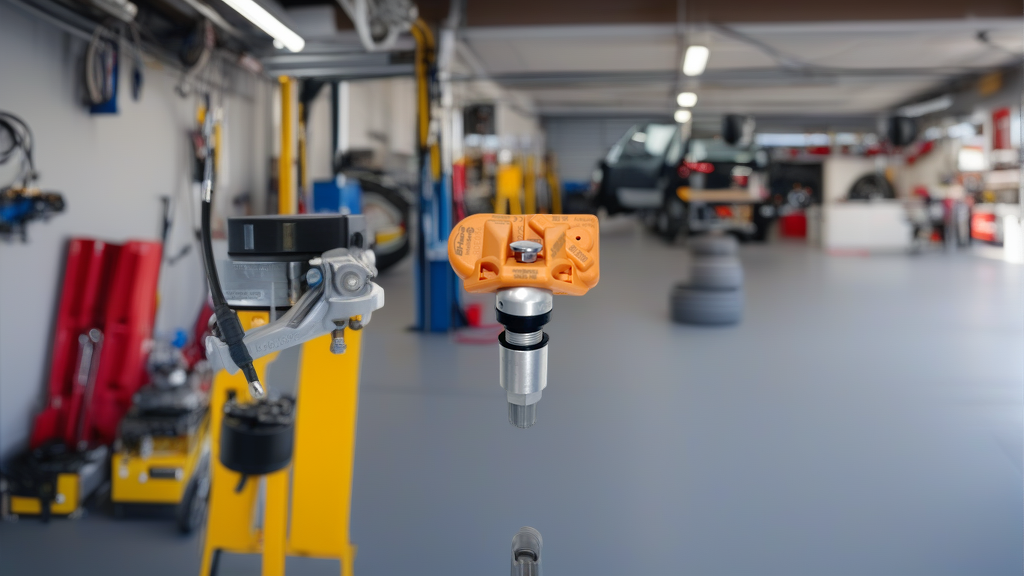
The aftermarket TPMS world has a dirty secret: inventory bloat. Walk into any serious shop and you’ll see pegboards sagging under dozens of plastic-wrapped sensors, each supposedly unique to a single make or model. For years, that was the accepted cost of doing business—buy one SKU for the Mercedes C-Class, another for the Chrysler 300, and a third for that oddball Dodge Journey that rolls in every other Tuesday.
That model is collapsing, and the reason sits in a small, black, pre-programmed unit from BH-Sens (Baolong Technology). The RDE036V21—a 433MHz clamp-in sensor—carries OE cross-references for 0045400217, 05154876AA, and 407005DA0C, and it covers fitments across Alfa Romeo, Aston Martin, BAIC, Chrysler, Dodge, and eight more brands. For the C-Class owner, it solves a specific headache. For the shop owner, it solves a business problem.
The Platform-Sharing Reality
Here’s what most drivers don’t realize: the Mercedes-Benz C-Class (W205 generation, 2014–2021) doesn’t use a Mercedes-exclusive TPMS brain. It uses a Continental/VDO architecture that has been adopted across the Stellantis group and several European luxury marques. The physical sensor—the metal valve stem, the 433MHz transmitter, the pressure and temperature sensing elements—is built to a common automotive standard. The only thing that changes between a C300 and a Dodge Charger is the software handshake.
The aftermarket has been slow to exploit this. OE dealers charge a premium for the same hardware with a different logo stamped on the housing. Traditional aftermarket brands force you to buy a separate SKU per vehicle, even when the internal electronics are identical. That’s not engineering necessity—it’s marketing segmentation.
The BH-Sens RDE036V21 cuts through that. It’s pre-programmed, so there’s no cloning tool required at installation. It registers with the vehicle’s TPMS receiver using the same protocol as the factory unit. And because it covers 79 dedicated fitments, it collapses what used to be a shelf of sensors into a single SKU.
A Technician’s Perspective: The C-Class Signal Issue
Let’s talk about what actually goes wrong with C-Class TPMS systems, because it’s rarely the sensor itself. The W205 has a known quirk: the tire pressure monitor uses a rolling code that can desynchronize if the vehicle battery dies or if someone performs a hard reset while the ignition is off. When that happens, the dash lights up with the dreaded “Tire Pressure Monitor Inoperative” warning, and the car refuses to clear it until the sensor transmits a fresh signal during a relearn procedure.
Most shops handle this by pulling out a factory scan tool, initiating the relearn, and hoping the old sensor still has enough battery life to respond. That’s a gamble. The original sensors in a 2016 C-Class are now over eight years old. Their internal batteries are rated for 10 years, but heat and road vibration degrade them faster. If you’re already in there, paying for labor and a scan tool session, the smart move is to replace the sensor with a fresh unit—not cross your fingers on an aging component.
The BH-Sens unit shines here. Because it’s pre-programmed with the correct ID format and 433MHz frequency, it responds to the vehicle’s relearn trigger without needing a separate programmer. For a C-Class, that means the standard magnet-based relearn (or an OBD trigger, depending on the model year) recognizes the sensor immediately. No “No Response” errors, no time wasted re-seating the sensor, no customer calling back an hour later because the warning light flickered on again.
| Common C-Class TPMS Failure | Root Cause | Fix with RDE036V21 |
|---|---|---|
| Inoperative warning after battery disconnect | Rolling code desync | Fresh sensor re-syncs on first relearn |
| Intermittent low-pressure alerts | Weak battery in original sensor | New 10-year battery, pre-programmed |
| Sensor not detected during relearn | Corroded valve stem or dead unit | Clamp-in design with new stem, immediate response |
| Cross-brand confusion (Chrysler/Dodge same platform) | Wrong sensor used | Single SKU covers both platforms |
Pro Tip: When you buy a pre-programmed sensor, always verify the OE cross-reference before installing. The RDE036V21 lists 0045400217, 05154876AA, and 407005DA0C on the box. If the customer’s VIN pulls up one of those, you’re done—no further programming needed. If it doesn’t, don’t force it. Use a programmable sensor instead.
Fitment: The C-Class and Its Platform Cousins
The W205 C-Class shares its MRA rear-wheel-drive platform with a surprising number of non-German vehicles. Chrysler’s 300, the Dodge Charger, and the Dodge Challenger all use variations of this architecture for their rear-drive models. That’s why a Stellantis part number (05154876AA) and a Chrysler part number (407005DA0C) appear on the same cross-reference list as the Mercedes part. They’re not “compatible” in the loose sense of the word—they are the same physical sensor, sourced from the same tier-one supplier, packaged under different OEM labels.
For a shop that services a mixed customer base, this is transformative. Instead of stocking three separate sensors for a C300, a Charger, and a 300C, you stock one. The BH-Sens unit covers Alfa Romeo (Giulia, Stelvio), Aston Martin (Vantage, DB11), and even BAIC vehicles—the latter being a growing presence in certain markets. That’s not a niche product; that’s a hedge against the parts-bin lottery.
There’s also a practical benefit for the C-Class driver specifically. The W205’s tire pressure monitoring system is sensitive to aftermarket wheels. Switch from the factory 17-inch alloys to a set of 19-inch AMG reps, and the sensor position changes relative to the receiver. A weak aftermarket sensor will drop off the network at highway speeds. The BH-Sens unit, with its 433MHz output and robust antenna design, maintains a solid link in that scenario. It’s not flashy, but it’s reliable—which is exactly what you want in a pressure sensor.
Buy or Skip: The Verdict
Who should buy the RDE036V21? If you own a C-Class from the 2014–2021 range and your TPMS warning light is a recurring theme, this is the fix. It’s pre-programmed, which means you can install it yourself with basic hand tools and a relearn procedure that takes two minutes with a magnet or an OBD tool. The price point undercuts the dealer part by a significant margin, and you’re getting a sensor made by Baolong Technology—a company that supplies OE sensors to multiple manufacturers. This isn’t a no-name knockoff; it’s the same factory that stamps out sensors for the cars you’re matching.
Who should skip it? If you have a 2008 C-Class (W204) with a different TPMS protocol, this won’t work—the W204 uses a 315MHz system in North America. Also, if your C-Class has been in a collision and the TPMS module itself is damaged, a new sensor won’t fix the wiring fault. Diagnose first, then buy.
The Bottom Line
The aftermarket parts game is finally catching up to the automotive industry’s platform-sharing reality. The RDE036V21 isn’t just a TPMS sensor—it’s a single SKU that replaces dozens, covering the C-Class and its platform cousins with genuine OE cross-references. For the shop owner, it’s inventory simplification. For the C-Class owner, it’s a direct, affordable replacement that works the first time.
If you’re tired of chasing TPMS ghosts on your W205, the BH-Sens RDE036V21 433MHz TPMS sensor is the pragmatic choice. Keep one on the shelf, or keep one in the glovebox—either way, you’re covered for 79 vehicles, including your own.

Recommended Part: RDE036V21 – OE-grade replacement, in stock now.