
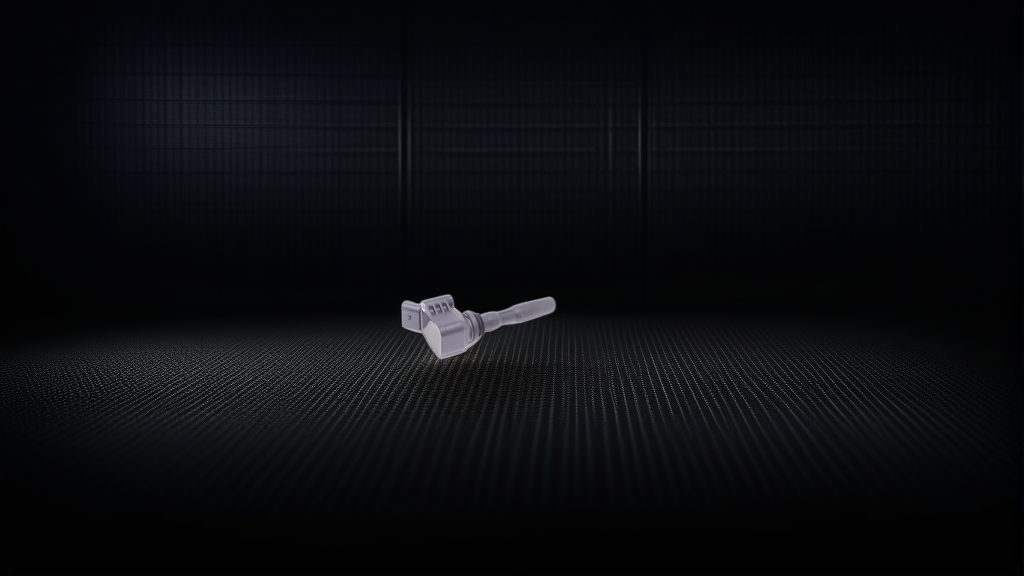
The 2.0T EA888 engine family has powered millions of Audi and Volkswagen vehicles for over a decade, and it remains one of the most popular platforms in the independent repair sector. But ask any technician who has spent time under one of these hoods, and they’ll tell you the same story: the factory ignition coils are a wear item, not a lifetime component. The good news is that the latest generation of coils, including the OSRAM OS1019, has addressed the failure modes that plagued earlier revisions.
The Failure Pattern That Shops Know Too Well
If you’ve been in this business for more than a few years, you’ve seen the classic EA888 coil failure at 60,000 to 80,000 miles. Misfire codes on cylinders 2 and 3, rough idle, and a check engine light that sends the customer straight to your bay. The root cause is typically micro-cracking in the coil housing, which allows moisture and oil vapor to compromise the secondary winding. When the coil fails, it doesn’t just misfire—it can take out the spark plug and, in worst-case scenarios, damage the ignition driver in the engine control module.
The updated 04E905110B and 06L905110C revisions, which supersede the original 04E905110A, use a modified housing material and improved epoxy potting. These changes reduce thermal expansion stress and extend service life noticeably. For shops that track parts failures, this is a measurable improvement, not marketing copy.
What Changed With Coil-On-Plug Technology
The coil-on-plug (COP) design eliminates the need for spark plug wires entirely. Each cylinder gets its own coil mounted directly above the plug, which shortens the electrical path and reduces energy loss. The EA888’s COP system fires at around 30,000 to 40,000 volts, depending on load and fuel mixture. What matters more than peak voltage is the dwell time—the period the coil charges before firing.
The OS1019 from OSRAM maintains a consistent dwell time across the RPM range, which is critical for Audi’s direct-injection engines. These engines run leaner mixtures at cruise, and lean mixtures require more ionization energy to bridge the spark gap. If the coil can’t sustain that energy, you get incomplete combustion, which reads as a misfire or, worse, goes unnoticed while gradually fouling the catalytic converter.
Spark Energy Versus Fuel Economy: The Real Trade-Off
Here’s where the “performance upgrade” conversation gets interesting. Many aftermarket coils promise “more spark energy” as a bolt-on power gain. For a stock or mildly tuned EA888, that’s mostly marketing. The factory ECU controls ignition timing and dwell, and it will not deliver extra spark energy just because the coil can theoretically produce it. What a quality aftermarket coil actually buys you is consistency and headroom.
The OS1019’s copper-wound primary and laminated secondary core provide stable output even at high cylinder pressures under boost. On a tuned Audi running 18 to 20 psi, the stock coil can start to break down at high RPM and high load. The OSRAM unit holds its output curve flatter, which means fewer misfires at the top end and, in practice, better fuel economy because the ECU doesn’t have to pull timing to protect against knock from incomplete burn.
Key Specs at a Glance
| Specification | OS1019 (OSRAM) |
|---|---|
| OE Reference | 04E905110B / 06L905110C |
| Type | Coil-on-Plug (COP) |
| Compatible Brands | Audi, Volkswagen |
| Applications | 4 (EA888 1.8T/2.0T) |
| Housing | High-temp reinforced polymer |
| Primary Winding | Copper |
| Connector | Pencil-style, direct fit |
What Shops Should Tell Their Customers
For an Audi owner experiencing intermittent misfires or just hitting the 70,000-mile mark, replacing coils proactively is cheap insurance. A set of four OS1019 coils plus fresh spark plugs runs a few hundred dollars in parts. Compare that to the cost of a tow-in, a diagnostic session, and a single coil replacement at retail—the economics favor prevention.
The aftermarket now offers a coil that meets or exceeds the current OEM revision. For shops, that means you can stock one part number that covers most 2.0T EA888 Audis from the last decade. For owners, it means fewer repeat visits. The OS1019 is a solid choice for both stock daily drivers and tuned cars up to moderate boost levels. If you’re building for serious power—beyond 400 horsepower—you’ll want to look at upgraded coil packs with integrated igniters, but for the vast majority of Audi owners, this is the last coil you’ll need for another 80,000 miles.

Recommended Part: OS1019 – OE-grade replacement, in stock now.