
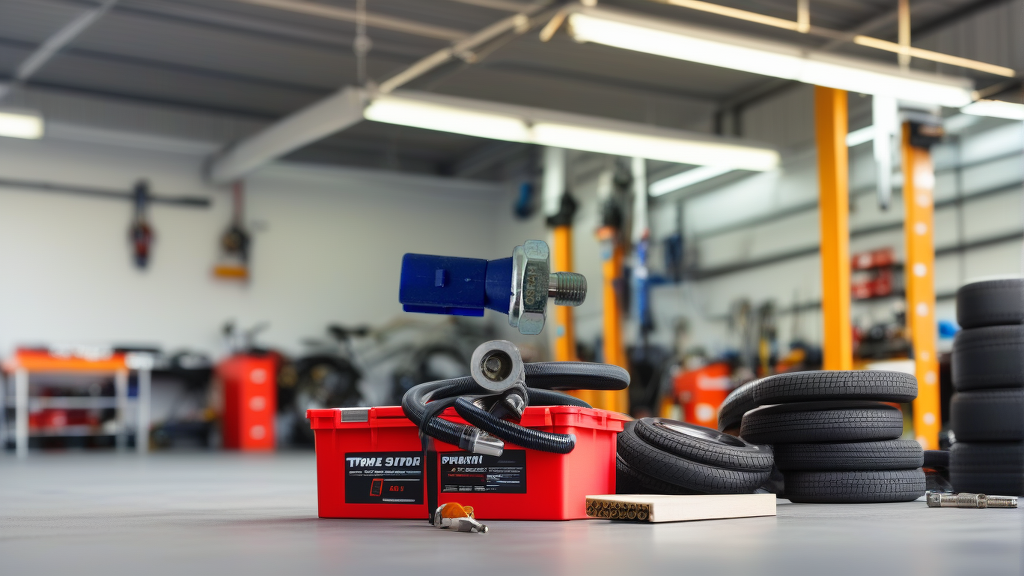
Ask any independent shop foreman which warning light triggers the most unnecessary tow bills on modern Audi models, and you’ll likely hear about the oil pressure lamp. It’s not that the 2.0 TFSI or 3.0 TFSI engines are prone to catastrophic lubrication failure—they aren’t, for the most part. The problem is that the sensor feeding data to the engine control unit (ECU) can fail in ways that mimic a genuine loss of pressure. A shorted or drifting piezoresistive element inside the sensor sends a signal that the ECU interprets as “below threshold,” and suddenly a perfectly healthy engine is shut down as a precaution.
The aftermarket has taken notice. For 2026, the replacement sensor landscape for Audi applications is shifting, with OE-grade options like the OSRAM OS-OPA001 (OE# L04E919081A) stepping in to fill a gap that OEM pricing has left wide open. But before we talk about parts, it’s worth understanding what’s actually happening inside that small brass housing threaded into the cylinder head or oil filter flange.
The Measurement Principle: It’s Not a Switch Anymore
Older vehicles used a simple oil pressure switch—a diaphragm that closed a contact at a preset pressure, typically around 0.3 to 0.5 bar. That gave you a binary answer: pressure present, or no pressure. Audi moved away from that approach on most EA888 and EA837 generations in favor of a variable pressure sensor. The OS-OPA001 is part of that newer family.
The sensing element inside is a piezoresistive silicon diaphragm. When oil pressure pushes against the diaphragm, it deforms microscopically. That deformation changes the electrical resistance of implanted strain gauges. A Wheatstone bridge configuration converts those resistance changes into a differential voltage signal, which an integrated signal-conditioning chip amplifies and linearizes. The output is a ratiometric analog voltage—typically 0.5V at atmospheric pressure to 4.5V at maximum rated pressure, which for this sensor is around 5 bar (72.5 psi).
What matters for the technician is that this signal is not a simple on/off. The ECU reads the voltage continuously and uses it for multiple tasks: triggering the low-pressure warning in the instrument cluster, adjusting camshaft timing strategies, and in some cases, protecting the turbocharger from oil starvation during hot shutdown. A sensor that reads 0.3V high at idle can cause the ECU to command a false “low oil pressure” condition, which on some Audi models triggers a reduced-power mode that feels like a transmission issue.
Signal Types and Wiring: Where Things Go Wrong
Audi uses two types of oil pressure sensing architectures depending on the engine family. On many 1.8T and 2.0T engines, the sensor is a three-wire device: 5V reference, ground, and signal return. On others, particularly some V6 and V8 applications, the sensor communicates over a LIN bus (Local Interconnect Network). The OS-OPA001 is a three-wire analog unit, which makes it a direct swap for the L04E919081A application.
Here’s where real-world diagnostics get interesting. The connector on these sensors is notorious for oil wicking up the wiring harness via capillary action. That oil degrades the insulation resistance between the signal wire and ground. A technician with a multimeter might see 2.4V on the signal wire with the engine running, which seems fine. But under load, when the engine bay heats up, the oil-soaked wiring changes resistance, and the voltage drifts. The ECU sees a value that doesn’t match its internal plausibility model for RPM and oil temperature, and it throws a P052A or P052B code.
| OS-OPA001 Spec | Value |
|---|---|
| Brand | OSRAM |
| Part Type | Oil Pressure Sensor |
| OE Reference | L04E919081A |
| Signal Type | Analog, ratiometric (0.5–4.5V) |
| Pressure Range | 0–5 bar |
| Compatible Brands | Audi |
| Applications | 4 vehicle models |
The Temperature Factor and Measurement Drift
Oil temperature plays a bigger role in pressure sensor accuracy than most DIYers realize. The piezoresistive element’s sensitivity changes with temperature. To compensate, the sensor’s conditioning chip applies a polynomial correction factor based on an integrated temperature diode. But that compensation has limits. When a sensor ages, the gel coating protecting the silicon die can degrade, especially if the engine has seen oil change intervals stretched beyond 10,000 miles. The gel becomes brittle, and the die starts to see localized stress that the compensation algorithm can’t correct.
This is why you can see a sensor that reads fine on a cold start but sets a fault after 20 minutes of highway driving. The thermal drift is nonlinear, and the ECU’s plausibility check eventually flags the signal as implausible, even if the actual oil pressure is within spec. For shop owners, this is the difference between a 20-minute diagnostic and a two-hour headache chasing a phantom oil pressure issue.
Real-World Fitment and Installation Notes
The OS-OPA001 fits four Audi applications, and the install is straightforward on most of them. The sensor threads into the oil filter housing or the cylinder head, depending on the engine code. Torque spec is typically 20 Nm (15 ft-lb). Do not over-tighten—the aluminum housing in the cylinder head strips easily, and a heli-coil repair on an EA888 is a job nobody wants on a Saturday.
One common mistake is replacing the sensor without checking the wiring harness connector. The terminals in the connector have a tendency to spread after multiple disconnect cycles, creating intermittent contact. A quick check with a terminal pick to tighten the female pins can save a comeback. Also, apply a small amount of dielectric grease to the connector seal, not to the pins themselves. Grease on the pins can insulate the contact surface and cause the same signal issues you’re trying to fix.
Pro Tip: When diagnosing a P052A on an Audi with the 2.0 TFSI, always verify oil level and oil pressure with a mechanical gauge before condemning the sensor. A scan tool reading of 0.8 bar at hot idle is borderline; if the mechanical gauge shows 1.2 bar, the sensor is your culprit. If the mechanical gauge agrees with the sensor, you have a real oil pressure problem—stop selling parts and start looking at the oil pump relief valve.
Market Outlook: Where the Aftermarket Is Headed
The OEM price for the L04E919081A sensor has crept up steadily, and for a part that is essentially a consumable on high-mileage Audis, that’s a hard pill to swallow. The aftermarket response has been strong. The OSRAM-branded OS-OPA001 offers a direct replacement at a fraction of the dealer price, and the build quality—sealed electronics, proper connector retention, and accurate calibration—holds up in real-world use.
For the buyer, the takeaway is simple: if you own an Audi with 60,000 miles or more and you’re chasing an intermittent oil pressure warning that never seems to replicate in the shop, the sensor is a reasonable first replacement. Check the wiring first, but don’t be afraid to swap the part. And when you do, the OS-OPA001 is a solid choice that won’t have you questioning whether you saved money at the cost of reliability. It’s the kind of part that lets you fix the car once and move on to the next job.

Recommended Part: OS-OPA001 – OE-grade replacement, in stock now.