
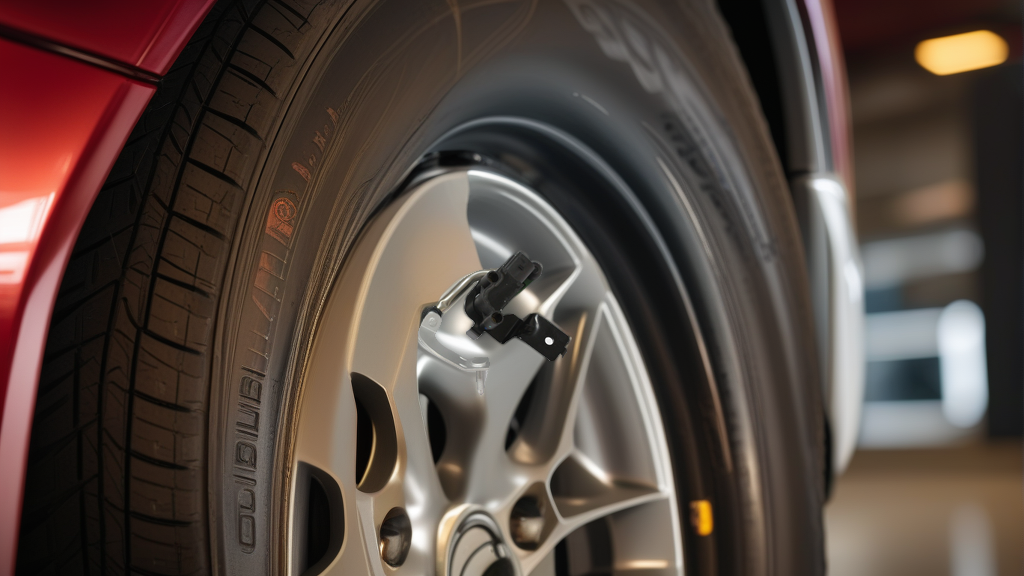
The 2012 Audi A6 Allroad rolled into the shop on a Tuesday with a dashboard lit up like a Christmas tree. The owner, a repeat customer, was frustrated. The air suspension warning had been intermittent for weeks, but now the car was sitting lopsided in the parking lot—driver’s side rear visibly sagging. The headline complaint wasn’t the ride quality, though. It was the constant, dinging warning chime every time she hit a pothole on the highway.
Most independent shops immediately suspect the air strut or the compressor. It’s the usual suspect on any Allroad with over 60,000 miles. But a quick visual inspection showed no leaks, and the compressor cycled normally. The real culprit was hiding behind the rear wheel liner, covered in road grime and corrosion: the ride height sensor.
The Diagnostic Trap
The customer’s initial quote from the dealership was over $1,200 for a new sensor plus reprogramming. That’s a hard pill to swallow for a sensor that is essentially a plastic potentiometer measuring suspension travel. The failure mode here is classic Audi: water ingress through the wiring harness connector, causing corrosion on the pins. This creates erratic resistance values, which the air suspension control module interprets as a catastrophic ride height variation.
We scanned the car and pulled code 01577—Terminal 30, Open Circuit, but with a sporadic status. The live data showed the rear left sensor reading -45mm while the other three corners sat at 0mm. The suspension was trying to level itself, but the sensor was sending garbage data, forcing the compressor to run overtime until it hit thermal cutoff. That’s why the car sagged after sitting overnight—the system gave up and vented pressure to protect the compressor.
The fix wasn’t a new air spring. It was replacing the faulty sensor with the OS-HSA024 | OSRAM Ride Height Sensor (OE# 3C0412522B). This is a direct swap, no coding required on most 2008-2016 C6/C7 platforms, and it resolves the physical wear issue.
Why the OS-HSA024 Holds Up
The OEM unit on this car was a Bosch unit that had a known weakness in its sealing boot. Once that rubber boot tears, water and salt spray do the rest. The OSRAM replacement (SKU: OS-HSA024) addresses this with a more robust housing and a sealed connector interface. It is built to the same dimensional tolerances as the factory part, which is critical because the sensor arm must align perfectly with the upper control arm link.
Installation took roughly 40 minutes. The hardest part is accessing the bracket bolts if the car is not lifted high enough. We used a two-post lift, but it’s doable on ramps if you have a flexible ratchet extension. The sensor bolts are Torx T30, and the link arm clip can be stubborn. A flathead screwdriver to pry the retaining clip off is essential. Do not pull the arm by the plastic rod—you will snap it. That is a $60 mistake if you buy the cheap aftermarket link; the OSRAM kit includes the sensor only, so reuse the existing link if it’s not worn.
Key Specs: OS-HSA024
- Brand: OSRAM
- OE Reference: 3C0412522B
- Type: Hall-effect ride height sensor (non-contact)
- Voltage Range: 4.5V – 5.5V reference
- Output Signal: 0.5V – 4.5V linear
- Fitment: Audi A6 (C6/C7), A6 Allroad, A7 (with air suspension)
- Mounting: Direct bolt-on, plug-and-play
The Before and After Reality
Before the swap, the car had a 2-inch rake from left to right. The ride was jittery over bumps because the damping was stuck in “firm” mode—the system’s default when it loses confidence in the ride height data. After the replacement, the car immediately leveled out on startup. The compressor ran for about 30 seconds to re-pressurize the struts, then shut off.
The customer took it for a test drive and reported the dash warning cleared itself within 200 yards. No VAG-COM reset was needed. The only adaptation required is to calibrate the “normal” ride height if you have a newer module, but on this 2012 model, the module accepted the new sensor’s baseline automatically.
The difference in ride comfort was night and day. The harsh topping-out sensation over speed bumps was gone. That’s because the sensor is not just for leveling—it inputs data to the CDC (Continuous Damping Control) shocks. With accurate ride height, the dampers now adjust in real-time, allowing the car to absorb impacts instead of transmitting them directly into the chassis.
Pro Tip: Before you condemn the compressor, always check the live data from all four sensors. If one sensor reads a static value while the others fluctuate, it’s the sensor, not the pump. Replacing a pump on a clogged system is a common misdiagnosis that costs customers $800 in parts alone.
Market Context and Buyer Takeaway
The demand for these sensors is growing because the C7 platform is now entering the “budget enthusiast” phase—cars are cheap to buy, but maintenance costs are still premium. Dealership sensors run $250-$400 retail, and used units are a lottery ticket because the internal Hall effect chip is often the damaged component, not just the arm.
The OSRAM unit offers a middle path—new manufacturing, warranty coverage, and a price point that sits comfortably below the dealer but above the no-name Chinese knock-offs that fail within 6 months. For a part that lives in the wheel well, exposed to every splash of brine and gravel, paying a little extra for a brand like OSRAM is justified. They have been in the OE lighting and sensor business for decades; they understand automotive environmental testing.
If you are a shop owner, stock these. The failure is predictable on high-mileage Audis with air suspension, and the profit margin on the part plus 0.8 hours of labor is solid. For the DIY owner, this is a manageable weekend job. Just be careful not to overtighten the mounting bolts—they go into the subframe, and stripping those threads turns a simple job into a drill-and-helicoil nightmare.
For this customer, the total bill was under $400, including the sensor and labor. She got her Allroad back with a level stance and no warning lights. The car now rides better than it has in months, proving that sometimes the smallest, cheapest part is the one that makes the biggest difference.
Recommendation: If you are sourcing this part for your shop or personal Audi, the OS-HSA024 is the reliable choice. It fits the bill for anyone tired of chasing intermittent suspension faults without breaking the bank on OEM pricing.

Recommended Part: OS-HSA024 – OE-grade replacement, in stock now.