
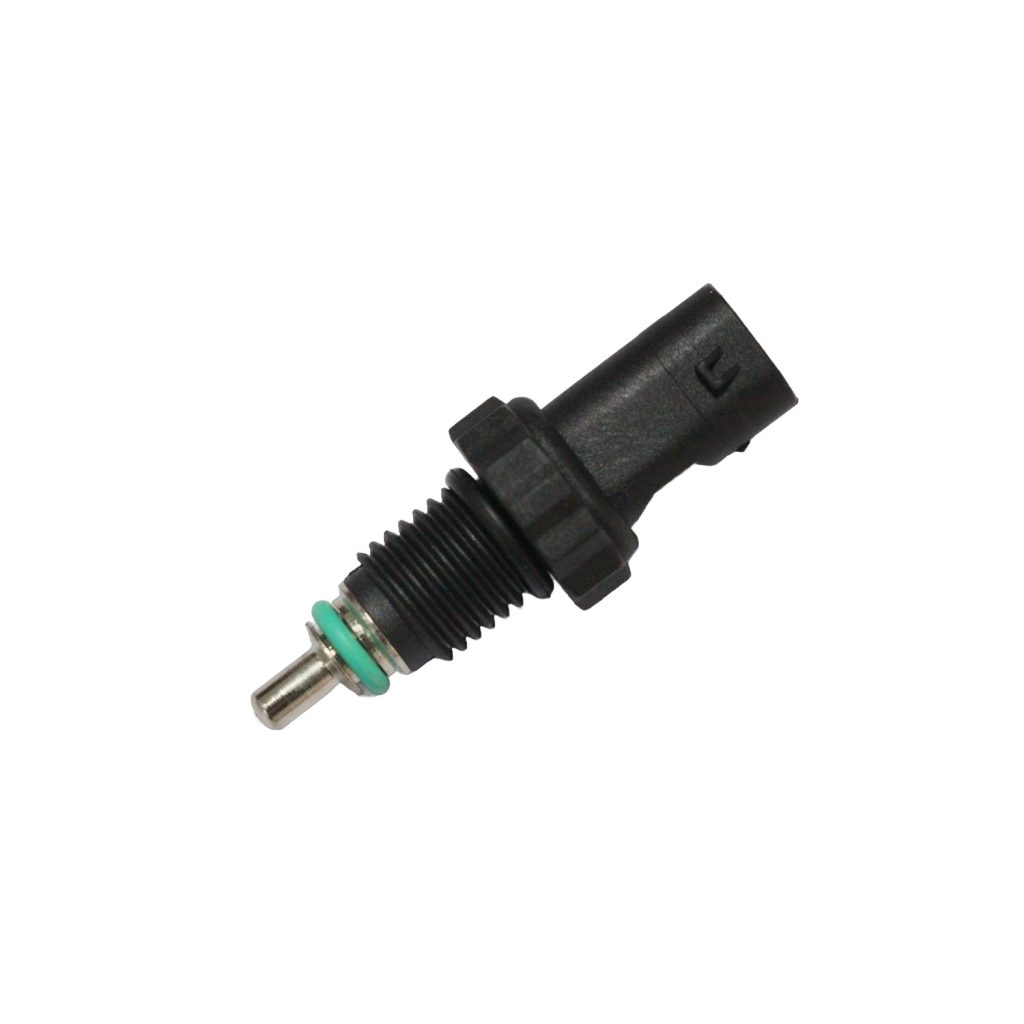
Audi’s 3.0 TDI and 3.0 TFSI engines have earned a reputation for longevity, but the cooling system remains the weak point. Specifically, the coolant temperature sensor mounted near the thermostat housing tends to fail between 60,000 and 90,000 miles, often throwing a P0116 code. Replacements from the dealer run $80 to $120, but the aftermarket has stepped up with options like the OSRAM OS-WTA011, which sells for a fraction of that. The catch? You need to understand what the specs actually mean before you install it.
Key Specs: OS-WTA011 (OSRAM)
| Specification | Value | What It Means in Practice |
|---|---|---|
| Electrical Connector | 4-pin, rectangular (Audi-specific) | Direct plug-and-play for 2008–2016 Audi A4, A5, A6, Q5, Q7 with 3.0L engines. No wiring harness modification needed. |
| Voltage Range | 5V DC (sensor supply) | The sensor outputs a varying analog signal between 0.5V (cold) and 4.5V (hot). The ECM reads this to adjust fueling and cooling fan activation. A sensor that drifts outside this range triggers fault codes. |
| Temperature Range | -40°C to +150°C | Covers Arctic cold starts to post-shutdown heat soak. Exceeding this range permanently damages the internal NTC thermistor. |
| Response Time | < 5 seconds (ΔT 50°C) | How quickly the sensor reports a 50°C change. Slower than this means the ECM sees “laggy” data, causing delayed fan engagement and potential overheating. |
| IP Rating | IP67 (sealed connector) | The connector and housing are dust-tight and withstand submersion up to 1 meter for 30 minutes. Coolant spray, road salt, and pressure washing won’t ingress. |
Reading the Specs Like a Technician
The IP67 rating is the one you should care about most. OEM Audi sensors are IP65, which means they resist jets of water but aren’t fully sealed. The OSRAM unit’s IP67 rating addresses the most common failure mode: coolant wicking up the connector pins and corroding the terminals. If you’ve seen green crust on the connector, you know exactly what this means.
The 5V voltage range is standard for Audi’s ECM, but here’s the nuance: the OS-WTA011 uses a dual-output design that mirrors the OE sensor’s two separate internal circuits. One circuit feeds the ECM, the other feeds the instrument cluster. This is why you can’t just install a generic two-wire GM-style sensor — the Audi ECM will reject it. The 4-pin connector isn’t just about power and ground; it carries two independent signal lines.
Response time matters more than most DIYers think. A slow sensor doesn’t just cause a code — it causes the electric cooling fan to cycle erratically, which puts extra wear on the fan controller and water pump. The OS-WTA011’s sub-5-second response matches the OE spec, so you won’t introduce new problems.
Common Mistakes
Don’t rely on resistance checks alone. A NTC thermistor can test within spec at room temperature but drift wildly at operating temperature. If you’re diagnosing a P0116, test the sensor’s output voltage while heating it with a heat gun. It should ramp smoothly from 3.5V down to 0.8V as temperature rises. Any sudden jumps mean the thermistor is cracked internally.
Also, never mix sealants. The OS-WTA011 ships with a pre-applied O-ring seal. Adding thread sealant or Teflon tape can deform the seal and cause a slow coolant weep — which you won’t notice until the sensor fails a month later.
Fitment Notes
The OS-WTA011 covers three applications per the catalog, but the physical design is identical across the 3.0 TDI (CRCA, CREC) and 3.0 TFSI (CAKA, CGEA) engine families. If you’re working on a 2008–2016 Audi with the supercharged 3.0, this is your sensor. The only vehicles that don’t apply are the 2.0T models, which use a different two-pin configuration.
Bottom Line
For shops that work on late-model Audis, stocking the OSRAM OS-WTA011 makes sense. It beats the dealer price, and the IP67 connector eliminates the most common repeat-failure cause. For home DIYers, the specs tell you it’s a direct swap — no adapters, no coding, no VCDS tweaks. The OS-WTA011 is the one spec sheet you don’t have to read twice.

Recommended Part: OS-WTA011 – OE-grade replacement, in stock now.