
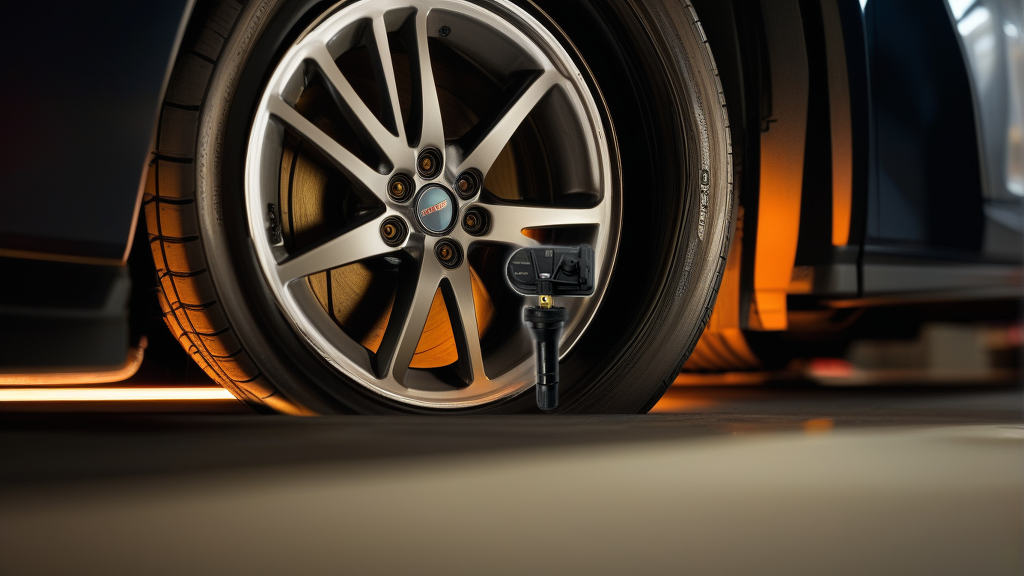
There’s a moment every STAR owner knows too well. You swap in a fresh set of wheels, or the dash lights up with that amber tire pressure warning at 6 AM on a Monday. You check the pressures — all fine. But the light stays on, blinking like it’s mocking you. That’s not a leak. That’s a TPMS sensor that needs to be relearned to the vehicle’s ECU. And if you’ve been fighting with a 2019 STAR model or anything in the last decade, you know the relearn procedure isn’t always as straightforward as the owner’s manual suggests.
The good news? STAR’s TPMS system is actually one of the more flexible platforms out there. You have three paths to get the job done: the automatic relearn, the OBD method, and the stationary (magnet) procedure. Each has its place, depending on your tools and the specific STAR model year on the lift.
Here’s the breakdown, step by step, with the tools you’ll need and the shortcuts that save real time in the bay.
The Automatic Relearn: When You Have the Right Sensor Already
STAR’s automatic relearn (sometimes called “auto-locate”) is designed for when you’re installing brand-new sensors that are already programmed with the correct IDs — or when you’re rotating tires and the existing sensors just need to be re-indexed to their new positions.
What you need: Nothing but the vehicle and a working TPMS tool (or a paperclip if you’re doing the manual trigger method, though that’s painfully slow).
The procedure:
- Park the vehicle on a flat surface, set the parking brake, and ensure all tires are at the correct cold pressure (typically 33–35 PSI for STAR models, but check the door jamb sticker).
- Turn the ignition to the ON position (do not start the engine). The TPMS light should blink for a few seconds, then go solid — that indicates the system is in relearn mode.
- Starting with the left front tire, release air from the valve stem for about 8–10 seconds, or until the horn chirps once. That confirms the sensor has been registered to that position.
- Move to the right front, then right rear, then left rear — repeating the air release and waiting for the chirp each time.
- When the last tire is done, the horn will chirp twice, and the TPMS light will go out. Inflate all tires back to spec immediately.
Pro tip: Some STAR models don’t use the air-release method. On certain 2021+ models, you’ll need to hold the TPMS reset button (located under the dash or in the glovebox) until the light blinks three times, then drive the vehicle above 15 mph for 10 minutes. The system auto-locates the sensors as you drive.
OBD Relearn: The Fastest Route for Shops
If you’re a shop owner or a serious DIYer, the OBD relearn is the way to go. It’s faster, cleaner, and doesn’t require deflating tires — which means less re-inflation time and zero risk of seating issues on low-profile tires.
What you need: An OBD TPMS diagnostic tool (like the Autel TS508, Bartec TPMS, or a STAR-specific scan tool with TPMS function). If you’re using a universal sensor like the BH-Sens 433MHz unit, the tool will handle both programming and relearn.
The procedure:
- Plug the OBD tool into the diagnostic port (usually under the driver’s side dash).
- Turn the ignition ON, and follow the tool’s menu to select “TPMS Relearn” → “OBD Relearn.”
- The tool will communicate with the ECU and prompt you to scan each tire sensor with the RF trigger function. Wave the tool near the valve stem of each tire in the order shown on the screen (typically LF, RF, RR, LR).
- Once all four sensors are read, the tool sends the new IDs to the ECU. The tool will confirm with a “Relearn Successful” message, and the TPMS light on the dash will go out.
Why this method wins: It takes under two minutes. No tire deflation, no horn chirps, no driving around the block. This is also the only method that works if you’re installing sensors that weren’t pre-programmed with STAR-compatible IDs — the tool writes the IDs directly.
Stationary Relearn: The Old-School Magnet Trick
Before OBD tools were affordable, this was the only way. It still works, and it’s your fallback if your OBD tool is dead or you’re working on an older STAR model (pre-2016) that doesn’t support OBD relearn.
What you need: A strong neodymium magnet (or the factory STAR TPMS magnet tool, part number 10-014 — which is just a donut-shaped magnet on a stick).
The procedure:
- Set the ignition to ON and put the vehicle in relearn mode (same process as the automatic method — the light will blink).
- Place the magnet over the valve stem of the left front tire. The horn will chirp within 5 seconds.
- Repeat for right front, right rear, and left rear.
- After the last chirp, the horn chirps twice and the light goes out.
This method is straightforward but requires the magnet to be positioned dead-center over the valve stem. If the horn doesn’t chirp, adjust the angle or try a stronger magnet. Cheap fridge magnets won’t cut it — you need something rated at least 10 lbs of pull force.
Common Mistakes That Waste Time
Mistake #1: Not resetting the system before attempting a relearn. If the TPMS light is solid (not blinking), the system isn’t in relearn mode. You must force it into relearn first.
Mistake #2: Using the wrong frequency sensor. STAR vehicles use 433MHz sensors. If you install a 315MHz sensor, it won’t communicate — no relearn method will fix that. Always verify the sensor frequency before installation.
Mistake #3: Skipping the sensor ID check on OBD relearn. If the tool reads “No Response” from a sensor, that sensor is dead or incompatible. Don’t try to force the relearn — investigate before you waste 30 minutes.
The Sensor That Makes Relearn Easier
The single biggest factor in whether a relearn goes smoothly is the sensor itself. Cheap, clone-style sensors often have weak RF output or inconsistent timing, which means the OBD tool has to “hunt” for the signal — or worse, the relearn fails entirely.
That’s why the BH-Sens BL-ST-066 433MHz TPMS sensor is worth the investment. It’s a Baolong Technology unit — the same OEM supplier for many Asian and European brands — and it’s pre-programmed, which means it arrives ready to install. For STAR vehicles, it’s a direct fit, and the RF output is strong and consistent, so the OBD relearn picks it up in one pass.
The BL-ST-066 covers 53 vehicle applications across Fengon, Ineos, Infiniti, Mitsubishi, Nammi, and more — all with a 433MHz signal. That makes it a solid stock item for shops that see a mix of Asian brands, not just STAR.
Bottom Line
Whichever relearn method you choose, the key is preparation. Confirm the sensor frequency, make sure the vehicle is in relearn mode before you touch anything, and use a sensor with proven RF reliability. If you’re doing this professionally, invest in an OBD tool — the time savings pay for it in a week. If you’re a home mechanic, the magnet method still works fine on STAR models, just be patient.
And when you’re ready to replace those sensors, the BL-ST-066 from LongweiParts is a proven, affordable option that takes the guesswork out of the relearn process. It’s the kind of part that lets you finish the job, clear the light, and move on to the next ticket.

Recommended Part: BL-ST-066 – OE-grade replacement, in stock now.