
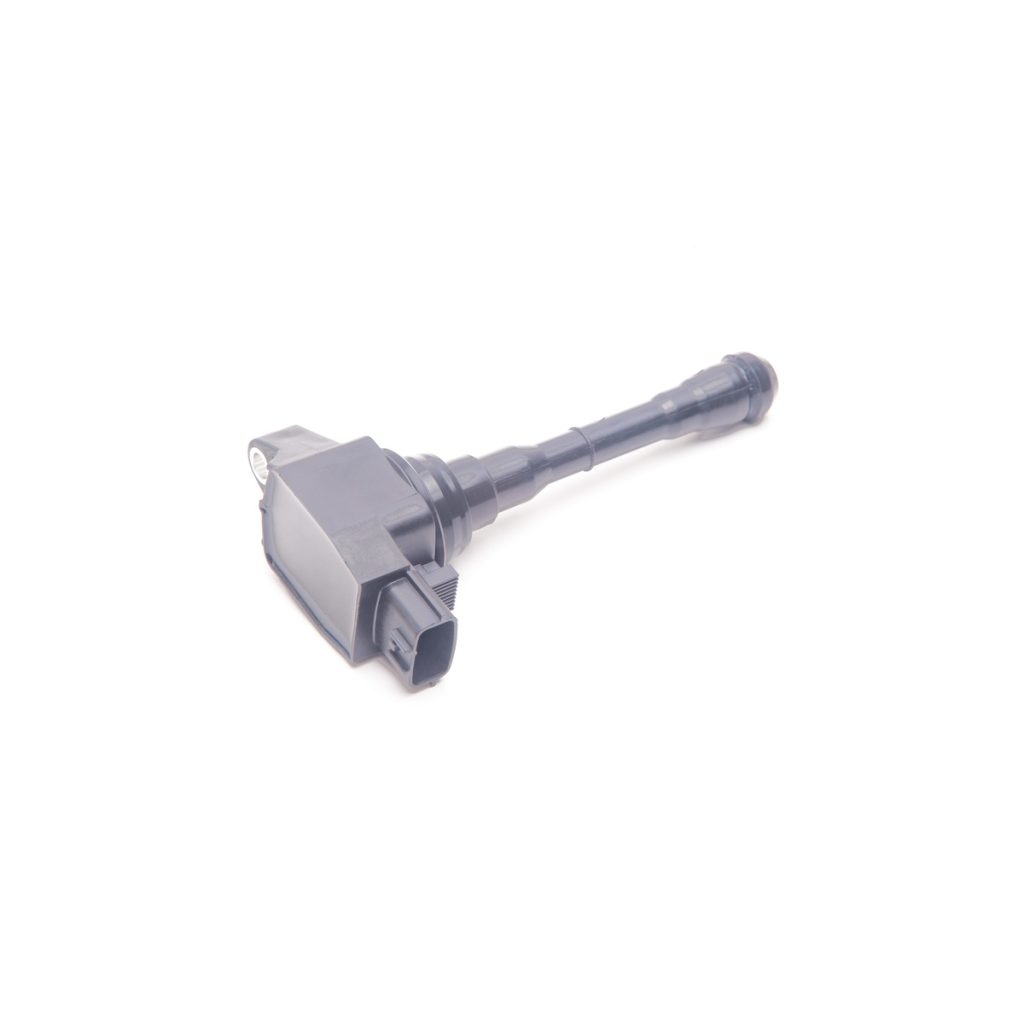
Nissan’s coil-on-plug (COP) design has been a workhorse across the QR25, VQ35, and MR20 engine families for nearly two decades. But here’s the thing—COP systems age differently depending on how the vehicle is driven. A 2015 Altima used for highway commutes will go 100,000 miles on its original coils without complaint. The same engine in a Frontier that tows, idles in traffic, and gets regular heat soak will start throwing P0301 misfires at 60,000. The failure isn’t always the coil itself—it’s the degradation of spark energy over time.
What Coil-on-Plug Technology Actually Does
COP eliminates the distributor and spark plug wires by mounting each ignition coil directly atop the spark plug. This shortens the electrical path, reducing resistance and electromagnetic interference. For Nissan’s variable-valve timing systems, this matters. The ECU relies on precise ignition timing, and weak coils create late or incomplete combustion that the knock sensor reads as detonation. The result? The ECU pulls timing, fuel economy drops 2-3 MPG, and you get that sluggish throttle response owners often mistake for a dirty MAF sensor.
When OEM Coils Reach Their Limit
Nissan’s factory coils are adequate, not exceptional. They’re engineered to meet emissions and fuel economy targets at a cost point. The windings use thinner copper wire, and the potting compound (the epoxy protecting the internal transformer) tends to crack under thermal cycling—especially on turbocharged applications like the QR25DER in the Juke or the VR30DDTT in the Infiniti Q50. Once moisture gets past that cracked compound, you get arcing, oxidation, and intermittent misfires that set a P0300 random misfire code. That’s the failure mode that forces premature replacement.
The Performance Coil Difference
Aftermarket performance coils, like the OS1213 from OSRAM, use denser primary windings and a higher turns ratio in the secondary. That translates to a hotter, longer-duration spark at the plug gap. For a Nissan running E85, increased boost, or even a mild tune, this means more complete combustion. You’ll see it in the data: lower knock counts, smoother idle, and throttle response that feels sharper at part throttle. But here’s the counterintuitive part—a more efficient burn also improves fuel economy. The engine doesn’t need to inject extra fuel to compensate for misfires. On a healthy VQ35DE, I’ve seen highway fuel economy improve by 1.5 MPG just from replacing aging factory coils with quality aftermarket units.
| Feature | OEM Nissan Coil | OS1213 Performance Coil |
|---|---|---|
| Primary winding | Copper, standard gauge | Denser copper, lower resistance |
| Secondary turns | Standard ratio | Higher ratio, higher output voltage |
| Potting compound | Standard epoxy | High-temp thermoset, crack-resistant |
| Heat range tolerance | Up to 220°F | Rated for 300°F continuous |
| Typical lifespan | 60-80k miles | 100k+ miles under normal use |
Key Specs — OS1213 OSRAM Ignition Coil
- OE Reference: 224481KC0A
- Fitment: Nissan models with QR25DE, VQ35DE, and MR20DE engines
- Output: Multi-spark capable, 30kV+ peak
- Connector: Direct OEM-style plug, no wiring modification needed
- Build: Epoxy-sealed, vibration-resistant housing
The Real-World Takeaway
If you’re chasing peak horsepower, the ignition coil isn’t your bottleneck—the fuel pump and injectors are. But if you’re dealing with a Nissan that’s past 70,000 miles, has any history of misfire codes, or you just want cleaner daily drivability, replacing factory coils with a performance-grade unit is one of the highest-impact reliability upgrades you can make. It’s a 20-minute job on most Nissan engines, requires no tuning changes, and eliminates the most common ignition-related check engine light triggers. For the cost of a single dealer diagnostic session, you can replace all four coils on a four-cylinder and reset the clock on your ignition system.
The OS1213 from OSRAM is a direct-fit replacement that matches Nissan’s electrical connectors and bolt patterns exactly—no harness adapters, no trimming, no surprises. Pair it with fresh NGK iridium plugs and you’ve got a ignition system that outperforms anything Nissan shipped from the factory. If your Nissan is throwing codes, running rough, or just doesn’t feel as sharp as it used to, start here. It’s the cheapest 20 minutes of improvement you’ll spend on the car this year.

Recommended Part: OS1213 – OE-grade replacement, in stock now.