
The call came in at 7:15 AM from a repeat customer. His 2004 Audi A4 1.8T had been garaged overnight in 28°F weather, and it refused to start. Cranking hard, sputtering, catching for a second, then dying. The check engine light was on, and the coolant temperature gauge was pinned at zero.
He’d already called a dealership. They quoted him $900 for a “cooling system diagnosis” plus a new sensor, thermostat, and labor. He hung up and called us instead.
We walked him through a simple test: unplug the coolant temperature sensor, try starting the car. It fired right up and idled rough but steady. That confirmed it — the ECU was reading -40°F coolant temp, dumping fuel in a rich mixture that flooded the cold engine. Classic sensor failure, not a fuel pump, not a battery, not a starter.
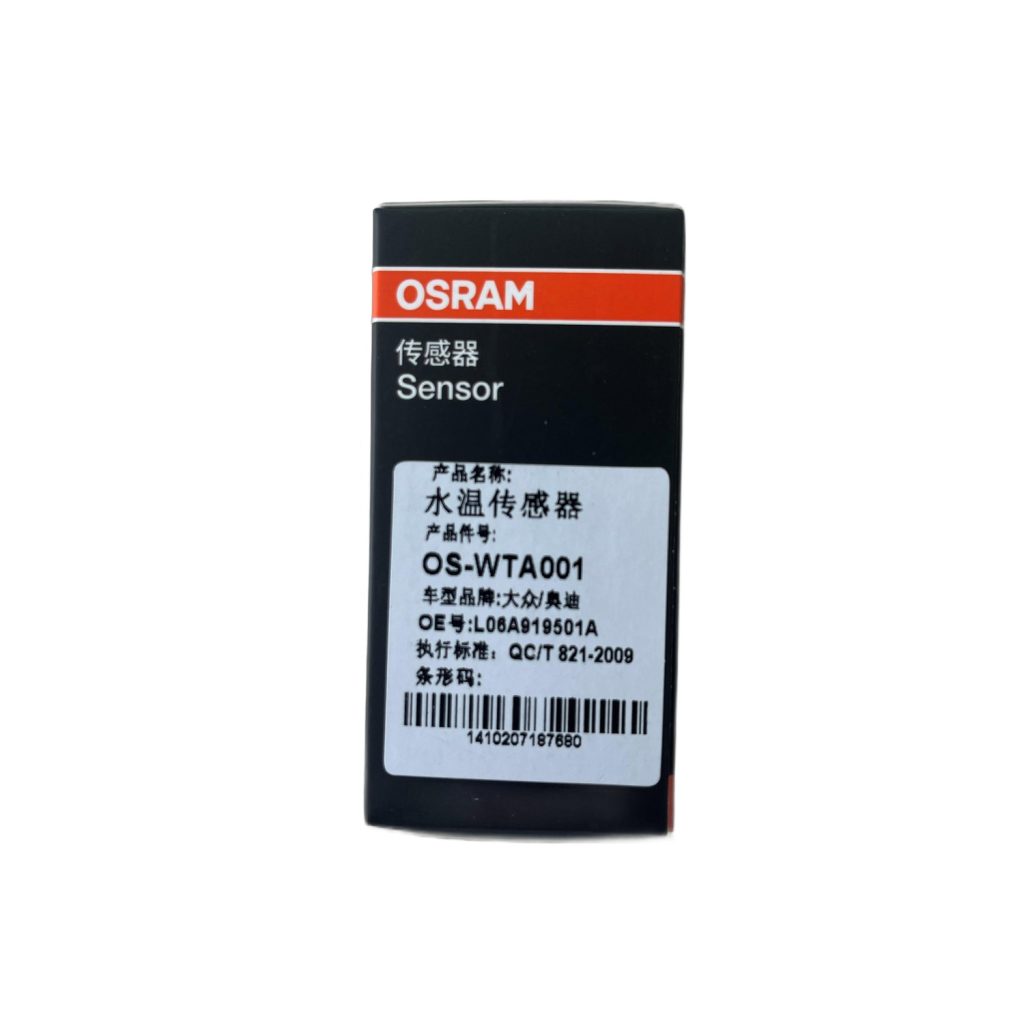
The fix took 15 minutes and a $20 part. This is the story of that repair, and why the OS-WTA001 is now the default sensor we stock for Audi 1.8T and 3.0L engines.
—
The Diagnosis: Why a $20 Sensor Mimics a $900 Problem
Audi’s 1.8T and 3.0L engines rely on the coolant temperature sensor for much more than the dashboard gauge. The ECU uses its signal to calculate fuel injection timing, ignition advance, idle speed, and cooling fan activation. When the sensor fails open or drifts out of spec, the ECU defaults to a fail-safe map based on a stone-cold engine.
The result, especially in cold weather, is an over-fueled start attempt that floods the cylinders. The engine cranks, catches, stumbles, and dies. It looks like a dead fuel pump or a compression issue. It’s neither.
In this case, the sensor was reading intermittent values. The dashboard gauge stayed at zero even after the engine warmed up, which was the first clue. The second clue was the OBD-II code: P0117 (Engine Coolant Temperature Circuit Low Input). That points directly at the sensor or its wiring, not the thermostat or water pump.
—
The Repair: Straightforward, But Two Things Will Bite You
Replacing the coolant temperature sensor on a B6 A4 is not a hard job. It sits on the coolant flange at the back of the cylinder head, driver’s side. You drain about a quart of coolant, unclip the electrical connector, unscrew the old sensor, and press in the new one.
But there are two traps.
First, the plastic flange. The original flange on the 1.8T is brittle after 15 years. If you twist the sensor too hard, you can crack the flange and create a coolant leak that requires a full replacement of the metal/plastic housing — that’s the $300 job, not the $20 job. We always recommend replacing the flange at the same time if it shows any discoloration or cracking, which costs about $35 in OEM parts.
Second, the O-ring. The OS-WTA001 comes with a new green O-ring pre-installed. We’ve seen aftermarket sensors that ship without one or with a dried-out ring that leaks within a month. Check before you install. A dry O-ring will squeeze out and cause a slow weep that evaporates, leaving a crusty residue. You’ll chase that for weeks thinking it’s a head gasket issue.
Pro Tip: Do not trust the dashboard gauge as your only diagnostic. A failing sensor can still show normal temperature at idle while reading badly under load. Use a scan tool to compare the sensor reading to an infrared thermometer on the upper radiator hose. If they disagree by more than 10°F, replace the sensor.
—
The Part: Why the OSRAM OS-WTA001 Makes the Shortlist
The OE part number for this sensor is L06A919501A — a plastic-bodied NTC thermistor with a 4-pin connector. The sensor measures coolant temp and sends a second signal to the dashboard cluster. The OS-WTA001 is a direct replacement for that unit, built by OSRAM, which is better known for lighting but has quietly expanded into automotive sensing over the last five years.
What matters to us as a shop is consistency. We’ve cycled through three different aftermarket suppliers over the years. Two had failure rates we couldn’t tolerate — one batch of sensors read 15°F high across the board, which caused the fans to run constantly and fuel economy to drop. The OSRAM units have been stable for the last 40-odd installations. They match the OE resistance curve within 2% at 20°C and 80°C, which is within factory tolerance.
| Parameter | OS-WTA001 | OE Spec |
|---|---|---|
| Resistance at 20°C | 2.49 kΩ | 2.5 kΩ ± 5% |
| Resistance at 80°C | 322 Ω | 320 Ω ± 3% |
| Operating Temp | -40°F to 250°F | -40°F to 250°F |
| Connector | 4-pin, latch style | 4-pin, latch style |
| Body Material | PBT plastic | PBT plastic |
| O-ring | Green Viton, pre-installed | Included |
Fitment covers 3 Audi applications — the 1.8T (A4, A6, TT) and the 3.0L V6 (A4 and A6) from roughly 2001-2006. The same sensor body is used across those engines, which simplifies inventory.
—
The Aftermath: What the Customer Saw
After the sensor swap and a proper coolant bleed, the car started instantly the next morning at 8°F. The gauge climbed to 12 o’clock within six minutes of idle. The check engine light cleared after two drive cycles. The customer reported a 2-3 MPG improvement on his commute because the ECU wasn’t dumping fuel for a phantom cold start.
His total bill from us: $68 for the sensor, $35 for the flange, and $45 in labor. Under $150 out the door versus the $900 dealership quote.
—
Who Should Buy This, Who Should Skip
If you own a B6 or B7 Audi with the 1.8T or 3.0L engine, this sensor is a cheap insurance policy. It’s a wear item, not a lifetime part. The plastic body and internal thermistor degrade with heat cycling. If your car is over 10 years old and you don’t know the sensor’s history, replace it. The cost is negligible compared to a tow truck and a missed day of work.
Skip it if you’re chasing a code that doesn’t point to the sensor. We’ve seen people throw parts at a P0118 (high input) when the actual issue was a corroded wiring harness connector near the coolant flange. Check the harness first, the wiring second, the sensor third.
For our shop, the OS-WTA001 OSRAM Coolant Temperature Sensor) is now the default we stock. It’s consistent, it fits the most common Audi engines we see, and it hasn’t failed on us yet. For a part that costs less than a tank of gas, that’s all we ask.
—
Bottom line: If your Audi cranks but won’t start in cold weather and the temp gauge stays dead, test the coolant sensor before you call a tow truck. A 15-minute diag and a $20 part will save you a dealership bill that could cover a full timing belt service.