
There’s a peculiar moment every Bentley specialist recognizes: the dash lights up with a low tire pressure warning that won’t clear after inflation. The customer insists the tires are fine. They are. The real problem is a TPMS sensor that’s been broadcasting its last few thousand pulses before going silent. On the FLYING SPUR, that moment usually arrives between the 50,000 and 70,000-mile mark — right when the factory battery inside the sensor hits its expected lifespan.
The fix isn’t complicated. But the parts markup at a dealership can run $400 per corner, and that’s before labor. The aftermarket alternative — specifically the BH-Sens RDE022V21 — has changed the economics of this repair. Here’s what the job actually involves, what tools you need, and where technicians still screw it up.
The Diagnosis: Don’t Blame the Valve Stem
Before you pull a wheel, understand what you’re dealing with. The FLYING SPUR uses a 315MHz direct TPMS system. Each sensor bolts to the valve stem inside the rim and transmits pressure and temperature data to the car’s receiver module. When one fails, the dash displays a specific warning — usually “Tire Pressure Monitor Fault” rather than a low-pressure reading.
A quick check with a TPMS trigger tool will confirm which corner is dead. If the sensor doesn’t respond to the trigger, it’s not a programming issue. The battery is likely depleted, and the sensor is a sealed unit. There’s no battery replacement path. You swap the whole sensor.
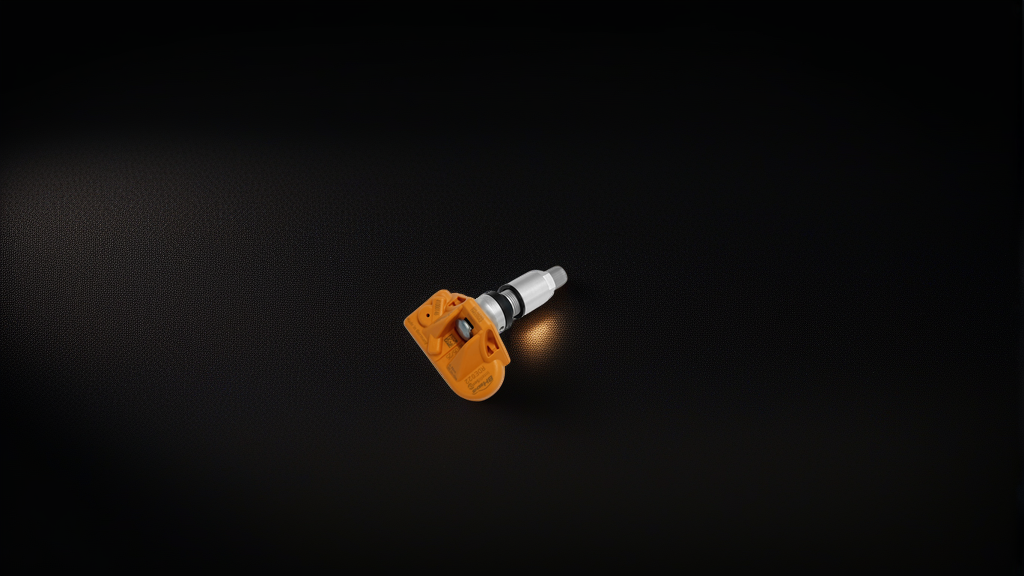
That’s where the RDE022V21 comes in. It’s a pre-programmed, clamp-in unit from BH-Sens (Baolong Technology), the same OEM supplier that builds sensors for many European brands. At 315MHz, it matches the FLYING SPUR’s factory frequency exactly. The OE cross-reference covers part numbers 249363, 290569, and 4F0907275A — so fitment for the Flying Spur is direct.
Tools and Torque Specs
This job doesn’t require a master technician’s toolbox. Here’s the complete list:
- Floor jack and jack stands
- Tire removal machine (or a manual tire spoon set if you’re experienced)
- 11mm socket for the sensor retaining nut
- Torque wrench (inch-pound range for the sensor, ft-lb for the lug nuts)
- TPMS trigger tool or a compatible scan tool
- New rubber valve stem grommet (comes with the sensor)
- Tire bead lubricant
The critical torque spec: the sensor retaining nut should be tightened to 35 in-lb (4 Nm) . Do not guess this. Over-torquing cracks the sensor housing. Under-torquing lets the sensor rotate inside the rim, which can tear the rubber grommet and cause a slow leak.
For the FLYING SPUR’s lug nuts, the spec is 130 ft-lb (176 Nm). Always re-torque after 50 miles of driving.
Step-by-Step Replacement
- Remove the wheel — loosen the lugs while the car is on the ground, then jack it up and remove the wheel completely.
- Deflate the tire — release all air pressure before breaking the bead.
- Break the bead — use a tire machine or manual spoons. Work the bead loose on the side opposite the valve stem first, then the valve stem side.
- Remove the old sensor — the retaining nut is 11mm. Hold the sensor body from inside the tire and back the nut off. Pull the sensor through the valve stem hole. The old grommet will likely be brittle — discard it.
- Install the new sensor — BH-Sens sensors come with a fresh grommet pre-fitted. Insert the sensor from inside the tire, push the valve stem through the hole, and thread the new retaining nut on. Tighten to 35 in-lb.
- Mount and inflate — lubricate the bead, seat the tire, and inflate to the FLYING SPUR’s recommended pressure (typically 38-42 psi front, 36-40 rear, depending on load — check the door placard).
- Reinstall the wheel — torque lugs to 130 ft-lb.
- Program and verify — since the RDE022V21 is pre-programmed with the appropriate frequency and protocol, the FLYING SPUR’s receiver should automatically recognize it after a short drive. Use your TPMS tool to confirm all four sensors report correctly.
Common Mistakes: The #1 error technicians make is cross-threading the retaining nut. The aluminum housing is softer than the steel nut, and once cross-threaded, the sensor is ruined. The #2 mistake is skipping the torque wrench entirely. The #3 mistake is failing to check for corrosion in the valve stem hole — if there’s aluminum oxidation, clean it before installing the new sensor, or you’ll get an intermittent leak.
The Pre-Programmed Advantage
Here’s what sets the BH-Sens unit apart from generic aftermarket sensors. Many TPMS sensors require cloning or programming with a dedicated tool before they’ll communicate with the vehicle. The RDE022V21 arrives pre-programmed for the Bentley protocol. You install it, and it begins transmitting immediately. For a shop, that’s 10 minutes of diagnostic time saved per wheel. For a DIY owner, that’s the difference between completing the job in an afternoon versus renting a programming tool and learning a new software interface.
The 315MHz frequency also matters. Some aftermarket sensors try to cover multiple frequencies with a switchable design. That’s an extra failure point. This unit is built for one frequency, one protocol, and it does that job reliably.
Market Outlook
The TPMS aftermarket is consolidating around a few quality manufacturers, and Baolong Technology is one of them. They’re a major OEM supplier, which means their sensors come off similar production lines as the factory units. For the FLYING SPUR owner looking to avoid dealership pricing, this is the sensible middle path — OEM-equivalent quality without the Bentley-branded markup.
Final Recommendation
If you’re doing a full four-corner replacement, budget about an hour of labor if you have a tire machine, or two hours with manual tools. The parts cost for four RDE022V21 sensors is a fraction of what a single dealer-sourced unit runs. For shops, stock a few of these — the FLYING SPUR isn’t the only vehicle they fit. Aston Martin, Audi, BMW, and Ferrari all use compatible 315MHz systems, which makes this one SKU cover a lot of high-end European traffic. That’s inventory efficiency worth having.

