
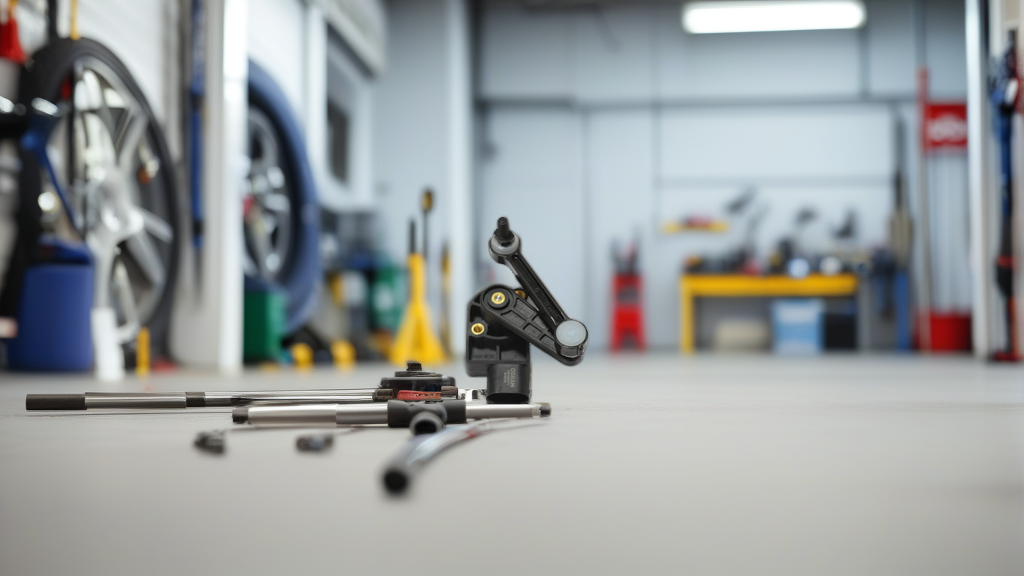
Audi’s adaptive air suspension systems are engineering marvels—until they aren’t. When a ride height sensor fails, the entire chassis control network gets confused. The dashboard lights up like a Christmas tree, the suspension drops to an awkward stance, and headlight aim goes haywire. What many owners don’t realize is that this small, unassuming sensor is doing far more than measuring ride height. It’s feeding data into a network that affects traction control, braking stability, and even transmission shift points.
The Physics Behind the Measurement
Ride height sensors on Audi models—particularly the Q7 and Touareg platforms—operate on a simple but elegant principle: variable resistance. The sensor connects to the suspension control arm via a link rod. As the suspension compresses or extends, the sensor’s internal shaft rotates. That rotation moves a wiper across a resistive track, changing the electrical resistance value sent to the ABS control module.
The module reads this as a voltage signal—typically 0.5V at full compression to 4.5V at full extension. The control module then interprets that voltage to calculate the vehicle’s ride height within roughly 2-3 millimeters of accuracy. It’s a linear relationship, but temperature can affect resistance values slightly, which is why Audi’s calibration routine includes a “zero point” adjustment after installation.
Why a Failed Sensor Feels Catastrophic
Here’s where it gets interesting from a diagnostic perspective. When a ride height sensor fails, the signal often doesn’t just drop to zero. On the OS-HSA011, which fits Audi models with OE part number 7L0616571D, the typical failure mode is an intermittent signal that causes the suspension to randomly adjust while driving. At highway speeds, the system may suddenly lower the vehicle to its sport setting, or worse, try to raise it to off-road height—creating a dangerously unstable situation at speed.
The sensor also communicates with the headlight leveling system. Audi’s adaptive xenon and LED headlights use the same ride height data to keep the beam pattern properly aimed. When the sensor fails, the headlights can point too high, blinding oncoming traffic, or too low, reducing visibility to dangerous levels. This is why a failed sensor often triggers both the suspension warning and the headlight warning simultaneously.
Signal Types and Data Flow
The OS-HSA011 uses a two-wire Hall effect sensor design, which is fundamentally different from older potentiometer-based units. Hall effect sensors use a magnetic field to detect rotation rather than physical contact. This gives them a longer service life and better resistance to vibration damage—two factors that matter significantly on Audi’s heavier SUV platforms.
The sensor outputs a 5V square wave signal that the ABS module interprets as frequency-based. This digital signal is more immune to electrical noise than analog voltage signals, which is crucial in a vehicle packed with ignition coils, electric motors, and other electromagnetic interference sources. The frequency increases with suspension travel, allowing the module to calculate not just ride height, but the rate of change—information used by the adaptive damping system to adjust shock valving in real time.
Sensor Technology Across the Vehicle
While we’re focused on ride height sensors, it’s worth understanding how Audi’s sensor architecture works as a whole. The same CAN bus network that carries ride height data also handles signals from pressure sensors in the brake system, temperature sensors in the climate control, and radar sensors used by the adaptive cruise control. Each sensor type uses a different measurement principle:
- Pressure sensors use piezoelectric elements that generate a voltage when mechanically stressed
- Temperature sensors change resistance with heat—negative temperature coefficient thermistors decrease resistance as temperature rises
- Radar sensors emit 77 GHz signals and measure the Doppler shift to calculate relative velocity of objects ahead
Audi’s genius is in the integration. The ride height sensor’s data doesn’t just adjust suspension—it’s shared with the stability control module to calculate body roll during cornering, with the transmission controller to adjust shift firmness based on vehicle attitude, and with the air compressor to maintain proper pressure in the air springs. One failed sensor doesn’t just ride rougher—it makes the entire vehicle feel less competent.
Market Outlook and Aftermarket Solutions
The aftermarket has responded to the demand for affordable ride height sensors that match OE quality. The OSRAM OS-HSA011, available through Longwei Parts, addresses the most common failure points on Audi’s air suspension systems. It uses a sealed housing rated to IP67, protecting against water ingress and road salt—two culprits that kill OEM sensors prematurely. The connector pins are gold-plated, reducing contact resistance and preventing the corrosion that creates intermittent signals.
For shops, the diagnostic approach is straightforward: use a scan tool to monitor live ride height data while manually moving the suspension link. A properly functioning sensor will show a smooth voltage or frequency change without dead spots. Any skip or jump indicates a worn resistive track—or a Hall effect sensor with a damaged magnet. Replacement takes about 30 minutes on most Audi models, making it one of the more accessible suspension repairs.
Who Should Consider the OS-HSA011
If you’re driving an Audi Q7, Touareg, or Cayenne with air suspension showing inconsistent ride height, this is the part to consider. It’s also the go-to replacement for a sensor that’s been damaged by a collision or by debris striking the link rod. The price point is significantly below the dealership cost for an OEM sensor, and the build quality matches or exceeds the factory part.
Audi owners who’ve experienced the frustration of a suspension malfunction warning at the worst possible moment understand the value of a reliable replacement. The OS-HSA011 delivers that reliability without the premium price tag. For the technician, it’s a clean install with plug-and-play compatibility. For the owner, it’s peace of mind that the suspension will behave predictably mile after mile.
Bottom line: When suspension sensors fail, don’t just replace the cheapest part available—replace it with something engineered to last. The OS-HSA011 from OSRAM is that part, and for Audi owners dealing with ride height issues, it’s worth serious consideration.