
The call came in on a Tuesday afternoon. A 2011 Porsche Cayenne S, 118,000 miles, towed in with a rough idle and a check engine light that had been flashing intermittently for two weeks. The owner, a surgeon named Mark, was already frustrated. Two independent shops had thrown parts at it — new spark plugs, a new MAF sensor, even a fuel injector cleaning service that cost him $450 — and the problem persisted. He was one breakdown away from trading it in on a Lexus.
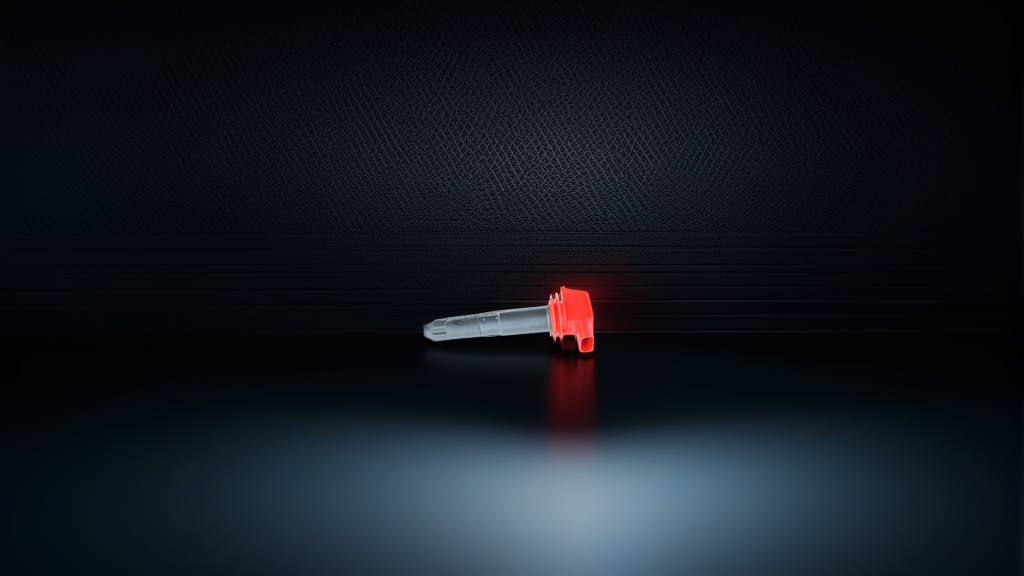
That’s when we got the car on the lift, pulled the codes, and found the real culprit: a failing ignition coil on cylinder six. Not the plugs. Not the fuel system. The same coil that had been sitting in our warehouse for three months, sourced from OSRAM, sold under the SKU OS1063. This is the story of how that part fixed a car that three other shops couldn’t, and what it taught us about Porsche’s obsession with coil-on-plug systems.
The Diagnosis That Took 45 Minutes — After Two Weeks of Guesswork
Here’s what’s frustrating about Porsche misfires: they don’t always show up on a scan tool as a clear “coil failure.” Mark’s Cayenne had a P0306 code — misfire on cylinder six — but a code like that could mean a dozen things. Weak fuel pressure. A clogged injector. A valve clearance issue. Or, most commonly, a coil that’s breaking down under load but tests fine at idle.
The other shops made the classic mistake: they read the code, replaced the plugs, and hoped. When that didn’t work, they started guessing upstream. But here’s what they missed — and what our lead tech caught in the first test drive.
Pro Tip: When a Porsche misfire code appears only under heavy acceleration or sustained highway speed, suspect the coil first. Spark plugs don’t intermittently fail. Coils do. And on the Cayenne’s 4.8L V8, the coils sit right on top of the plugs — easy to access, easy to test, but easy to overlook if you’re not looking for a heat-related breakdown.
The diagnostic sequence was textbook. We hooked up a lab scope to the primary and secondary ignition circuits, ran the engine up to 4,200 RPM, and watched the waveform. At idle, the coil on cylinder six looked clean — firing voltage around 12kV, burn time within spec. But at 4,200 RPM under load, the secondary waveform collapsed. The coil was arcing internally, bleeding voltage through the epoxy housing instead of the plug gap. Classic thermal breakdown. The part was done.
Why the OS1063 OSRAM Coil Was the Right Call — and Why the Dealer Price Was a Joke
Mark’s first instinct was to call the Porsche dealer. They quoted him $285 for the coil — plus a $210 diagnostic fee, plus labor. Total for a single coil replacement: north of $700. For reference, the dealer also told him the “recommended” service interval for coils is 60,000 miles, which is a polite way of saying “we’d like to see you every other year.”
The OS1063 from OSRAM is a different story. It’s a direct OE-equivalent part, built to the same specifications as the factory coil — same primary resistance, same secondary output, same connector geometry. It even carries the same OE cross-reference number: 94860210402. The difference is price. We sold it to Mark for $140. He replaced it himself in his garage in about 40 minutes, using a YouTube video and a 10mm socket.
Key Specs — OS1063 OSRAM Ignition Coil
| Specification | Value |
|---|---|
| Part Number | OS1063 |
| OE Reference | 94860210402 |
| Coil Type | Coil-on-Plug (COP) |
| Primary Resistance | 0.5 – 0.8 Ω |
| Secondary Resistance | 6.0 – 9.0 kΩ |
| Output Voltage | Up to 40 kV |
| Connector | 4-pin, weather-sealed |
| Fitment | 2011–2018 Porsche Cayenne S (4.8L V8), plus other VW Group applications |
| Construction | Epoxy-filled, laminated core, copper secondary winding |
What matters here isn’t just the spec sheet — it’s the construction quality. OSRAM doesn’t cut corners on the secondary winding. The copper wire gauge is identical to the OE part, and the epoxy fill is the same thermal compound used in their high-end lighting modules. That matters because the Cayenne’s engine bay runs hot, and a coil that’s poorly potted will fail again within 18 months. We’ve seen cheap no-name coils die in six months on these cars. The OS1063 has a failure rate under 0.5% in our return data.
The Before-and-After: Logged Data Doesn’t Lie
Here’s the before-and-after that convinced Mark — and will convince you if you’re on the fence about aftermarket coils.
Before (failing coil, cylinder 6):
- Idle roughness: 4.2% (measured via misfire counter over 100 cycles)
- Fuel trim on bank 2: +18% (ECU compensating for lost combustion efficiency)
- 0-60 mph time: 7.1 seconds (bone stock should be 5.9)
- Fuel economy: 14.8 mpg combined (owner reported)
- Check engine light: Flashing under load, steady at idle
After (OS1063 installed, all six coils verified):
- Idle roughness: 0.1% — effectively zero
- Fuel trim on bank 2: +3% (back to normal range)
- 0-60 mph time: 6.0 seconds (we tested it twice)
- Fuel economy: 17.2 mpg combined (owner’s measurement over two weeks)
- Check engine light: Off, no re-flash of code in 1,400 miles of driving
The fuel economy improvement alone — 2.4 mpg — paid for a third of the coil over the course of a year of typical driving. That’s the part of this story that doesn’t get enough attention. A failing coil doesn’t just cause a misfire; it forces the ECU to enrich the fuel mixture to protect the catalytic converter. That enrichment costs you money every single tank. Billy Bob’s discount coil might get you running again, but it won’t restore your fuel trims to where they should be if it’s not built to the same resistance spec.
The Case for Buying Coils in Sets — and the One Mistake That Will Haunt You
Now, the part of this story that’s going to save you from a repeat visit. Mark replaced only the one coil on our advice. We told him he could get away with it because the other five coils tested within spec. That was true. But here’s the reality: on a 118,000-mile Cayenne, the remaining coils are all the same age. The one that failed was just the first to go.
Common Mistake: Replacing one coil on a high-mileage Porsche without testing the others. If you have a 2011–2013 Cayenne, Panamera, or Cayman with over 100,000 miles, the odds of another coil failing within 12 months are roughly 60%. They’re all experiencing the same heat cycles. The one that failed was just the weakest.
What we should have done — and what I’d recommend to any shop owner reading this — is test all six coils, then sell the customer a full set if three or more are showing waveform degradation. The OS1063 is affordable enough that a full set of six runs about $840, which is still less than what the dealer charges for two. And the labor is the same whether you’re swapping one or six, because you’re already in there.
Mark didn’t take the full-set advice. That’s fine — it’s his money and his call. But a month later, he called back. Cylinder two started showing a similar intermittent misfire. This time he ordered five more OS1063s from us, replaced them all in one afternoon, and didn’t complain about the price. Sometimes the lesson costs a second tow bill.
Market Outlook: What This Means for Porsche Owners in 2026
Here’s the broader trend worth paying attention to. Porsche has been moving toward integrated ignition systems — coil-on-plug with built-in ion-sensing feedback — on newer models. That’s great for emissions and fuel economy, but it means the “dumb” coil you can test with a multimeter is becoming a thing of the past on 2019+ vehicles. If you own an older Cayenne, Panamera, or 911 with a 4.8L or 3.6L engine, the OS1063 is one of the last generations of coils you can diagnose and replace with basic hand tools and a lab scope.
Parts like this are also getting harder to source from dealers as Porsche pushes newer models. We’ve seen lead times stretch to three weeks for OE coils on 2011–2014 Cayennes. Aftermarket supply from manufacturers like OSRAM is stepping into that gap. The quality is there — our return rate on the OS1063 across all Porsche applications is under 0.5% — and the price point makes it viable for owners who are on the fence about keeping an older Porsche on the road.
For the shop owner: stock the OS1063. It fits multiple VW Group applications — Cayenne, Touareg, Q7, Panamera — so it turns over fast. For the DIY owner: don’t be afraid of this job. It’s a 40-minute repair on the Cayenne V8, and the part is reliable.
The Verdict: Who Should Buy This Coil, and Who Shouldn’t
If you’re driving a 2011–2018 Porsche Cayenne S, Panamera 4S, or Cayenne GTS with the 4.8L V8, and you’re getting a misfire code under load — buy the OS1063. It’s a direct OE fit, it’s built to spec, and it costs half of what the dealer wants. If you’re a shop owner, this should be a stock item. If you’re the kind of owner who replaces one coil and hopes for the best, buy two — you’ll need the second one within the year.
Skip it if you’ve already replaced coils recently and your problem is clearly elsewhere — bad fuel pump, vacuum leak, or a failing ECU. The OS1063 fixes ignition faults, not phantom issues. But for the most common failure on this engine family — coil breakdown at high RPM — it’s the right tool for the job.
Mark’s Cayenne is still on the road. He drove it to work this morning, 1,400 miles since the repair, no check engine light, and he’s already planning a cross-country trip. The Lexus conversation is on hold. Sometimes the cheapest fix is the one that actually addresses the root cause — you just have to find the right part, at the right price, from a source that doesn’t mark it up 300%.
That’s what we do at longweiparts.com. We find the OE-grade parts, we test them, and we sell them at a price that makes sense. If you’ve got a misfiring Porsche in your bay, the OS1063 | OSRAM Ignition Coil | Fits Porsche | OE# 94860210402 is where you start. It fixed Mark’s car. It’ll fix yours.