
An EπEπ 007 rolls into the shop on a Tuesday. Customer says the TPMS light has been on for three days. “Probably a dead sensor,” they tell you. You scan it. The BCM shows a fault on the left rear sensor — but the sensor isn’t dead. It’s sitting in a wheel that was recently refinished with a heavy metallic flake powder coat, and the aftermarket 12V charger plugged into the port is leaking RF noise across the 433MHz band.
This is the part of TPMS diagnostics most shops get wrong. They throw a new sensor at the car before checking the environment. On the Eπ — and its platform siblings like the Aeolus, Voyah, and Mhero — the 433MHz system is stable, but it’s not immune to installation mistakes and electrical interference. Here’s what to check before you quote the job.
The Real-World Diagnosis Flow
Start with the scan tool. The Eπ BCM monitors each sensor ID directly. If a sensor isn’t transmitting, you’ll see a “sensor not detected” fault or a pressure data error for that corner. But a missing transmission isn’t always a dead sensor.
Step 1: Read the battery failure pattern. A sensor’s internal battery is rated for 5 to 7 years of real driving. If the car is a 2024 with 18,000 km on it, a dead battery is an unlikely culprit. If the car is six years old and the loss is intermittent — coming and going for a week before total silence — that’s a dying lithium cell. Start asking service history questions. When was the last tire rotation? Any recent puncture repairs?
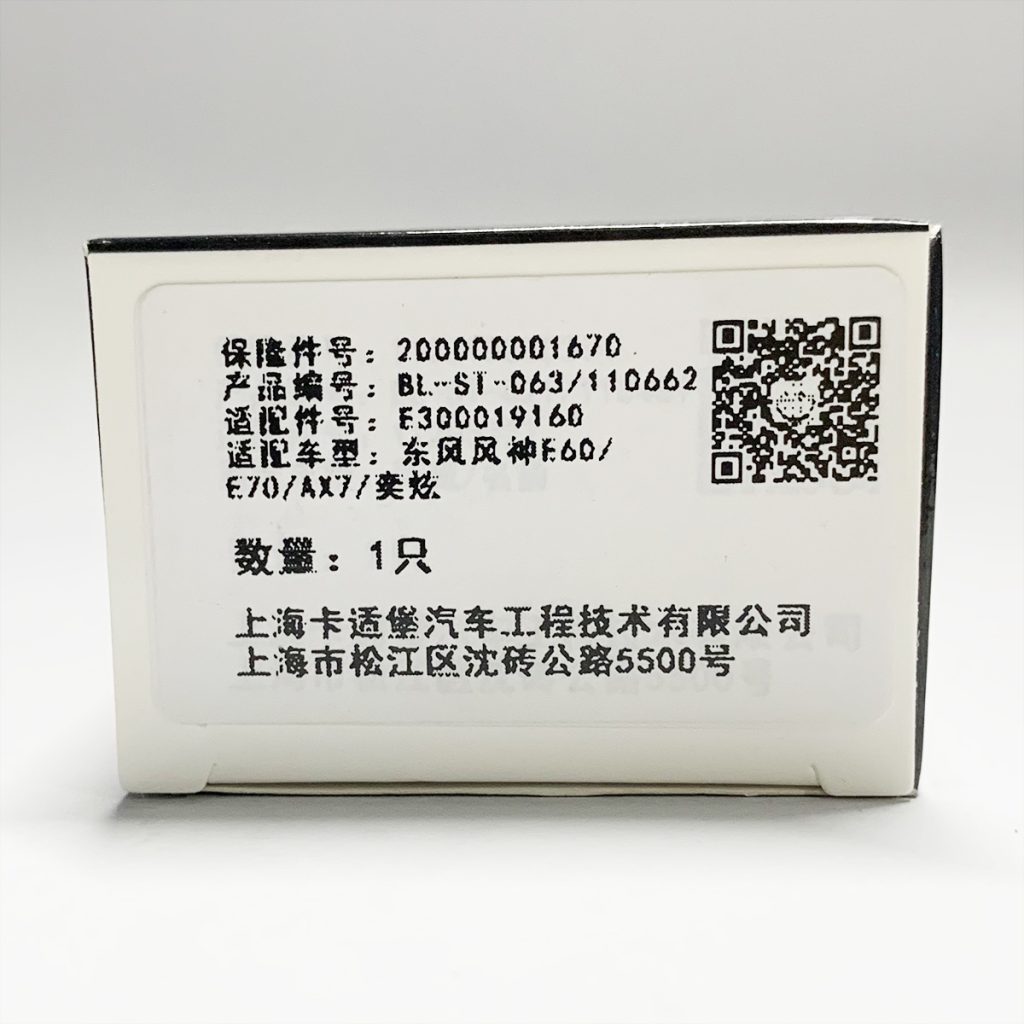
Step 2: Inspect the valve stem and sensor housing. The BL-ST-063 from BH-Sens (Baolong Technology) is a clamp-in, metal-stem design. If a previous tech over-torqued the stem nut, the sensor’s internal board can be stressed, causing intermittent contact. The symptom is erratic pressure values, not a clean dropout.
Step 3: Hunt for signal interference. Here are the usual suspects on any EV in this platform family:
- Metallic or ceramic window tint on the rear glass, blocking the BCM receiver
- Aftermarket dash cams, USB chargers, or cheap radar detectors emitting broadband RF noise
- Aluminum wheel refinishing — metallic flake in powder coat attenuates the RF signal noticeably
- Another vehicle in the next bay transmitting on the same 433MHz frequency
Step 4: Verify the sensor ID and OE number. The BH-Sens BL-ST-063 replaces OE# E300019160, E300020260, and H56A7920001AC across 15 applications in the Aeolus, Eπ, Mhero, Nammi, and Voyah lineups. If you’re installing a universal sensor that needs cloning, the Eπ BCM can reject it if the original ID isn’t properly overwritten.
Common Fault Codes on the Eπ Platform
The diagnostic trouble codes differ by market and

Recommended Part
BL-ST-063 – BH-Sens Quality Aftermarket Replacement
Direct fit. OE-spec construction. In stock and ready to ship. View product details