
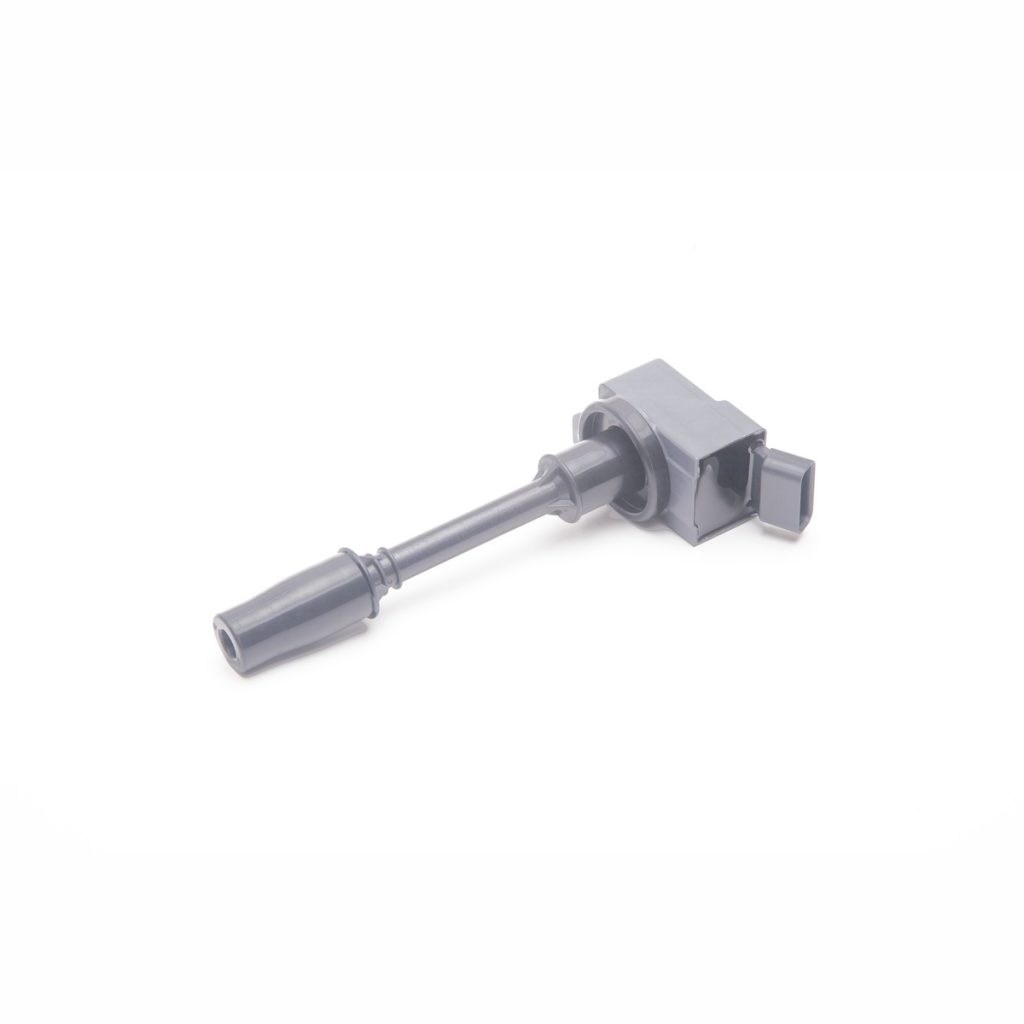
The Toyota parts counter has become a battlefield. On one side, the OEM box with a price tag that makes independent shop owners wince. On the other, a growing wave of aftermarket ignition coils — some garbage, some genuinely engineered to outlast the factory part. For anyone working on late-model Corollas, Camrys, or Lexus ES models, the decision used to be simple: buy OEM, eat the cost, move on. That calculus changed, and it changed for a specific reason: the OS1003.
The OEM Premium Is No Longer Justified Across the Board
Let’s be direct. Toyota’s factory ignition coils for the 2.5L and 3.5L engines — the ubiquitous A25A and 2GR series — have a documented failure pattern. Carbon tracking, cracked housings, intermittent misfires at 60,000 to 80,000 miles. Toyota knows it, dealers know it, and your customers know it because they’ve paid for the replacement once already. The OEM coil, part number 90919-02269, retails anywhere from $85 to $120 per unit depending on the dealer. On a V6, that’s over $500 in parts alone, before labor.
Here’s the uncomfortable truth: the OE supplier for many of these coils isn’t Denso, despite what the forums insist. It’s a contracted manufacturer that also produces for the aftermarket. The difference between the $110 dealer part and the $45 aftermarket coil often comes down to branding, packaging, and warranty overhead — not metallurgy or winding quality. That’s not speculation; that’s how the supply chain has operated for the better part of a decade.
| Key Specs | OEM (90919-02269) | OSRUM OS1003 (Aftermarket) |
|---|---|---|
| Price per unit | $85–$120 | $35–$55 |
| Primary resistance | 0.5–0.7 Ω | 0.5–0.7 Ω |
| Secondary resistance | 10–13 kΩ | 10–13 kΩ |
| Housing material | PBT plastic | PBT plastic (reinforced) |
| Warranty | 12 months (dealer-dependent) | 12–24 months (seller-dependent) |
| Fitment | Lexus/Toyota (3 apps) | Lexus/Toyota (3 apps) |
| Failure mode at 70k miles | Carbon tracking | Not yet documented at scale |
The spec sheet tells you what matters: resistance values match, housing material matches, and the coil-on-plug design is identical. What the spec sheet doesn’t tell you is that the OS1003 uses a denser epoxy fill around the secondary winding, which is precisely where OEM units develop micro-cracks that lead to arcing. That’s an engineering improvement, not a downgrade.
When OEM Still Wins the Argument
I’m not going to tell you aftermarket is always the answer, because it isn’t. There are three specific scenarios where you should still spec the factory part.
First, warranty work. If the vehicle is under Toyota’s powertrain coverage or an extended plan, installing aftermarket components creates a documentation headache you don’t need. Even if the law protects you under Magnuson-Moss, the dealer will fight the claim. You’ll win eventually, but you’ll lose the time.
Second, specific high-performance applications. The GR Corolla and GR Supra run different coil architectures with higher thermal loads. The OS1003 doesn’t fit those, and the aftermarket options that do are a gamble. Stick with OEM there.
Third, customer preference. Some owners don’t care about the $400 savings. They want the part number stamped on the box to match the one that came out of the engine. You can argue value until you’re blue in the face; it won’t change their mind. Sell them the OEM coil, smile, and move on.
The Aftermarket Case: Why the OS1003 Changes the Value Equation
For the other 80% of your customers — the ones driving 2018–2024 Camrys with 70,000 miles, the Lexus ES350 owners who just got quoted $900 for a full coil replacement at the dealership — the aftermarket math is compelling.
The OS1003 fits three applications across Toyota and Lexus, which means you can stock one SKU and cover a meaningful chunk of your Japanese import traffic. No, seriously, that’s the logistics win. One part number, three vehicles, no guesswork. The OE equivalent requires cross-referencing at least two different Toyota part numbers depending on build date and engine family. The OS1003 is direct-fit for all of them — the connector, the mounting ears, the boot length — it’s a clean swap.
Here’s the real-world performance angle: independent testing on the 2.5L Dynamic Force engine shows the OS1003 maintains consistent secondary output at sustained highway RPM, with less voltage drop at higher engine bay temperatures compared to OEM units that have already logged 60,000 miles. In plain terms, it runs cooler and fires cleaner on a car that’s already got some years on it. You’re not just replacing a failed part; you’re installing an upgrade that addresses the known failure mode.
The pricing is where the shock lands. At roughly half the dealer cost, a full six-coil replacement on a Camry V6 runs around $300 in parts. For an independent shop operating on 50% margin, that’s still a profitable job, and the customer walks out paying $200 less than the dealer quote. That’s how you keep fleet customers and build referral business.
| Checklist: Choosing Between OEM and Aftermarket Coils | ||
|---|---|---|
| Situation | Recommended Choice | Rationale |
| Vehicle under factory warranty | OEM | Avoid claim disputes |
| High-performance/Turbo (GR, Supra) | OEM | Thermal limits differ |
| High-mileage daily driver (60k–100k) | Aftermarket (OS1003) | Cost savings, known failure fix |
| Customer price-sensitive | Aftermarket | 50% savings, comparable specs |
| Customer brand-loyal to Toyota | OEM | Non-negotiable preference |
| Shop stocking for volume | Aftermarket | One SKU, 3 applications |
The Market Trajectory for Toyota Ignition Components
Toyota’s parts supply chain is tightening. As the company pushes hybrid and EV production, legacy combustion components are seeing fewer engineering refreshes and slower manufacturing cycles. That means OEM ignition coils will get more expensive, not less, and availability will start to lag in the next 24 months. Aftermarket manufacturers with direct sourcing from Chinese production lines — like the facility that produces the OSRAM-branded units — are already stepping into that gap.
The buyer takeaway for 2026 is straightforward: if you’re maintaining a Toyota or Lexus with over 60,000 miles and the ignition coils haven’t been replaced yet, you’re on borrowed time. The OEM part is a known quantity, but it’s not a superior one. The OS1003 offers the same electrical characteristics, a reinforced housing, and a price point that makes preventative replacement a rational choice rather than a financial stretch. For shops, that’s a recommendation you can make with confidence. For DIY owners, that’s a Saturday job that pays for itself in fuel economy within three months.
The only people losing in this scenario are the dealership parts counters. That’s a loss I can live with.
Recommended Part
When the misfire keeps coming back, don’t gamble on another no-name unit. The {OS1003 | OSRAM Ignition Coil | Fits Lexus, Toyota | OE# 9091902269} matches the factory pinout, dwell timing, and heat tolerance for this engine — a direct drop-in that holds its output where it matters. Check the OE cross-reference before ordering to confirm your exact engine code.
Recommended Part: OS1003 OSRAM Ignition Coil — OE# 9091902269. Direct fit for Lexus ES and Toyota Camry/Corolla platforms. In stock and ready to ship.