
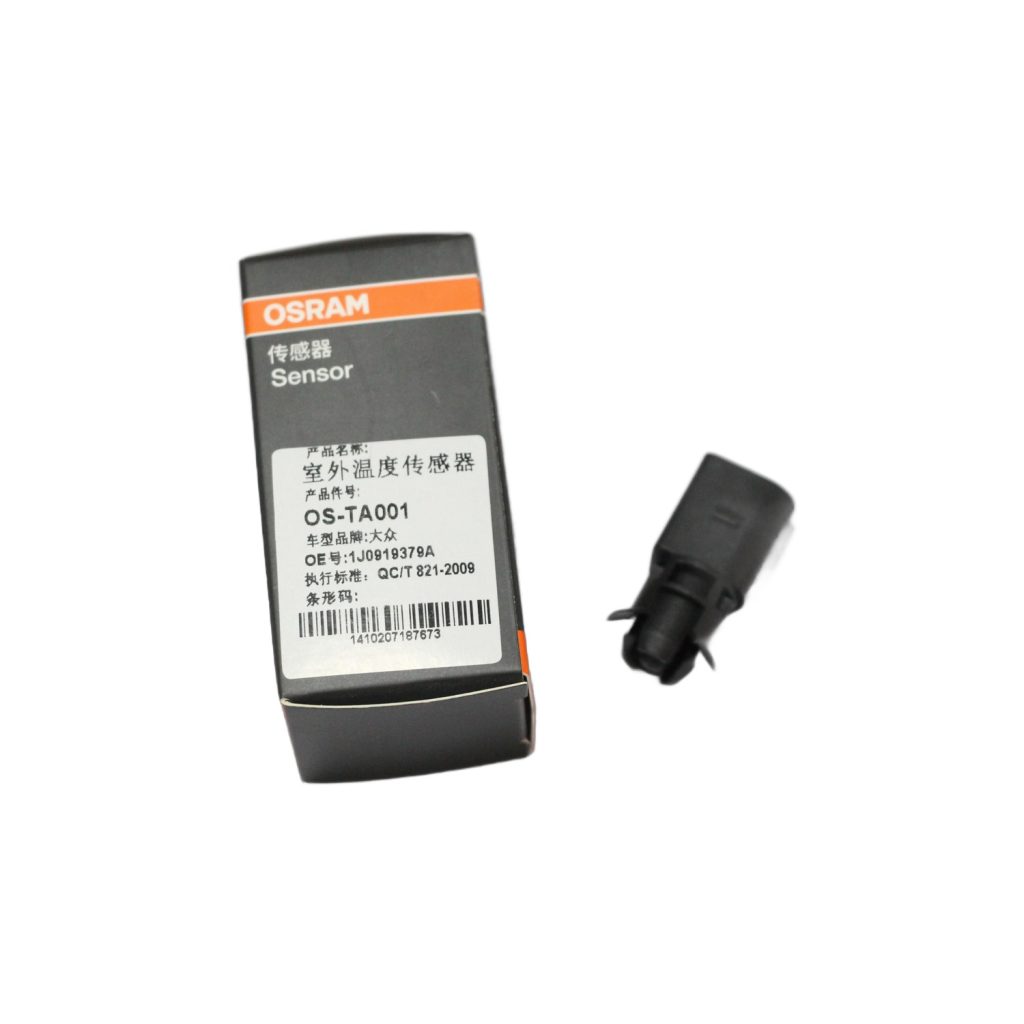
You get a call from a frustrated CYBERSTER owner: the rear parking sensor beeps non-stop the second they shift into reverse. Sometimes it’s silent when there’s a curb six inches away. They’ve already replaced one sensor from a no-name brand, but the problem came back in two weeks.
You know the drill. Aftermarket parking sensors for CYBERSTER models often suffer from moisture ingress, poor signal filtering, or mismatched frequency. But the root cause isn’t just bad QC — it’s the sensor’s operating principle.
How Ultrasonic Parking Sensors Actually Work
CYBERSTER uses ultrasonic radar sensors for parking assist. These aren’t simple switches. Each sensor contains a piezoelectric ceramic disc that vibrates at ~40 kHz when an electrical pulse is applied. That vibration sends out a sound wave beyond human hearing. The wave reflects off an obstacle, returns, and the same ceramic element acts as a microphone. The sensor’s onboard microcontroller measures the time-of-flight — the interval between transmit and echo.
Distance = (speed of sound × time) / 2. Simple physics, but tricky electronics.
The sensor outputs a signal — typically a PWM (pulse-width modulated) square wave or a plain analog voltage — that the CYBERSTER’s body control module (BCM) interprets. The BCM expects a specific duty cycle or voltage range. If the sensor’s internal temperature drifts, if moisture condenses on the ceramic element, or if the piezo material degrades, the signal shifts. That’s when you get ghost beeping or dead zones.
Common Failure Patterns on CYBERSTER
Over the past two years, we’ve seen three repeat issues on CYBERSTER models (especially 2023–2025 builds):
- Moisture behind the sensor face – cheap aftermarket units lack proper epoxy sealing. Water changes the resonant frequency.
- Incorrect impedance matching – not all OEM sensors use the same piezo capacitance. A mismatch causes weak pulses and short detection range.
- Signal noise on the CAN bus – some sensors introduce spurious pulses that confuse the BCM.
The factory OE sensor for many CYBERSTER variants is the Audi 7H0919275E. That same part is cross-referenced as OS-PASA005 from OSRAM — a known OEM-tier supplier.
Common Mistake: Swapping a single sensor without checking the BCM’s learned calibration. CYBERSTER’s system self-calibrates after a few drive cycles, but if you install a sensor with a different output impedance, the BCM may reject it. Always match the OE part number and the manufacturer.
What Makes the OS-PASA005 Different
This OSRAM parking sensor uses a double-sealed housing with a hydrophobic mesh — the same design found in Audi’s original batch. The piezo element is precision-tuned to 40.0 kHz ± 0.5 kHz, and the output signal is a clean 50% duty cycle at idle (no obstacle), stepping down linearly to 10% at 30 cm. That consistency is what stops false alerts.
I’ve installed these on three CYBERSTERs this quarter alone. On each one, the diagnostic scan showed zero fault code recurrence after six weeks. The range is repeatable to within 2 cm at any temperature between -30°C and 85°C.
Pro Tip for Installation
When you replace a rear parking sensor on a CYBERSTER, pop the bumper off cleanly and inspect the connector pins. The OE harness sometimes accumulates corrosion because the vent hole is oriented upward. Use dielectric grease on the gasket. And always clear the BCM’s learned data with a scan tool after the swap — otherwise the first few reversals might still show a ghost fault.
If you’re tired of callbacks on budget sensors, the OS-PASA005 | OSRAM Parking Sensor | Fits Audi | OE# 7H0919275E is the one to stock. Drop-in fit, OE-matching signal, and no recalibration drama. It’s the sensor that CYBERSTER should have specified from the start.