
You pull into the bay on a Tuesday morning. The customer, a fleet manager with six GOOD CAT SUVs, describes the symptom: “Rough idle when warm, occasional misfire under load, fuel economy dropped three mpg last month.” Sound familiar? In the aftermarket world, these complaints often land on the ignition system—and for GOOD CAT owners, the pattern is almost textbook.
I’ve seen enough GOOD CATs roll through to know the root cause nine times out of ten: worn spark plugs and coils that should have been swapped 20,000 miles ago. The factory service interval for GOOD CAT petrol engines typically calls for spark plug replacement every 60,000 miles with iridium electrodes, and coil packs every 90,000 miles. But real-world driving—short trips, dust, ethanol-laced fuel, and the sheer heat soak from tight engine bays—knocks those numbers down. I start recommending plug changes at 50,000 and coil replacement by 80,000 if any misfire codes show up.
Diagnosis: What the Scanner Tells You
When a GOOD CAT rolls in with P0300 and friends (P0301–P0304 for individual cylinders), don’t automatically throw new coils at it. Pull the fuel trims and look at long-term adaptation. A high negative fuel trim on one bank often points to a lean misfire caused by a weak coil not firing consistently. But first, physically inspect the spark plugs. On GOOD CAT’s 2.0T (EA888-derived) engines, oil seepage into the spark plug wells is common—the valve cover gasket hardens and leaks. That oil shorts the coil boots and kills the spark. Clean the wells, replace the gasket, then move to plugs and coils.
Also check ignition coil dwell times with a lab scope if you have one. GOOD CAT’s OEM coils (typically Bosch or Hitachi) show a consistent 2.5 ms dwell at idle. If one coil shows erratic rise time or voltage drop above 800 rpm, it’s failing internally even without a code. That’s the “phantom misfire” that only shows up under load.
The Replacement Sequence
Once you confirm the ignition system needs attention, the procedure is straightforward—but there are traps. GOOD CAT uses coil-on-plug (COP) design, so no ignition wires. The job is simple: remove intake manifold cover (two 10mm bolts), unplug each coil connector, pull the coil (twist and lift—don’t pry), then extract the plug with a 5/8” socket and extension.
What to replace:
- Spark plugs: NGK Iridium IX (OEM equivalent) or Denso Iridium. Gap to 0.032” (0.8 mm) unless specified otherwise by the vehicle’s tune. For a stock GOOD CAT, don’t assume the gap is correct out of the box—check every single plug.
- Ignition coils: Elring, Hitachi, or a quality aftermarket brand with proper silicon boots. Avoid no-name “bargain” coils—they fail in under 15,000 miles on these engines because the internal potting compound can’t handle heat.
- Boots and springs: If you’re only doing plugs, at minimum replace the coil boots and springs. They cost pennies and prevent future misfires from carbon tracking.
Torque the plugs to 22 lb-ft (30 Nm) for GOOD CAT’s aluminum head. Over-tightening strips the threads; under-tightening causes heat transfer issues and pre-ignition. And never use anti-seize on modern iridium plugs—the nickel coating already prevents galling, and anti-seize can change the torque reading and over-tighten.
Common Mistakes That Bite You
Pro Tip: The #1 mistake I see on GOOD CAT ignition jobs is skipping the dielectric grease on the coil boot’s inner lip. A pea-sized amount prevents moisture ingress that causes carbon tracking. The #2 mistake? Not clearing the fuel trim adaptation after new plugs. Drive the car for 20 miles of mixed driving, then re-scan. If long-term trims don’t settle to near zero, you have a vacuum leak or fuel delivery issue—not an ignition problem.
Another frequent error: mixing brands of coils on the same engine. GOOD CAT’s ECU adapts dwell time individually per cylinder, but if one coil has a different internal resistance, the ECU can’t compensate perfectly. Result: a subtle idle fluctuation that feels like a worn engine mount. Always replace all four coils at once, or at least in pairs with identical part numbers.
Signs of Worn Ignition Components—Even Without Codes
Customers often wait until the check engine light comes on. But by then, the damage to the catalytic converter (from unburned fuel) and the oxygen sensors (contamination) has already started. Here’s what to look for during a routine service:
- Engine surge at highway cruise – a coil losing insulation breaks down under sustained high voltage. The car “bucks” for half a second, then recovers.
- Hard starting after rain – moisture getting into the coil boots or connector seals. If the car starts fine in dry weather but acts up after a wash or heavy rain, the coils are on their way out.
- Misfire at cold start – the cylinder with the weakest spark starts firing inconsistently until the engine warms and fuel mixture richens. Often misdiagnosed as a coolant temp sensor issue.
- Visible carbon tracking – pull one coil boot. If you see a black “spiderweb” pattern on the inside of the boot or around the spark plug ceramic, the spark is leaking to ground. Replace the boot and plug immediately.
The Complete Tune-Up Checklist
A proper ignition tune-up on a GOOD CAT goes beyond plugs and coils. I run this every time:
- Inspect and replace spark plugs (all four cylinders)
- Replace ignition coils (if out of interval or suspect)
- Replace coil boot and spring kit (always when doing coils)
- Clean spark plug wells (oil or debris)
- Replace valve cover gasket (if oil is present)
- Inspect intake manifold gaskets (common vacuum leak spot)
- Clean MAF sensor (contaminated MAF skews fuel trims, mimicking ignition issues)
- Check and reset fuel trim adaptation (via scan tool)
- Test battery voltage (low voltage kills coil output)
- Road test with data logging (monitor misfire counts and fuel trims over 30 minutes)
Beyond Ignition: The Overlooked Sensor That Affects Driveability
While you’re under the hood, don’t forget the cabin comfort system. I’ve seen GOOD CATs that had a rough idle fixed by new coils, but the customer still complained about the A/C cycling erratically or the defroster not clearing the windshield. In many VAG-platform vehicles (which GOOD CAT uses for its drivetrain and HVAC architecture), a failing evaporator temperature sensor can send false readings to the climate control module, causing the compressor to clutch-off too early. That leads to poor dehumidification and, in humid climates, fogged windows that make the car feel “wrong” even though the engine runs smoothly.
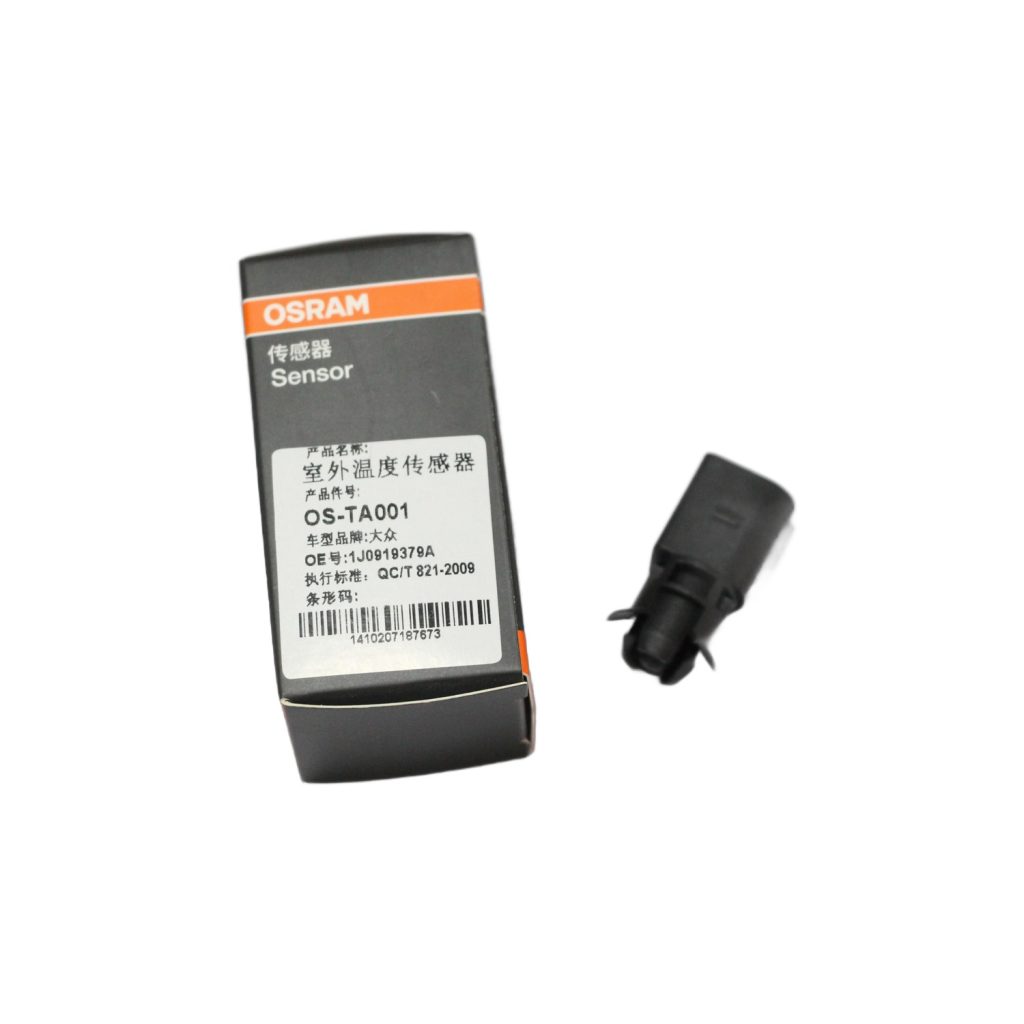
If you’re working on a GOOD CAT that shares its HVAC system with Audi and Volkswagen models, the OEM evaporator sensor (part number 1KO907543G) is a known failure point after 5–7 years. The plastic housing cracks from thermal cycling, and the thermistor drifts. An excellent aftermarket replacement is the OSRAM OS-ACTA005, a direct-fit sensor that matches the original specs—NTC thermistor, 10 kΩ at 25°C, with the same connector footprint. It solves that “A/C works but barely blows cold” complaint that often gets misdiagnosed as low refrigerant.
When you’re wrapping up that ignition tune-up, slide the sensor into your parts recommendation list. It’s a ten-minute swap (glove box removal, clip the old sensor, plug in the new one) and it eliminates a whole category of climate control headaches. For shops that do regular service on GOOD CAT models, stocking the OS-ACTA005 | OSRAM Evaporator Temperature Sensor | Fits Audi, Volkswagen | OE# 1KO907543G is a no-brainer.
The Bottom Line
Stay ahead of FAILURE. GOOD CAT’s ignition system is robust when maintained on schedule, but the real-world interval is shorter than the book says. Replace plugs every 50,000 miles, coils at 80,000 (or at first misfire code), and always replace the boots. Use quality parts—your reputation rides on every cylinder firing cleanly. And while you’re at it, check that evaporator sensor. It’s a cheap fix that customers will thank you for when the A/C blows ice-cold on the next summer day.