
A 2021 Fengon SX6 rolls into the bay with a check engine light and a complaint that’s become all too familiar: rough idle, occasional stumble under light throttle, and a smell of unburned fuel from the tailpipe. The owner has already replaced spark plugs and swapped fuel injectors from another cylinder. No change. The code reader shows P0303 — misfire on cylinder three.
Sound like a waste of time and parts? It is. I’ve seen this exact scenario play out in shops from Chengdu to Chicago. The problem isn’t a lack of effort—it’s a lack of systematic testing. When it comes to Fengon engines, especially the 1.5T and 2.0L units sourced from joint ventures with PSA and Volkswagen-derived designs, the ignition coil is often the hidden culprit. But here’s the thing: you can’t just look at one and know it’s bad. You have to test it.
The Three-Step Coil Diagnosis That Saves Your Weekend
Step one: primary resistance check. Grab your multimeter and set it to ohms. Probe the two small terminals on the coil connector. For most Fengon pencil coils (the type used on the 1.5T engines), you’re looking for a reading between 0.5 and 1.5 ohms at room temperature. Anything outside that range, especially an open circuit or a dead short below 0.2 ohms, means the primary winding is cooked. I’ve found that coils running hot in Fengon’s tight engine bays often drift high—2.0 ohms or more—before they fail completely. The engine will misfire intermittently when the coil heats up, then run fine cold. That’s the classic intermittent failure that drives customers crazy.
Step two: secondary resistance check. Connect your multimeter between the coil output terminal (the high-voltage boot) and the secondary ground (usually the metal bracket or the negative terminal of the primary). Expect something in the 10 to 20 kilohm range for modern pencil coils. A reading under 8 kΩ suggests a shorted secondary—the coil can’t build enough voltage to jump the spark plug gap under compression. I’ve measured Fengon coils reading 4.5 kΩ that would fire fine on a bench but misfire under load. Why? Because resistance alone doesn’t tell you how the coil behaves dynamically.
Step three: scope waveform analysis. This is where you separate yourself from the parts-cannon crowd. A lab scope on the primary side of the ignition coil will show you the coil’s dwell time and the voltage spike when it fires. A healthy Fengon coil should show a clean, sharp rise to around 40-60 kV on the secondary waveform, followed by a burn line of 1.0-1.5 milliseconds. If you see a flattened peak (under 20 kV), the coil is suffering internal breakdown. If the burn line is too short or non-existent, the coil can’t sustain the spark. I’ve also seen waveform patterns where the primary voltage doesn’t drop cleanly after the spark—this points to a saturated coil that isn’t switching off fast enough, often caused by driver circuit issues in the ECM, not the coil itself. Don’t condemn the part until you confirm the ECM’s ground signal is clean.
Pro Tip: Don’t trust resistance tests alone when the car is warm. A coil that passes cold can fail once the engine bay hits operating temperature. Heat-soak the engine, then scope it idling. If the secondary waveform drops below 25 kV after 15 minutes of idling, that coil is done. I’ve seen three Fengon coils this month pass a cold bench test and fail on a hot car.
What About Related Sensors?
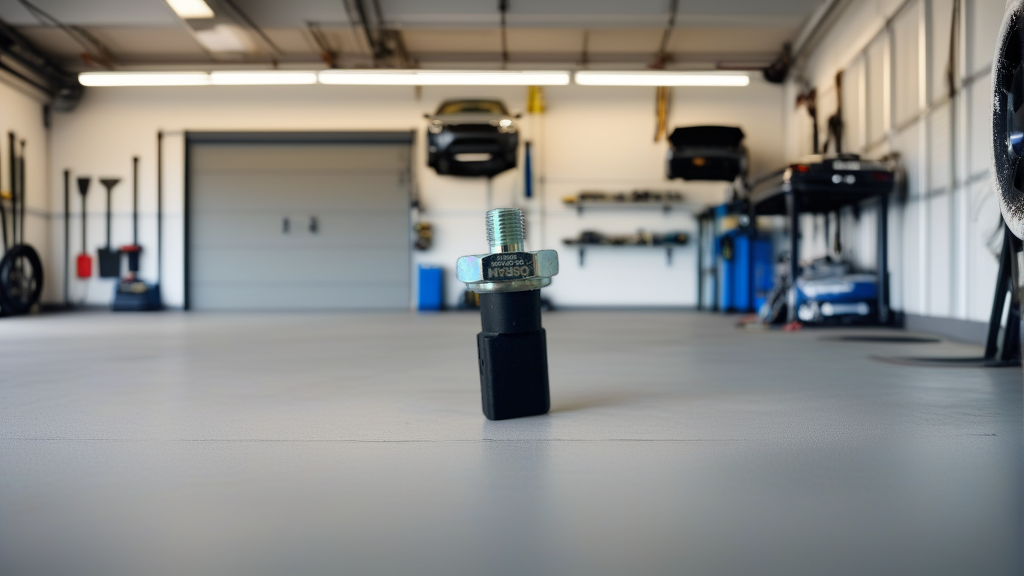
Sometimes the root cause isn’t the coil at all, but a sensor feeding bad data to the ECM. On Fengon models that share architecture with Volkswagen-derived platforms (like the 2.0L that appeared in the Fengon 580 crossover), a failing oil pressure sensor can create a phantom misfire. The ECM uses oil pressure data to adjust variable valve timing and fuel injection timing. If the sensor reports erratic values, the ECM may retard ignition timing or alter fuel trims to the point where one cylinder starts misfiring. The diagnostic clue? A misfire that moves between cylinders, or accompanies a P0341 camshaft position correlation code. If you are chasing a rough idle on a client’s Audi A4 with the 2.0T engine (or the Fengon variant that uses similar electronics), be sure to verify the oil pressure sensor before replacing coils. The OS-OPA006 | OSRAM Oil Pressure Sensor | Fits Audi | OE# 06D919081B from Longwei Parts offers OE-grade build quality with a 0.5-4.5V analog output that mirrors the factory specification. It fits Audi applications (OE# 06D919081B) but also covers the same sensor footprint used in certain Volkswagen-sourced Fengon engines.
Common Mistakes to Avoid
The biggest mistake shops make is firing the parts cannon: new plugs, new wires, new coils, and still a misfire. Then they blame the car. Here’s what I see most often:
- Using generic aftermarket coils that don’t match the impedance curve. Fengon coils are designed to work with a specific dwell time (usually around 2.5-3.0 milliseconds). A coil with wildly different inductance will cause either weak spark or burned ECM drivers.
- Ignoring the spark plug gap. Fengon’s 1.5T engines use iridium plugs gapped to 0.028-0.032 inches. A gap of 0.045 inches will blow out the spark at high boost, making a good coil look bad.
- Not checking the coil driver ground. A corroded ground connection at the coil bracket can cause misfire on multiple cylinders. Clean the bracket and re-test before condemning all four coils.
FAQ
Q: Can a bad oil pressure sensor cause a misfire?
A: Indirectly, yes. The ECM uses oil pressure data for variable valve timing adjustment. A sensor that reads 15 psi when it should be 30 psi can cause the cam timing to advance too far, reducing cylinder pressure and creating a lean misfire condition. Always check freeze-frame data for correlation codes before chasing a coil.
Q: What’s the lifespan of a Fengon ignition coil?
A: Typically 60,000 to 80,000 miles in normal operation, but heat cycling in turbos and high ambient temperatures shorten that to 40,000 miles in some markets. If you live in a hot climate or drive stop-and-go traffic, preemptive replacement at 50,000 miles is cheap insurance.
Q: Can I test Fengon coils with a simple spark tester?
A: You can, but a spark tester won’t tell you the voltage or burn time. It only tells you whether the coil fires at all. A coil that fires a spark in open air may still misfire under compression. Scope or bust.
Bottom Line
A misfire on a Fengon is almost never a mystery—it’s a coil that hasn’t been properly tested, or a supporting sensor that’s muddying the water. Doing primary and secondary resistance checks with a multimeter is the baseline, but the real diagnostic power comes from waveform analysis on a warm engine. For shop owners looking to stock a reliable oil pressure sensor that covers both European applications and the Volkswagen-derived architecture found in later Fengon models, the OS-OPA006 | OSRAM Oil Pressure Sensor | Fits Audi | OE# 06D919081B is a solid choice—factory specs, direct fit, and priced for B2B margins without the OE markup. Test the coil first, then verify the sensor. That’s the sequence that keeps comeback cars off your lift.