
A 2019 Forthing SX6 rolled into my shop last week with a P0303 code and a shake that would rattle your fillings loose. The owner had already thrown a fresh set of spark plugs at it—no change. Classic ignition coil failure, or was it something deeper? With Chinese-branded vehicles like Forthing gaining traction in emerging markets, knowing how to separate a bad coil from a failing injector or a vacuum leak is money in the bank for any independent shop.
The Real-World Diagnosis Flow
Start with the basics: swap the suspected coil to another cylinder. If the misfire follows, you’ve found your culprit nine times out of ten. On Forthing’s 4A91-based 1.6L and 1.5T engines, the coil-on-plug units sit directly over the spark plugs with no plug wires. That makes removal simple, but it also means the coil handles brutal heat and vibration daily.
Before you condemn the part, run these two confirmation tests:
Primary resistance check — Set your multimeter to the 200-ohm range. Probe the two small pins on the coil connector. A healthy Forthing coil reads between 0.3 and 1.0 ohms. Anything open (OL) or dead short means replace it.
Secondary resistance check — Switch to the 20k-ohm range. Probe one small pin and the high-tension terminal (where the spark plug boot connects). Expect 6 to 12 kohms. Outside that window, the coil is weak and will misfire under load even if it idles fine.
Pro Tip: A coil that passes both resistance tests can still fail under thermal load. If the resistance checks good but the car misfires after a highway pull, scope it. You’ll see a flattened or missing burn line on the secondary waveform when the coil breaks down hot.
Why Scope Analysis Matters More Than Specs
Resistance numbers are a pass/fail gate, but waveform analysis tells you what’s actually happening inside the cylinder. Connect a secondary ignition probe (capacitive pickup) to the coil wire or directly over the coil boot on Forthing’s COP design. A normal pattern shows a tall firing line (5–10 kV), followed by a flat spark burn line (around 1–2 kV), then a series of diminishing oscillations as the coil rings down.
What to watch for:
- Low firing voltage (under 4 kV) — suggests low compression, lean mixture, or a worn plug.
- Excessive firing voltage (over 15 kV) — indicates a wide spark plug gap, open plug, or a cracked coil boot.
- No oscillations after the burn line — the coil is shorted internally or the primary circuit has an open driver in the ECU.
On Forthing models, a surprisingly common culprit is carbon tracking inside the coil boot. Pull the boot, look for gray or black lines on the rubber. That’s a path to ground. Replace the coil and the spark plug if it’s fouled.
The Parts Angle
Once you confirm the coil is dead, sourcing the right replacement matters. Aftermarket coils for Forthing have improved dramatically over the last three years. The old “just-match-the-connector” approach led to early failures from poor internal insulation. Modern designs use epoxy-filled cores that handle the 40,000-volt spikes better.
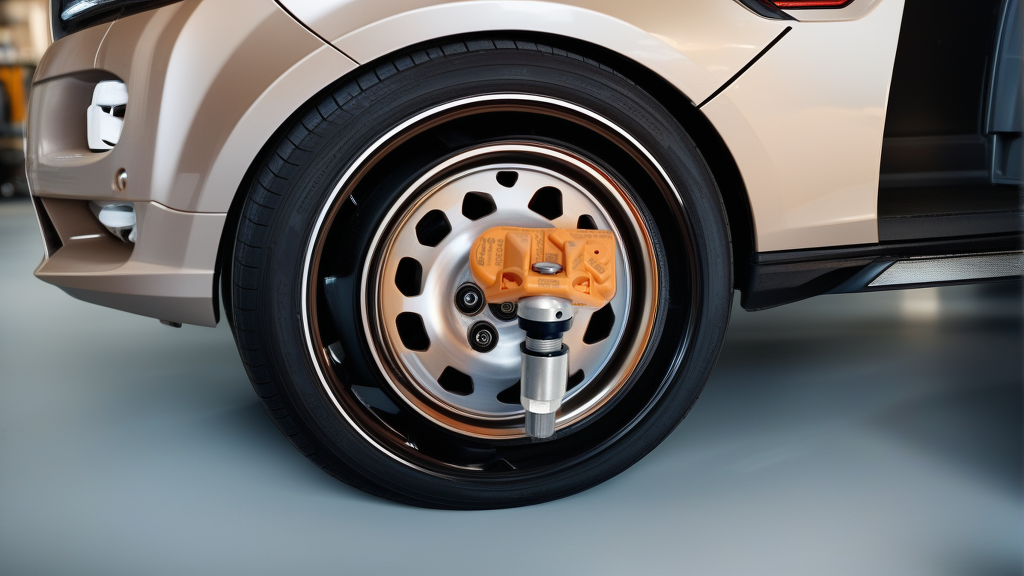
While you’re under the hood, don’t overlook the tire pressure monitoring system. A Forthing with a persistent misfire often triggers the TPMS warning lamp indirectly—the vibration from the misfire can be interpreted as a wheel-speed anomaly, or the battery drain from a failing coil can cause the TPMS sensors to go into low-power mode. That’s where RDE048V21 | BH-Sens 433MHz TPMS Tire Pressure Sensor | Fits Aston Martin, Audi, BMW, Bentley, Bugatti & 9 More | OE# 11B0015CP, 11B0022CP, 2000680 comes in handy.
When the Coil Isn’t the Problem
If you’ve tested the coil, scoped the pattern, and still get a misfire, look at the injector pulse width. Forthing’s 1.6L is sensitive to fuel trims. A clogged injector on cylinder 3 will mimic a coil failure perfectly—same rough idle, same code, same swapping-trick confusion. Injector resistance should be 11–14 ohms. Also check the engine ground strap; a corroded ground on the Forthing can cause the ECU to drop coil firing events.
Common Mistake: Replacing all four coils when only one is bad. Forthing coils are individually controlled—they don’t share a driver like wasted-spark systems. One dead coil doesn’t threaten the others. Keep the three good ones as spares.
—
After the fix, verify with a road test under load (third gear, 2,500–4,500 RPM). If the misfire is gone and the TPMS light stays off, you’re done. For customers wanting a reliable OE-replacement sensor that fits multiple brands—including Forthing—the RDE048V21 | BH-Sens 433MHz TPMS Tire Pressure Sensor | Fits Aston Martin, Audi, BMW, Bentley, Bugatti & 9 More | OE# 11B0015CP, 11B0022CP, 2000680 (RDE048V21) covers Aston Martin, Audi, BMW, Bentley, and more with a single part number. It’s a solid cross-reference for shops that service mixed fleets.
Bottom line: test the coil, scope the pattern, and don’t chase ghosts. Forthing’s ignition system is straightforward once you treat it like any modern four-cylinder.