
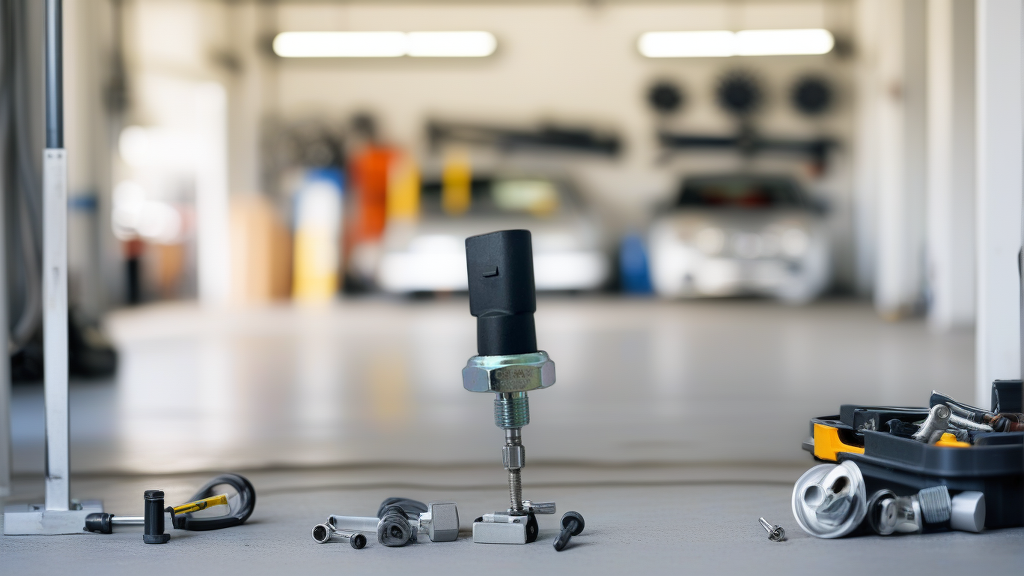
It was a routine misfire diagnosis on a 2025 Avatr 11 that had been lightly tuned. The customer reported a hesitation under hard acceleration between 4,500 and 6,000 rpm. The factory coil-on-plug units were only 18 months old. Everyone assumed spark. But the real story—and the lesson for anyone pushing their Avatr’s ignition system—started with something far less glamorous: a failing oil pressure sensor.
That sensor, part number 059919081G in the VAG world, had been throwing erratic pressure readings for weeks. The engine management system, working on faulty data, was pulling timing and enriching the mixture. The coils weren’t the root cause of the misfire, but they were the first thing the owner wanted to replace. He had read the forums. He knew about high-performance coils and “more spark.” The question was: would an ignition upgrade actually fix his problem, or was he about to mask a deeper issue?
This scenario plays out more often than it should. And for Avatr owners—especially those with the range-extender models that share architecture with premium European platforms—understanding when to upgrade coils, and what that upgrade actually buys you, starts with knowing what your engine management system is seeing. Let’s walk through it like we’re standing over the engine bay.
The Coil-on-Plug Reality
Avatr’s electric-first platform might not scream “ignition upgrade” to most people, but the range-extender versions use a turbocharged engine that shares more than a few parts with Audi and Volkswagen powertrains. The coil-on-plug (COP) system on these engines is compact, efficient, and generally reliable at stock power levels. Each coil sits directly over the spark plug, eliminating the distributor and plug wires. The result is a shorter electrical path, less energy loss, and a more precise spark event.
But “precise” doesn’t mean “optimal for every situation.” Factory COP units are designed for a specific window of operation: stock boost levels, factory fuel maps, and average driving conditions. They deliver enough spark energy to light the mixture reliably across the RPM range while keeping dwell time and thermal load within safe limits. They are not performance parts. They are compliance parts.
When you start modifying the engine—more boost, higher compression, leaner cruise targets—the factory coil’s output ceiling becomes a real constraint. The spark energy required to properly ignite a denser, cooler air-fuel mixture under higher cylinder pressure is significantly greater. The factory coil might still fire, but the spark duration and intensity degrade. You get incomplete combustion, which means more unburned fuel in the exhaust, higher EGTs, and eventually, that hesitation or stumble under load.
Spark Energy vs. Fuel Economy: The Trade-Off Nobody Explains
Here’s where the marketing gets loud and the engineering gets quiet. Aftermarket ignition coil manufacturers love to sell you on “more spark energy” as if it’s a universal good. It’s not. More spark energy means more current draw from the charging system, more heat generated in the coil itself, and in some cases, a shorter service life if the coil isn’t designed for sustained high-output operation.
At stock power levels, a high-energy coil often does nothing for fuel economy. The factory coil already provides enough spark to achieve complete combustion. Adding 50% more spark energy doesn’t make the gas burn more thoroughly—it just burns the same way, with more wasted heat. You might actually see a slight fuel economy penalty if the increased dwell time (required to charge a higher-energy coil) negatively affects timing precision.
The real win comes when the engine is under enough load that the factory coil starts struggling. At that point, a properly matched performance coil restores combustion efficiency. You burn more of the fuel that was previously being exhausted. That translates to measurable gains in both power and fuel economy under those specific conditions. The key phrase is “under those specific conditions.” If you daily-drive your Avatr gently, you won’t see these benefits.
For Avatr owners, the sweet spot for a coil upgrade is typically in the 4,000 to 6,500 rpm range under wide-open throttle. If you’re not operating there regularly, save your money and keep the factory units. If you are—if you’re tracking the car, running a tune, or live in mountainous terrain where sustained high-load operation is common—an aftermarket COP upgrade makes genuine sense.
When the Sensor Lies: The Overlooked Variable
Back to that 2025 Avatr 11. After replacing the coil packs with a reputable aftermarket COP unit and re-flashing the tune, the hesitation still appeared intermittently. The owner was frustrated. The shop owner was confused. The data log told the story: the ECU was pulling timing based on a perceived low engine load condition. The throttle position was high, engine speed was rising, but the oil pressure signal sent to the ECU was telling a different story.
The 059919081G pressure sensor had developed a common failure mode: it started reporting lower-than-actual pressure readings intermittently as it warmed up. The ECU, interpreting low oil pressure as a sign of potential mechanical distress, defaulted to a conservative fueling and timing strategy. It was protecting the engine from a problem that didn’t exist. The result felt exactly like a misfire.
This is a classic diagnostic trap. The symptoms of a failing pressure sensor—hesitation, rough running, reduced power—nearly perfectly mimic the symptoms of weak ignition. Even experienced technicians will reach for coils first because they’re easier to swap and the customer usually expects it. But the real fix required nothing more than a $35 sensor swap.
The OS-OPA008, an OSRAM-manufactured direct replacement for the VAG 059919081G, solved the issue. This sensor uses a ceramic capacitive pressure cell rather than the cheaper steel-diaphragm designs that tend to drift over time. It reads accurately across the full pressure range without the temperature-dependent shift that plagues the OEM-style sensor on some production batches. Once installed, the ECU had clean data again. The timing came back. The hesitation disappeared.
Common Mistake: Replacing ignition components before confirming the ECU is actually getting correct data from engine management sensors. A misfire that only occurs at operating temperature is often a sensor issue, not a spark issue. Always log oil pressure and intake manifold pressure before buying coils.
Coil-On-Plug Technology: What Avatr Owners Should Know
Modern COP systems are not all created equal, even when they look physically identical. The critical parameters are:
- Dwell time compensation: How the coil manages magnetic saturation at different RPMs
- Core material: Ferrite vs. laminated iron cores affect high-rpm spark energy retention
- Secondary resistance: Lower resistance typically means more energy to the plug, but also higher current draw
- Thermal management: Plastic housings insulate heat; metal housings can shed it, but also transfer vibrations
For the Avatr range-extender engine—which operates under significant thermal stress in sustained hybrid mode—heat management is the priority. A coil that can’t shed heat will start dropping output after ten minutes of hard driving. This is why many tuners prefer coils with an exposed metal core or integrated heat sink fins over fully potted, plastic-encased units.
The other factor is compatibility with the ECU’s ignition control strategy. Some aftermarket coils require longer dwell times to reach full output. If the ECU isn’t programmed to supply that dwell, you get no benefit. Conversely, some aftermarket coils have faster charge times but lower peak energy. They’re better for high-RPM operation but offer no advantage at low RPM. You need to match the coil’s characteristics to how you drive.
For most Avatr owners, the best upgrade path isn’t the most expensive coil on the market. It’s a coil that closely matches the factory dwell profile but uses a better core material and more robust insulation. The result is a small energy bump at every RPM, better heat tolerance, and no need to re-tune the ECU’s ignition driver settings.
The Bottom Line on Coil Upgrades
If you’re driving an Avatr with the range extender and you’ve already added a tune, a better intercooler, and a freer-flowing exhaust, a performance COP upgrade is a logical next step. It stabilizes combustion under high load and ensures the spark doesn’t become a bottleneck. But if the car is stock or lightly modified, spend your diagnostic time and budget confirming the ECU is getting clean data from every sensor first.
In the case of that Avatr 11 we started with, the owner ended up with both a set of upgraded coils and the OS-OPA008 oil pressure sensor installed. The coils gave him a measurable 3–5 lb-ft torque gain between 5,000 and 6,200 rpm on the dyno. The sensor gave him the confidence that the ECU was making decisions based on reality. That combination transformed a car that felt “off” into one that pulled cleanly to redline every time.
For shops servicing these vehicles, stock the OS-OPA008 | OSRAM Oil Pressure Sensor | Fits Audi, Volkswagen | OE# 059919081G as a first-line diagnosis part for any Avatr or VAG-based car coming in with misfire symptoms and no obvious coil failure. It’s cheap, it’s fast to install, and it eliminates one of the most common hidden causes of ignition complaints. A $35 sensor swap before a $400 coil swap is the kind of diagnostic discipline that builds trust—and keeps customers from chasing parts they don’t need.