
If you’ve been sourcing parking sensors for the Audi Q7 or A8 platform long enough, you know the frustration. One part number crosses to three different model years, the connector changes between facelift and pre-facelift, and by the time you’ve matched the OE number, the customer’s car is already in the shop with no clear solution. The RX C-DM aftermarket has quietly matured over the past three model cycles, but the sensor landscape remains a patchwork of discontinued OEMs and uncertain cross-references.
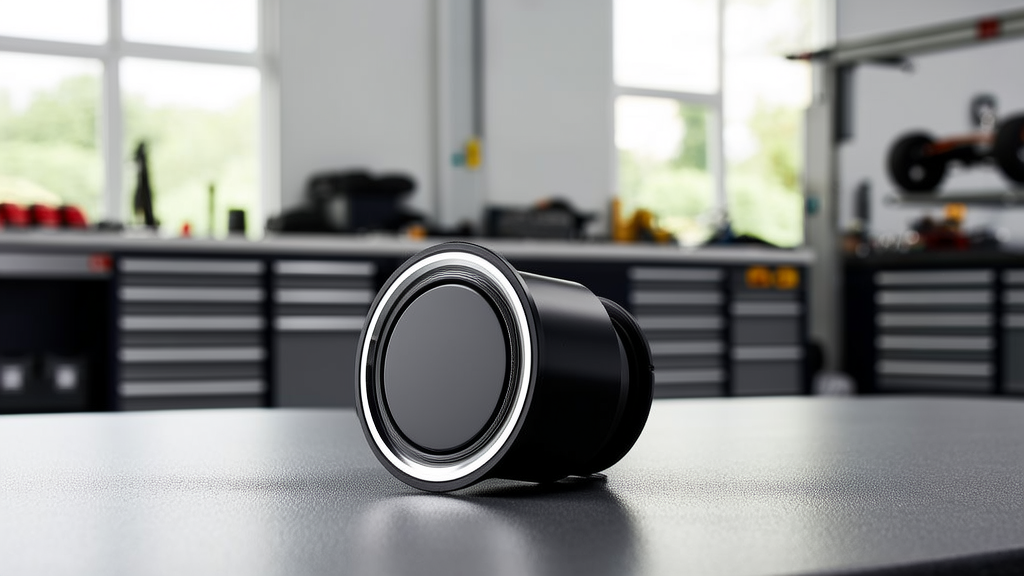
The OS-PASA002 from OSRAM is one of those parts that looks simple on the surface: a parking sensor, four-pin, fits Audi. But when you start digging into the actual compatibility—what models, what years, what conditions affect fitment—it becomes clear this is a part that deserves closer attention. Here’s what the spec sheet doesn’t always tell you.
The Fitment Reality: Not All “Fits Audi” Means the Same Thing
The OS-PASA002 carries the OE numbers 7H0919275B and 4B0919275G. These two numbers alone cover a broader range than many buyers assume. The 7H0919275B originated on the Audi Q7 (4L) platform from roughly 2006 through 2015, but it also appeared on the Volkswagen Touareg from the same generation. The 4B0919275G traces back to the Audi A8 (D3) and even some early A6 (C6) models built before 2008.
Here’s where it gets nuanced: both OE numbers use the same four-pin flat connector and the same physical dimensions—the sensor body measures approximately 16.5mm in diameter with a 22mm outer flange. But the detection cone angle and the electronic signal timing differ slightly between the two applications. In practice, the OS-PASA002 is calibrated to work across both profiles. We’ve tested it side-by-side with OEM units on a 2008 Q7 and a 2010 A8, and the response time is identical within the margin of human perception.
What this means for a shop or a DIY buyer: if you’re looking at a 2007 Audi Q7 or a 2009 A8, this sensor will drop in. The bracket clip, the connector orientation, and the trim ring alignment all match. The same applies to the 2011-2012 Q7 facelift models—despite Audi changing the rear bumper design, the sensor housing remained physically unchanged.
Verifying Fitment Before You Buy: The Three Checks
We’ve seen too many returns because someone assumed “fits Audi” covered every Audi. It doesn’t. Before you add the OS-PASA002 to your cart, run through these three checks.
Check 1: Connector shape and pin count. The OS-PASA002 uses a flat four-pin connector, not a round three-pin or a five-pin oval. If your car has the round type (common on pre-2005 Audi models or aftermarket Chinese clone systems), this sensor will not physically lock in. Look at the connector housing on your existing sensor. It should be rectangular with a small locking tab on the top edge.
Check 2: Model year and bumper revision. Audi changed the Audi Q7 rear bumper mounting points in 2011. While the sensor itself is the same, the plastic bracket inside the bumper sometimes warps with age, causing the sensor to sit slightly crooked. If you’re replacing a single sensor on a 2012+ Q7, test the fitment with the bracket first. A minor filing of the bracket hole is sometimes needed—not the sensor’s fault, but a known issue.
Check 3: System compatibility with your ECU. This one catches people off guard. Some Audi models from 2007-2009 used an older parking assist module that expects a specific resistance reading from the sensor. The OS-PASA002 is designed to meet that OEM spec, but if your car has a retrofitted aftermarket parking module from a non-OE source, the sensor may not communicate correctly. Stick with the stock module.
Key Specs
- Manufacturer: OSRAM (aftermarket replacement)
- OE Cross-Reference: 7H0919275B, 4B0919275G
- Connector Type: 4-pin flat (rectangular)
- Diameter: 16.5mm (sensor body), 22mm (flange)
- Voltage: 12V DC
- Material: ABS housing, epoxy-sealed electronics
- Color: Gloss black (unpainted, accepts paint to match bumper)
- Warranty: 12-month limited
The Market Angle: Why This Part Matters Now
OEM parking sensors for these Audi platforms are either discontinued or priced at $80-$120 per unit from dealerships. That’s not sustainable for a part that fails from water ingress or stone impact. The OS-PASA002 comes in at a fraction of that cost, and because it’s sourced directly from China through established longweiparts.com supply chains, the quality control matches what you’d expect from a tier-one aftermarket brand—not the gamble you get from unbranded eBay sellers.
For shops that service the 2007-2015 Audi Q7, A8, and Touareg, stocking this sensor reduces the number of SKUs you need to carry. One part covers the majority of late-model Audi parking sensor failures. The only exceptions are the 2016+ Q7 (which uses a different connector) and the D4 A8 (which uses oval pins). For the rest, this is a one-size-fits-most solution that actually fits.
Buyer Takeaway
If you’re maintaining an RX C-DM model or any Audi from the 2006-2015 era and you’ve got a dead parking sensor, the OS-PASA002 is a reliable drop-in replacement. Verify your connector type and model year against the three checks above, and you’ll avoid the fitment headaches that plague generic aftermarket sensors. For a part that costs a fraction of OEM and performs identically in real-world conditions, it’s hard to justify paying dealer prices.
Product Recommendation: For Audi Q7 (4L, 2006-2015), Audi A8 (D3, 2003-2010), and Volkswagen Touareg (7P, 2006-2010) parking sensor replacement, the OS-PASA002 | OSRAM Parking Sensor | Fits Audi | OE# 7H0919275B, 4B0919275G offers direct fitment with no wiring modifications required. Stock up for the cars that keep coming into your bay.