
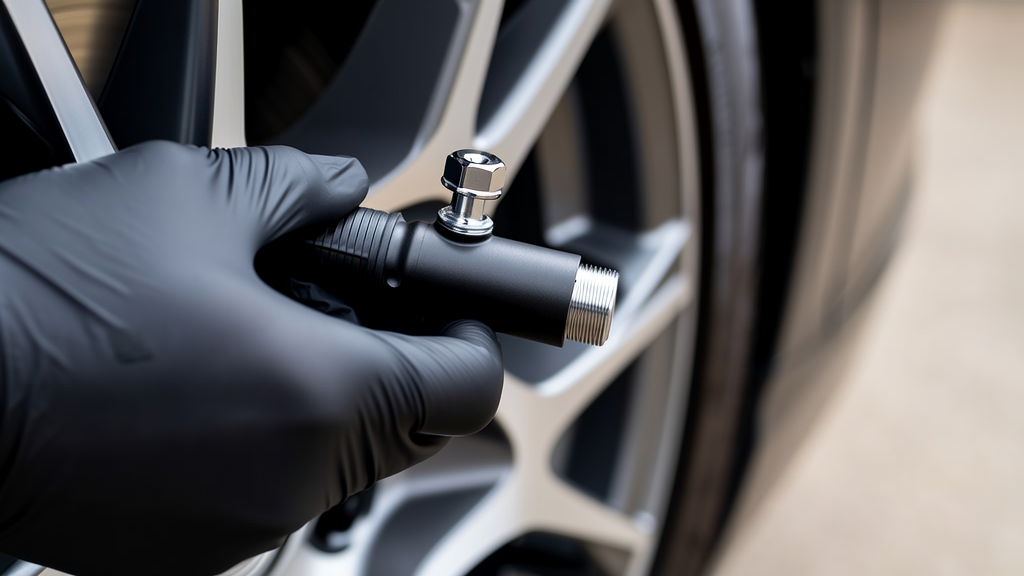
When the Ineos Grenadier hit the market, it revived the spirit of the classic off-roader with modern mechanicals. But like any modern vehicle, its tire pressure monitoring system (TPMS) relies on a quartet of sensor modules that can fail, run out of battery, or get damaged on the trail. Owners and independent shops have been watching the aftermarket scramble to fill gaps left by the OE supply chain. One part that’s gaining traction is the BH-Sens 433MHz unit, a crossover fitment that covers Ineos alongside Fengon, Infiniti, Mitsubishi, and several others. It’s a reminder that sensor technology—whether pressure, temperature, height, or radar—isn’t magic; it’s physics, duty cycles, and a few silicon tricks.
How Pressure, Temperature, and Height Sensors Actually Work
Every TPMS sensor is a miniature data-acquisition system bolted inside a wheel. The pressure element is typically a MEMS (micro-electromechanical system) diaphragm that flexes under load. As the tire pressure changes, the diaphragm moves a capacitive plate, altering the capacitance. A tiny ASIC reads that shift, converts it to a digital value, and temperature-compensates it using an on-board thermistor—usually a band-gap sensor that correlates voltage with Kelvin temperature. The result is a ±1% accuracy reading sent at intervals from 30 seconds to several minutes, depending on the vehicle’s protocol.
Height sensors—the kind used in air-suspension systems like those on some Ineos variants—work similarly but with a different geometry. A Hall-effect or magneto-resistive element detects the rotation of a linkage arm as the suspension travels. The angle translates to ride height, and the ECU adjusts air bags accordingly. Radar sensors, on the other hand, use frequency-modulated continuous wave (FMCW) or pulse-Doppler techniques. They emit a 24–77 GHz chirp, measure the time-of-flight and Doppler shift of the reflection, and calculate distance and relative velocity. It’s the same principle that’s been in military fighters since the 1940s, now shrunk to a matchbox.
Signal Types and Measurement Principles
All these sensors output one of two signal types: analog voltage (e.g., 0–5 V for a height sensor) or a digital protocol such as CAN, LIN, or proprietary RF. TPMS sensors like the BL-ST-066 use a 433 MHz ISM-band transmitter. The data packet includes sensor ID, pressure, temperature, and a status byte (fast leak, slow leak, normal). The receiver in the vehicle’s body control module decodes it and triggers a warning if thresholds are breached.
Measurement principles vary by environment. For pressure, the key is long-term stability—drift of more than a few kPa per year is unacceptable. Temperature sensors must respond quickly to internal cavity heat without lagging. Height sensors need resolution around 1 mm for decent ride control. Radar demands immunity to vibration and weather. Good aftermarket parts, especially those sourced directly from Chinese OEM suppliers like the BH-Sens line, are tested against OE specs for exactly these parameters.
Key Specs – BL-ST-066
| Parameter | Value |
|---|---|
| Frequency | 433 MHz |
| OE Cross-References | 3641050RD01, 407002GL0A, 407002GN0A |
| Compatible Brands | Ineos, Fengon, Infiniti, Mitsubishi, Nammi + 4 more |
| Sensor Type | Tire pressure + temperature |
| Battery Life | 5–7 years typical |
| Protocol | Subaru/Infitini/Mitsubishi compatible (programmable) |
Market Outlook for Ineos TPMS Replacements
With more Grenadiers entering the second and third year of ownership, TPMS battery failures are beginning to surface. Independent shops that stock a versatile, known-good part like the BL-ST-066 can service not only Ineos but also the many cross-brand platforms that share the same 433 MHz architecture. The aftermarket is no longer just a cheaper alternative—it’s often a more available one. For the Ineos owner who wheels hard and replaces tires often, having a common-sense replacement on hand beats waiting weeks for a dealer-sourced OE module.
If you’re stocking for a shop or managing a fleet, consider adding the BL-ST-066 | BH-Sens 433MHz TPMS Tire Pressure Sensor | Fits Fengon, Ineos, Infiniti, Mitsubishi, Nammi & 4 More | OE# 3641050RD01, 407002GL0A, 407002GN0A to your inventory. It covers eight brands, uses a proven BH-Sens chipset, and programs easily with common TPMS tools. The sensor technology inside is the same solid MEMS-plus-radio logic that has kept millions of cars running safely—now adapted for the Grenadier’s rugged life.