
You’ve got a 2020 Changan CS75 Plus sitting on the lift. The owner complains that the rear parking sensors stopped working, but the camera still shows the image. A quick scan with a diagnostic tool throws a U0422 — invalid data from the parking assist control module. No physical damage to the bumpers, wiring looks clean. You’ve seen this before. The control unit itself has gone intermittent. Time to swap it out.
For Changan vehicles built after 2018, the parking assist control unit is mounted behind the left rear trim panel, above the wheel well. It’s a sealed module prone to moisture ingress on earlier revisions, though later models (2021+) used a better gasket. If you’re working on a 2019 CS35 Plus or a 2020 UNI-T, the location is similar — always check the service manual for your specific variant, but the general procedure holds across the lineup.
Tools You’ll Need
- 10 mm socket and ratchet (for trim bolts)
- Plastic trim removal kit (non-marring)
- T20 Torx driver (for the module bracket)
- Digital multimeter (to verify power and ground)
- Small flathead screwdriver (to release the connector lock)
- Torque wrench (10 Nm for bracket bolts, 5 Nm for bumper sensor bolts if reusing)
- Dielectric grease (for connector sealing)
- Zip ties (for harness routing)
Step-by-Step Replacement
- Disconnect the battery negative terminal. Wait two minutes for system capacitors to discharge. This is non-negotiable — the parking assist module can retain enough charge to trigger a false code if hot-swapped.
- Remove the left rear interior trim panel. Start by pulling the plastic push pins at the top edge using a trim tool. Then pop the lower edge clips. The panel is held by four 10 mm bolts along the wheel arch flange. Set the panel aside without stressing the wiring harness still attached to the interior light (if equipped).
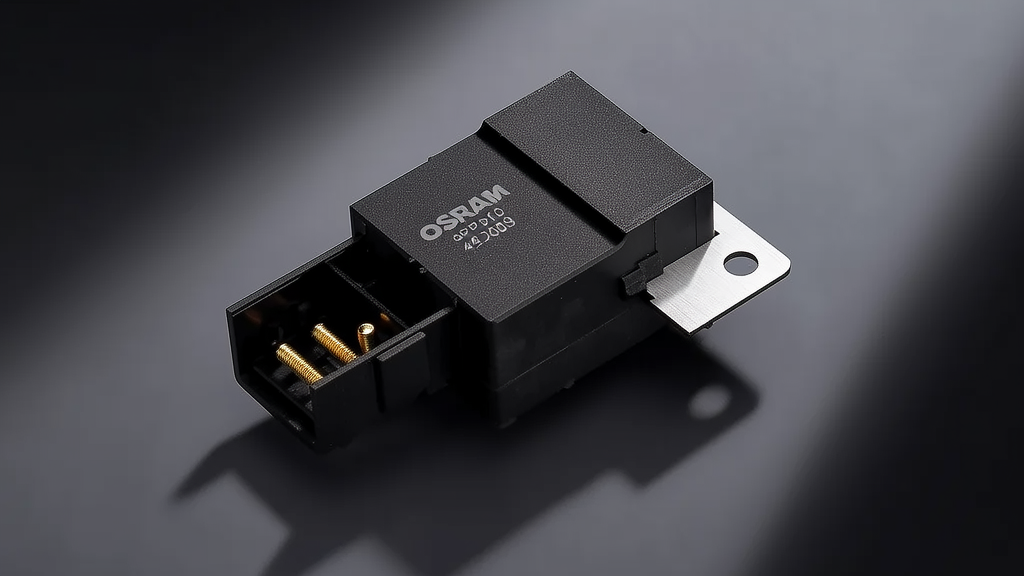
- Locate the parking assist control module. It’s a rectangular black box, about 4×3 inches, bolted to the inner body panel. A single 10-pin connector enters from the top. On some Changan models, it’s wrapped in a foam sleeve — remove the sleeve carefully.
- Disconnect the electrical connector. Press the locking tab and gently rock the connector side-to-side while pulling. Do not pry on the module itself. Use a small flathead to lift the secondary lock if present.
- Remove the module bracket. Two T20 Torx bolts hold the bracket. Torque spec is 10 Nm ± 1 Nm when reinstalling. Over-tightening can stress the housing and cause hairline cracks.
- Transfer the bracket to the new module (if the replacement unit does not come with a bracket). Verify the part number matches: for Changan, common OE numbers include 3601160-CS75 or 3601010-UNI. Important: The OS-PDCA009 from OSRAM is a direct OE replacement for Audi models like the Q7 (OE# 4L0 919 283C), but it is not compatible with Changan units. For Changan, source a unit that explicitly lists your vehicle. If you’re working on an Audi, the OS-PDCA009 | OSRAM Parking Assist Control Unit | Fits Audi | OE# 4L0 919 283C is a proven drop-in.
- Reinstall in reverse order. Apply a thin layer of dielectric grease to the connector pins before reinserting. Torque the bracket bolts to 10 Nm. Reconnect the battery.
- Test the system. Start the vehicle, place it in reverse. The parking graphic should appear on the infotainment screen within three seconds. Walk around the rear with the key fob to trigger each sensor. If one sensor fails, the system may still show a fault for the whole unit — do not blame the new module yet.
Common Mistakes to Avoid
Pro Tip: The most frequent error is buying a used or counterfeit module. Aftermarket units for Changan are widely available, but many lack proper CAN-bus filtering. A module that works on a test bench may glitch in the vehicle because the power supply noise from the alternator isn’t replicated. Always bench-test the new unit with a known-good harness, or buy from a supplier who guarantees compatibility.
- Forgetting to disconnect the battery. This can trigger a U series communication fault that requires a dealer-level scan tool to clear. Some generic scanners won’t erase stored codes in the BCM after a module swap.
- Using silicone-based grease instead of dielectric grease. Silicone can migrate into the connector terminals and cause high resistance over time. Stick with dielectric or even white lithium grease in a pinch.
- Not checking the sensor harness continuity. A broken wire in the bumper harness (common on Changan models with rear collision damage) can bring down the entire control unit. Before condemning the module, measure resistance from the module connector to each sensor pin. It should be below 5 ohms.
- Overlooking water intrusion. The control unit location behind the left rear panel is vulnerable if the rear door seal leaks. Inspect the area for rust or dampness. If the old module has corrosion on its connector, you need to treat the cause — replace the seal and dry the cavity — or the new unit will fail within months.
Final Word on the Replacement
Parking assist control units on modern Changan vehicles are surprisingly durable once the environmental issues are addressed. The job pays 0.8 hours under warranty, but an independent shop should quote 1.0 to allow for trim care and diagnostic verification. If you encounter a vehicle with repeated module failures despite correct replacement, check the CAN-bus termination resistor values in the parking system — a short elsewhere can falsely trigger module damage.
For Audi technicians or owners dealing with a similar problem, the OS-PDCA009 | OSRAM Parking Assist Control Unit | Fits Audi | OE# 4L0 919 283C (OE# 4L0 919 283C) offers an OEM-quality alternative at a fraction of the dealer price. It fits multiple Audi models from 2005–2015 and includes the correct bracket and connector seal. Pair it with a fresh gasket and you’ll eliminate the most common failure point on those MMI systems.