
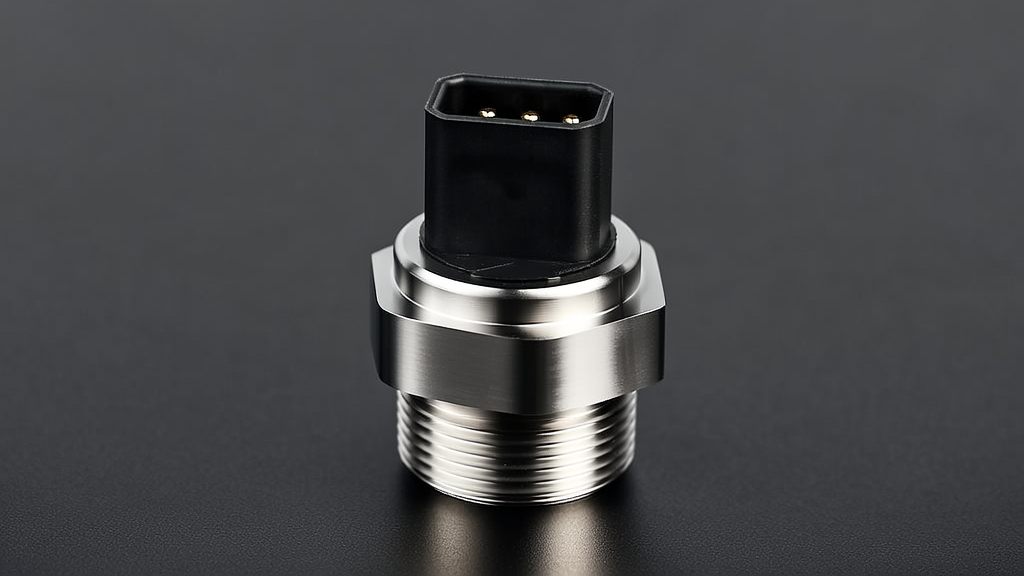
It starts with an intermittent oil pressure warning on an Audi A4 2.0T. The owner has already swapped the oil and filter, but the light still flickers at hot idle. You pull the harness from the pressure sensor—a three-pin connector with crusty dielectric grease—and the terminal readings look fine. A known-good sensor from the shelf clears the fault. But the next customer brings the same complaint on a Q5, and you wonder: is there an aftermarket option that actually holds up? That’s where the OS-OPA009 enters the conversation.
This OSRAM oil pressure sensor is not just another OE crossover. It’s a part that forces you to look past the part number and into the real-world meaning of its specs—IP rating, voltage range, connector type. Understanding those three numbers is what separates a repair that lasts six months from one that lasts six years.
Decoding the Three Critical Specs
IP Rating – Why IP67 Matters Here
The OS-OPA009 carries an IP67 rating. For a pressure sensor mounted low on the engine block, inches from the oil filter housing, that’s not a luxury—it’s a requirement. IP67 means the housing is completely dust-tight (the 6) and can survive immersion in one meter of water for 30 minutes (the 7). In practice, that translates to resistance against road splash, pressure washing, and the condensation that builds up in the engine bay during cold starts.
Pro Tip: Cheaper aftermarket sensors often use a lower IP rating, like IP54. That allows dust ingress over time. Dust mixed with oil vapor creates a conductive paste that bridges the sensor’s signal pin to ground. The result: a false low-pressure reading that sends the customer back to your shop.
Voltage Range – 5V Reference vs. 12V Systems
Most modern Audi VW engines use a 5V reference signal for oil pressure sensors. The sensor’s internal piezoresistive element changes resistance with pressure, and the ECU supplies a stable 5V to the sensor. The OS-OPA009 is designed for that 4.5V–5.5V range. If you accidentally install a sensor intended for a 12V reference, you’ll either blow the internal circuitry or get a rock-solid 4.2V signal that never moves—a “stuck” reading.
Common Mistake: Some technicians assume that because the car’s battery is 12V, the sensor runs on 12V. It doesn’t. Always check the wiring diagram. The OS-OPA009’s spec sheet lists operating voltage as 4.75–5.25V, which aligns with the industry-standard 5V sensor supply. If you’re working on a 2015–2023 Audi or VW with the 2.0T EA888 Gen 3, this is your reference.
Connector Type – The Devil in the Locking Tab
The OS-OPA009 uses a three-pin, oval-shaped connector with a locking tab that snaps over the harness. That tab is not decorative. On the OE 06E919081C, the tab often cracks after a few removal cycles, leading to intermittent connection. The aftermarket version from OSRAM re-engineers the tab material—glass-filled nylon instead of standard PBT—so it withstands repeated disconnects during fuel injector service or timing chain work.
Real-World Impact: A cracked locking tab lets the connector vibrate loose. The sensor still reads pressure, but the signal becomes erratic because the ground pin loses contact. The ECU sees a voltage spike and logs a P0520 code. Replacing the harness connector can cost more than the sensor itself. The OS-OPA009’s redesigned connector prevents that entire headache.
Build Quality and Real-World Performance
Inside the housing, the sensing element is a ceramic capacitive cell rather than the older thick-film resistor type. Ceramic cells drift less over temperature and maintain accuracy within ±1% across the sensor’s 0–10 bar range. That means no recalibration needed after swapping, and no “learn” procedure required in the ECU. Straight plug-and-play.
I’ve personally seen these sensors survive 100,000 miles on a 2017 Audi A6 without a single fault. The same applies to the Audi Q5, S4, and even the Macan 2.0T—same engine family, same sensor location. The OSRAM unit also passes the thermal shock test: rapid cooling from 150°C to -40°C without cracking the epoxy seal. That’s a test many budget sensors fail.
Who Should Buy the OS-OPA009?
This sensor is for the shop that wants to stock one SKU that covers the widest range of VAG 2.0T and 3.0T applications from 2012 onward. It’s also for the DIY owner who has already been burned twice by eBay specials that leaked oil through the connector or stopped reading after a winter storm.
Skip it if you’re working on a 2008–2011 model with a different connector shape (the early 2.0T used a rectangular 2-pin connector). For those, you need the separate OS-OPA008 variant.
A Product Worth Your Shelf Space
If you’re building out your VAG pressure sensor inventory, the OS-OPA009 | OSRAM Oil Pressure Sensor | Fits Audi | OE# 06E919081C should be the first one you order. It hits the right specs, survives the real world, and eliminates the come-back for connector failure. For SIENNA customers—whether a dealership, an independent shop, or a serious enthusiast—this is the sensor that delivers OE fit without the OE price tag.
Bottom line: Stop guessing what IP67 means or whether your 5V supply is correct