
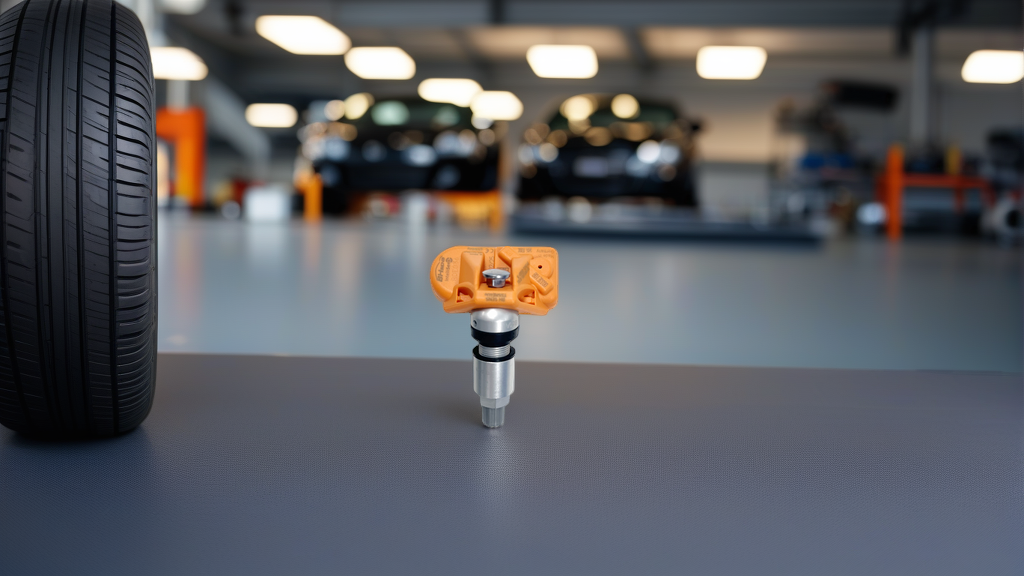
If you drive a Jeep and the tire pressure warning light keeps bothering you, you’re not alone. The system is generally reliable, but age, aftermarket electronics, and simple battery drain can trigger false alarms or total failures. Below we break down the three most common causes and how to diagnose them without wasting time or money.
Common TPMS Fault Codes for Jeep
Modern Jeeps log specific codes when the TPMS system detects a problem. Here are the codes you’ll most likely see with a compatible scan tool:
| Fault Code | Description | Likely Cause |
|---|---|---|
| U0122 | Lost communication with TPMS module | Dead module, bad wiring, or blown fuse |
| C121C | Tire pressure sensor – internal fault | Sensor battery dead or sensor damaged |
| C1240 | Sensor not initialized / missing ID | New sensor not learned or intermittent signal |
| C1500–C1505 | Sensor low battery or no signal | Individual sensor battery exhausted |
Tip: Many Jeep models from 2008 onward (Wrangler JK, Grand Cherokee WK2, Cherokee KL) use 433MHz sensors. Always confirm frequency before buying replacements.
Dead Battery Symptoms and Diagnosis
A TPMS sensor’s internal battery is sealed and non-replaceable – when it dies, you replace the whole sensor. Symptoms:
- The warning light comes on intermittently first, then stays solid.
- One tire always shows “— psi” or “0 psi” on the dashboard.
- The light stays on even after you inflate all tires to the correct pressure.
- In colder weather, dead batteries become more noticeable because cold weakens aging cells.
How to confirm: Use a handheld TPMS trigger tool or a bidirectional scanner. If the sensor doesn’t respond when you place the tool near the valve stem, the battery is dead. A good sensor should transmit a signal within a few seconds.
Signal Interference and False Alarms
Jeep owners often install aftermarket dash cams, LED light bars, or CB radios. These devices can emit radio frequency noise that drowns out the weak 433MHz signal from your TPMS sensors. The result: a flashing light that goes away when you turn off the accessory.
Suspect interference if:
- The warning light only appears when certain electronics are on.
- Multiple sensor IDs drop out simultaneously.
- The light flashes briefly then resets after a few minutes of driving.
Fix: Temporarily disconnect aftermarket electronics. If the light clears, relocate the device further from the TPMS receiver (usually near the center console or behind the glove box) or install a noise filter.
Recommended Part
For a reliable replacement that fits most Jeep models (Wrangler, Cherokee, Grand Cherokee, Compass, Renegade) along with Alfa Romeo, Aston Martin, BAIC, Chrysler, Dodge and 8 more, use the RDE036V21 | BH-Sens 433MHz TPMS Tire Pressure Sensor | Fits Alfa Romeo, Aston Martin, BAIC, Chrysler, Dodge & 8 More | OE# 0045400217, 05154876AA, 407005DA0C. It is a direct OE swap for parts like 0045400217, 05154876AA, 407005DA0C and many others. Program it with a compatible TPMS tool, then have a tire shop mount and learn it to your vehicle.
FAQ
How do I know if my Jeep TPMS sensor is bad or just low on battery?
A low battery will give occasional dropouts – the light flashes, then goes solid, then returns to normal after driving. A completely dead sensor will show no pressure reading at all for that wheel. Use a TPMS trigger tool to test; if no response, the sensor is bad.
Can I replace just one TPMS sensor on my Jeep?
Yes, but make sure it matches the original frequency (433MHz) and protocol. Mixing different brands or frequencies can cause the system to fail to learn the new sensor. For best results, replace all four at once if the others are over 5 years old.
My Jeep TPMS light blinks for 60 seconds then stays on – what does that mean?
A blinking light for the first 60 seconds after start-up indicates a system fault, not just low pressure. Common causes: a sensor that failed to transmit during the initial 10‑minute drive cycle, or a complete loss of communication with the module. Scan for codes to pinpoint the issue.
Will aftermarket wheels cause TPMS interference?
Aftermarket wheels themselves don’t cause interference, but the metal type (e.g., aluminum vs. steel) can slightly affect signal strength. The bigger issue is the valve stem type – some aftermarket wheels require a different sensor form factor. Always use the correct sensor for your wheel design.