
Modern vehicles rely on a network of sensors to deliver performance, safety, and fuel efficiency. Your CLUBMAN (Mini Clubman) is packed with pressure, temperature, height, and radar sensors that constantly monitor the driving environment. Understanding how each sensor works helps you identify issues earlier and make smarter replacement choices.
The Basics of Automotive Sensor Technology
All sensors share a common job: turn a physical property (force, heat, distance) into an electrical signal the ECU can process. The signal can be analog (varying voltage or frequency) or digital (PWM, CAN bus data). The principle behind each sensor type determines its accuracy, response time, and failure modes.
For a Clubman owner, the most critical sensor interactions involve tire pressure, engine coolant temperature, suspension level, and forward collision radar. Let’s break them down.
Tire Pressure Monitoring System (TPMS) – Pressure and Temperature Sensors
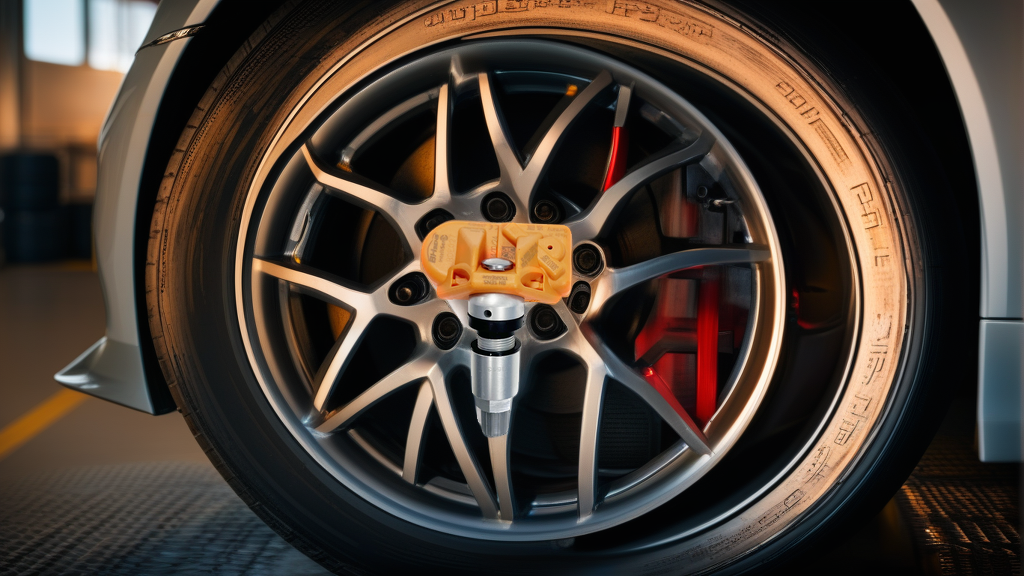
The Clubman uses a direct TPMS system. Each wheel’s sensor module houses a pressure sensor, a temperature sensor, a battery, and a radio transmitter. The pressure sensor is a micro-electromechanical system (MEMS) piezo-resistive element. When tire pressure deforms a tiny silicon diaphragm, the resistance across the element changes. The sensor electronics convert that resistance into a digital value, which is then transmitted at a designated frequency.
Signal type: Radio frequency (RF) – most Mini Clubman models use 433MHz, though some earlier units used 315MHz. The signal contains a unique ID per sensor, pressure in kilopascals (or PSI), temperature in degrees Celsius, and a battery status flag. The receiver in the Clubman’s body control module decodes this data and displays it in the instrument cluster.
Measurement principle: Direct pressure measurement inside the tire. The temperature sensor is a small NTC thermistor mounted close to the pressure element – it compensates for temperature effects on the pressure reading and also warns of overheating tires.
The RDE027V21 TPMS sensor (brand BH-Sens, OE# 36106856209, 36106881890, 6855539, 70735510) is a plug-in replacement for many Clubman and other BMW/Mini applications. It uses the same 433MHz frequency and is pre‑programmed with common Mini OE IDs, so you don’t need a separate cloning step. For example, the BH-Sens RDE027V21 TPMS sensor used in many Mini Clubman models operates at 433MHz and clamp-in design, matching the factory standard.
Sensor failure signs: Sporadic “TPMS inactive” warnings, low reading when tire is properly inflated, or no reading after a tire rotation (due to mismatched sensor IDs).
Height (Level) Sensors – Suspension and Headlight Leveling
The Clubman, especially Clubman S and JCW trims with adaptive suspension or dynamic headlights, uses ride‑height sensors to measure suspension travel. These are typically Hall‑effect angle sensors. A metal arm attaches the sensor to the suspension control arm. As the suspension compresses or extends, the arm rotates a magnet past a Hall‑effect IC. The IC outputs a voltage (0–5V) proportional to the rotation angle. That voltage tells the suspension control unit the wheel’s position relative to the body.
Measurement principle: Angular position converted to linear suspension travel using geometry stored in the ECU’s calibration table. The sensor has no moving wear items except the linkage – the magnetic pickup is contactless.
Signal type: Analog voltage (0.5–4.5V typical) or PWM on later models. The suspension ECU uses these readings to adjust damping valves, control ride height, and aim the headlights per load level.
Failure signs: Uneven ride height, headlights pointing too high or low, or “suspension malfunction” warnings. Many height sensors are specific to left/right side.
Radar Sensors – Adaptive Cruise Control and Collision Avoidance
Clubman models equipped with the Driving Assistant Professional package use a forward‑facing millimeter‑wave radar sensor behind the lower front bumper. This is a Frequency‑Modulated Continuous Wave (FMCW) radar. The sensor transmits a radio signal that sweeps across frequencies (e.g., 76–77 GHz). A portion of that signal reflects off objects and returns to the receiver. The time delay between transmission and reception gives the distance. The frequency shift (Doppler effect) tells the relative speed.
Measurement principle: The radar module calculates the “range gate” and “beat frequency” from the transmitted vs. received signal. Multiple antennas allow azimuth and elevation detection (object position). The sensor then outputs target data (distance, speed, angle) over CAN bus or FlexRay.
Signal type: Digital (CAN bus messages containing tracked objects, sometimes raw FFT data for processing). The Clubman’s autonomous emergency braking and adaptive cruise control logic lives in the ECU, not in the sensor.
Failure signs: “Radar sensor blocked” message, adaptive cruise control unavailable, false collision warnings. Unlike TPMS, radar sensors require accurate alignment (yaw/roll/pitch) – a common issue after bumper replacement.
Temperature Sensors – Engine and Cabin
Temperature sensors in the Clubman come in two main flavors: negative temperature coefficient (NTC) thermistors for coolant, intake air, and ambient air, and positive temperature coefficient (PTC) elements for heating elements. The NTC works by decreasing resistance as temperature rises. The ECU sends a small constant current through the thermistor (or measures voltage drop across a voltage divider) and converts the resulting voltage to temperature using a lookup table.
Measurement principle: Resistance vs. temperature is nonlinear, but the ECU’s calibration compensates. Typical coolant sensor resistance: ~2.5kΩ at 20°C, ~300Ω at 80°C.
Signal type: Analog voltage (usually 0–5V). Failure signs: Wrong temperature gauge reading, cold‑start enrichment issues, or “engine too hot” warning if sensor shorts.
Comparison of Sensor Types in a MINI Clubman
| Sensor Type | Measurement Principle | Output Signal | Typical Clubman Application |
|---|---|---|---|
| TPMS pressure | Piezo-resistive MEMS | 433 MHz RF (digital packet) | Tire pressure monitoring |
| Temperature (coolant) | NTC thermistor | Analog voltage 0‑5V | Engine temperature gauge |
| Ride height | Hall‑effect angle sensor | Analog voltage 0.5‑4.5V or PWM | Adaptive headlights, suspension |
| Radar | FMCW Doppler | CAN bus digital (target list) | Adaptive cruise, AEB |
Why Sensor Accuracy Matters for the MINI CLUBMAN
A failing sensor can cause error codes that resemble other system faults. For instance, a stuck TPMS temperature sensor could report a sudden 120°C reading, triggering an incorrect “tire overheating” alert. Similarly, a drift in the height sensor calibration will cause headlights to misaim, potentially blinding oncoming traffic. Radar miscalibration of just 0.5° in vertical angle can cause the system to miss a pedestrian or trigger false braking.
When replacing sensors, always use OE‑quality or verified aftermarket parts that match the Clubman’s communication protocol and frequency. Incorrect TPMS sensors may not pair with the control module, and cheap radar replicas often fail in rain or snow.
Recommended Part
For your Clubman’s TPMS replacement, the RDE027V21 | BH-Sens 433MHz TPMS Tire Pressure Sensor | Fits Alpina, BMW, Mini | OE# 36106856209, 36106881890, 6855539 (BH-Sens RDE027V21) is a reliable pre‑programmed clamp‑in option that fits directly to the original valve stem. It covers Mini and BMW OE numbers 36106856209, 36106881890, 6855539, and 70735510. No additional programming tool is required for most Clubman models after 2014 – the sensor is already loaded with compatible IDs.
FAQ
Can I use the same TPMS sensor from a 2016 Clubman on a 2020 Clubman?
Not directly. Although both likely use 433MHz, the sensor ID format and data packet structure may differ. Check the OE number on your existing sensor. If it matches 36106856209 or 36106881890, the RDE027V21 is a direct fit for many 2014–2021 Clubman models.
How do I know if my Clubman’s radar sensor is misaligned?
Typical symptoms: “Radar sensor blocked” appears on a clear day, adaptive cruise control won’t engage, or you get false forward collision warnings. A professional recalibration is needed – usually with a factory scan tool and a specific target board placed in front of the bumper.
Will a failing height sensor always cause a warning light?
Often, but not always. A gradual drift in voltage may not trigger a dashboard light until it exceeds the diagnostic threshold. You may notice the headlights pointing too low or the ride feeling unbalanced before the warning appears. Monitoring live data with a scan tool is the best way to catch it early.
What happens if a temperature sensor shorts open?
An open circuit (infinite resistance) is read by the ECU as extremely cold temperature – typically below −40°C. This forces the engine computer to enter a cold‑start enrichment mode, leading to very rich fuel mixture, rough idle, and black smoke. Replace the sensor immediately to avoid catalytic converter damage.