
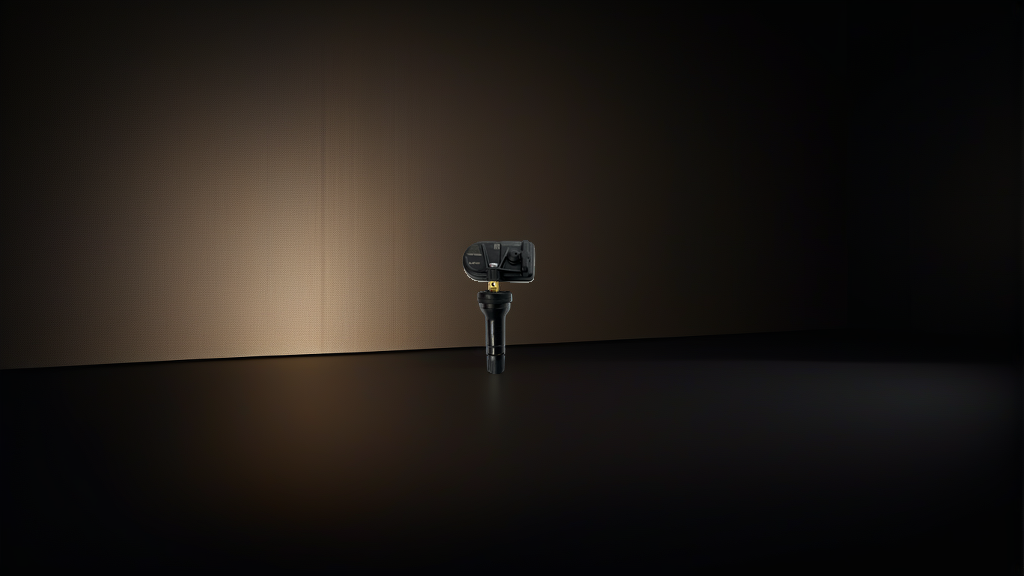
Volkswagen has used several TPMS generations over the past two decades. If you’re replacing a dead sensor or buying a spare set for your Golf, Passat, Tiguan, or Touareg, understanding the underlying specs will save you time and a second trip to the tire shop.
Frequency Band – Why 433MHz Dominates in VW
Most Volkswagen vehicles built after 2006 use 433MHz TPMS sensors. The 315MHz band was common in early-2000s North American models, but by the time direct TPMS became mandatory (NHTSA FMVSS 138 in the US), VW had standardized on 433MHz for global platforms.
- 433MHz – Used in VW’s MQB (Golf 7+, Passat B8, Tiguan Mk2) and earlier PQ35/PQ46 platforms. Sensors broadcast at 433.92MHz ± a small tolerance.
- 315MHz – Found almost exclusively on older North American VW models (e.g., 2005-2007 Jetta, some New Beetle). If you’re outside the US, assume 433MHz.
A sensor’s frequency is determined by the quartz crystal inside the transmitter module. Aftermarket replacements like the BH-Sens BL-ST-066 are tuned to 433MHz and will work on any VW that originally required a 433MHz sensor. Match your OE number – don’t guess the frequency by year alone.
Battery Life – Realistic Expectations for a Clamp-In Sensor
Clamp-in sensors (valve-stem type) use a sealed lithium coin cell. VW’s OEM sensors typically last 5 to 7 years in normal driving conditions. Battery life depends on:
- Transmission interval – VW sensors transmit at a fixed rate (typically every 60 seconds when stationary, every 20 seconds above 40 km/h). The more you drive, the faster the battery drains.
- Temperature extremes – Batteries degrade faster in hot climates (desert summers) and extremely cold winters.
- Vehicle idle time – Sensors don’t “save” battery while parked; they still transmit once per minute.
You cannot replace the battery – the sensor is potted in epoxy. When the battery dies, you buy a new sensor. A good aftermarket sensor should hit the same 5-7 year window. The BH-Sens BL-ST-066 uses a high-grade lithium cell rated for that span under normal use.
IP Rating – How Waterproof Is Your TPMS Sensor?
Every TPMS sensor installed inside a tire must withstand water, mud, road salt, and pressure cycling. The industry standard for clamp-in sensors is IP67 (dust-tight and protected against temporary immersion in 1m of water for 30 minutes). Some OEM VW sensors are rated IP69K, meaning they can survive high-pressure hot water jets (think automatic car washes or tire cleaning).
| Specification | IP67 | IP69K |
|---|---|---|
| Dust ingress | 100% sealed | 100% sealed |
| Water resistance | 1m depth, 30 min | High-pressure/steam jets |
| Typical usage | Most aftermarket TPMS | Heavy-duty / off-road |
| Common on VW? | Yes (majority) | Some Touareg/Amarok |
If you’re buying an aftermarket sensor, look for at least IP67. The BL-ST-066 meets IP67 – enough for daily driving and rain. For off-road use, confirm IP69K ratings with the seller.
Protocol Compatibility – The Hidden Gotcha
TPMS sensors don’t just broadcast frequency and pressure/temperature data. They use a specific communication protocol that the vehicle’s receiver module understands. Volkswagen has used several over the years:
- Schrader (433MHz) – Common on 2006-2016 Golf, Jetta, Passat. Uses a 125kbps OOK/ASK modulation.
- TRW / Conti (433MHz) – Used on 2017+ MQB vehicles. Slightly different data frame structure.
- Bendix (315MHz) – Early US-market models.
A 433MHz sensor is not automatically compatible with every 433MHz VW. You must match the OE number. The BL-ST-066 is cross-referenced with OE numbers such as 3641050RD01, 407002GL0A, 407002GN0A, and others – these correspond to the Schrader/TRW 433MHz protocol used on a wide range of models (Fengon, Ineos, Infiniti, Mitsubishi, Nammi, and more, but critically it fits many Nissan/Infiniti platforms that also use the same 433MHz VW-family sensor).
For your Volkswagen, if your OE number matches one of the ten listed on the product page (e.g., 407002GL0A, 407004CB0A), the sensor will pair correctly.
Fitment Note – These Sensors Aren’t Just for VW
While this article focuses on Volkswagen, the BH-Sens BL-ST-066 BL-ST-066 | BH-Sens 433MHz TPMS Tire Pressure Sensor | Fits Fengon, Ineos, Infiniti, Mitsubishi, Nammi & 4 More | OE# 3641050RD01, 407002GL0A, 407002GN0A is a multi-vehicle sensor. It fits certain Fengon, Ineos, Infiniti, Mitsubishi, Nammi, and several other brands that share the same sensor platform (likely Nissan-Renault-Mitsubishi alliance vehicles). That versatility is helpful if you manage a mixed fleet or buy parts in bulk for multiple vehicles.
Bottom line: if your VW’s OE number matches any of the listed numbers, you’re good. If it doesn’t, don’t assume.
Installation Tips for a Clamp-In Sensor
- Torque the valve nut to the manufacturer’s spec (usually 4-6 Nm). Overtightening can crack the sensor housing.
- Use a new rubber grommet when reinstalling the sensor – old grommets may leak air.
- Relearn procedure – After installing new sensors, most VW models require a TPMS relearn (often with a diagnostic tool or a specific key sequence). Check your owner’s manual.
Recommended Part
If you need a 433MHz clamp-in TPMS sensor with broad fitment covering many VW and alliance-platform vehicles, the BL-ST-066 | BH-Sens 433MHz TPMS Tire Pressure Sensor | Fits Fengon, Ineos, Infiniti, Mitsubishi, Nammi & 4 More | OE# 3641050RD01, 407002GL0A, 407002GN0A is a solid choice. It’s made by BH-Sens (Baolong Technology), a major OE supplier, so you’re getting factory-grade quality without the dealership markup.
FAQ
Can I use a 433MHz TPMS sensor on a 315MHz Volkswagen?
No. The receiver module in the car is tuned to one frequency only. A 433MHz sensor will not communicate with a 315MHz receiver, and vice versa. Always check your original sensor’s frequency (printed on the housing) or look up your vehicle’s VIN with the TPMS system.
How do I know if my Volkswagen sensor is dead or just needs reprogramming?
If the TPMS warning light is solid, the sensor is likely failed (dead battery or internal fault). If the light blinks for 1–2 minutes then goes solid, it often means a signal loss or missing sensor – try a relearn first. A dead sensor won’t respond to any activation tool.
Is a higher IP rating always better for TPMS sensors?
IP69K is more robust against high-pressure washing, but for 99% of passenger cars, IP67 is sufficient. The extra cost of IP69K is only justified for off-road vehicles or extreme mud/water conditions. For a regular VW Golf or Passat, IP67 works fine.
Can I mix different brands of TPMS sensors on the same vehicle?
Yes, as long as they share the same frequency and protocol (same OE equivalent). For example, you can replace a single dead VW sensor with a BH-Sens BL-ST-066 if the OE number matches. Just remember that all four sensors must operate on the same frequency – mixing 315MHz and 433MHz on the same car is not possible.