
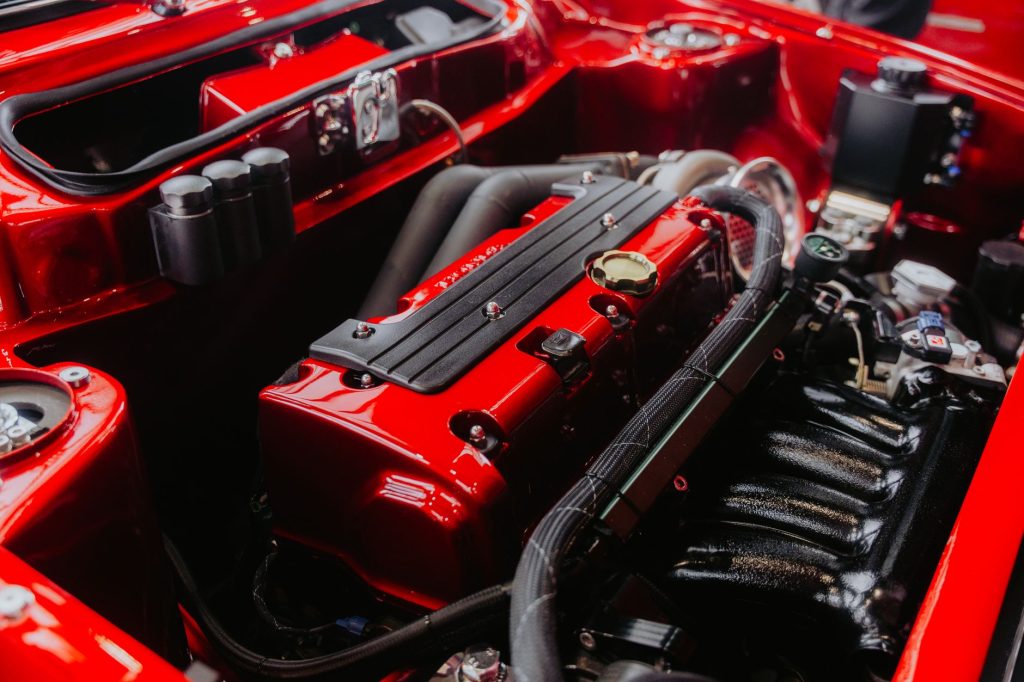
A 2023 DFM Forthing T5 EVO rolled in on a hook last Tuesday with a hard miss on cylinder three. Customer was certain it was plugs — a quick-lube joint had “done them” three months back. Plugs were fine. The coil wasn’t. And here’s where the job got interesting: that coil carried zero branding. No logo, no box (the customer left it home anyway), just a faint casting mark that looked like a batch date.
This is the situation where knowing the OE number system stops being catalog trivia and becomes the fastest route to a correct sale. On Chinese-market vehicles especially, box art tells you nothing. The molded-in number tells you everything.
Start With the Number, Not the Packaging
Every ignition coil wears its identity somewhere, and you usually have four places to look:
- Molded into the housing — typically near the mounting flange or alongside the connector boss. Small, raised characters. Bring a flashlight and a wire brush.
- Printed label on the bracket — common on newer units, but heat cycles eat these fast. Photograph it while it’s still legible.
- The old coil you already removed — if the vehicle ran on the original part, the OE number is sitting in your trash bin. Dig it out.
- The dealer parts counter — hand them the VIN and ask for the ignition coil number. They’ll print it whether you buy from them or not. Costs you nothing but five minutes.
On that T5 EVO, the number stamped into the housing read MW251981. Once you know how to read it, that string does most of your work for you.
What MW251981 Actually Tells You
The Mitsubishi Connection
OE numbers follow a format: two letters, six digits, sometimes a suffix. Those leading letters aren’t random — they signal which numbering family the part belongs to. DFM Forthing builds much of its passenger-car lineup around Mitsubishi-licensed engine architecture, and the 4A91-series mills under the hoods of the T5 and T5 EVO are the clearest example. Because the hardware descends from Mitsubishi designs, the electrical components follow Mitsubishi’s numbering conventions.
The rough decoder, learned from years of flipping through catalogs:
| Prefix | Era / Family |
|---|---|
| MB, MD | Older generations, largely 1980s–90s hardware |
| MN, MR | 2000s-era components |
| MW | Current-generation electrical and sensor parts |
So MW251981 isn’t gibberish. It flags a modern electrical-family part sharing design lineage with Mitsubishi-sourced components. Treat that as a rule of thumb, not gospel — always confirm against a fitment catalog before you order. But it narrows a thousand-candidate search down to a handful in seconds.
Why One Number Fits Several Applications
Shared platforms mean the identical coil shows up on multiple fitment lists across brands and model years. Add supplier reboxing — the same factory part wearing three different aftermarket labels — and shelf confusion multiplies fast.
The molded OE number cuts through all of it. Labels get slapped on by distributors; the casting comes from the tooling. When a boxed part and a bare part disagree, believe the casting.
One warning worth repeating: lookalikes are real. A coil with the wrong primary resistance can fire happily on the bench test and still slowly cook the ECU’s driver transistor over a few weeks of driving. Then you’re eating a comeback and an ECM claim.
Pro Tip: Before any failed coil goes in the scrap bin, photograph the OE number, the connector face, and the mounting pattern. Build a phone album per customer vehicle. Next time that chassis hits your lift, you’ll quote the job from the parking lot instead of guessing at the counter.
The Right Part for MW251981
Back to the T5 EVO. With the OE number confirmed, ordering became a thirty-second exercise. The | OE# MW251981](https://longweiparts.com/product/os1264-osram-ignition-coil-fits-dfm-forthing-oe-mw251981/”>OS1264) — an OSRAM ignition coil built against OE reference MW251981 — matched the application directly, and the resistance figures checked out against spec before installation. New coil in, miss gone, customer gone inside the hour. Total diagnostic time: about twenty minutes, most of it spent reading a casting instead of swapping parts blind.
That’s the whole argument for learning these numbering systems. A tech who can decode prefixes turns a mystery part into a catalog lookup. One who can’t is throwing coils at a misfire and hoping.
If you service DFM Forthing traffic regularly, MW251981 is a number worth memorizing — it covers the coil failures you’ll see most on the Mitsubishi-engine platforms. Keeping a couple of | OE# MW251981](https://longweiparts.com/product/os1264-osram-ignition-coil-fits-dfm-forthing-oe-mw251981/”>OS1264 units) on the shelf means those cars stop being special orders. In my experience, the shops that win these jobs aren’t the ones with the biggest catalogs. They’re the ones who can read the part before the customer finishes explaining the symptom.

Recommended Part: OS1264 – OE-quality aftermarket part, ready to ship.