
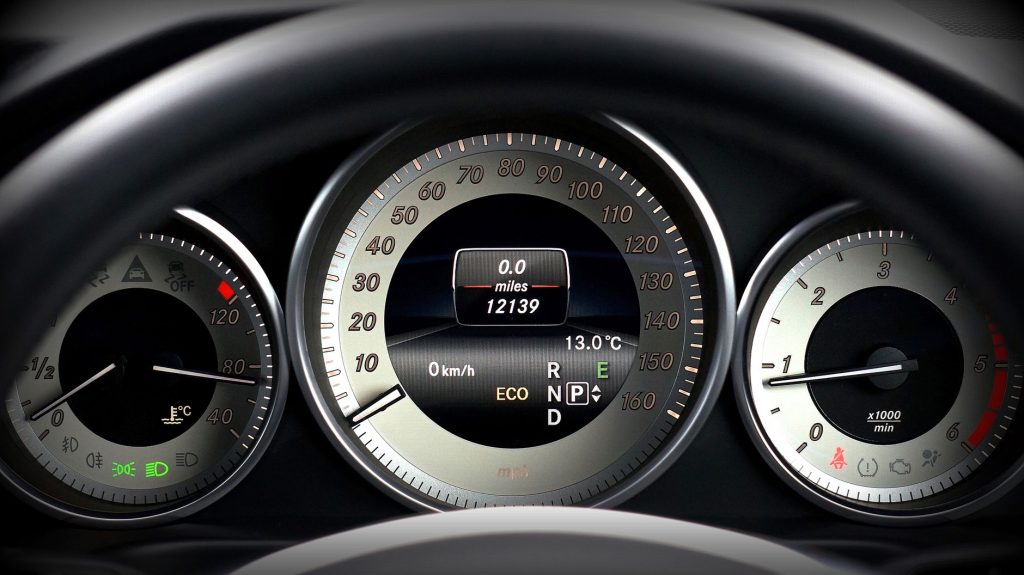
A customer’s AMG GT rolled into the shop last January with a tire pressure warning glowing before the engine even fired. He was certain both front sensors had died overnight. Ten minutes with a scan tool told a different story: both sensors transmitting, no stored faults, batteries healthy. A gauge check explained everything — fronts sitting at 2.1 bar against a 2.6 bar placard spec. The overnight temperature had dropped 14 degrees. There was no failure. Just physics.
It’s Physics, Not Fault Codes
Air contracts as it cools, and the working rule of thumb is roughly 0.06 to 0.07 bar lost per 10°C drop. On most sedans that’s a quiet annoyance. On a GT it’s a dashboard drama, because those 19- and 20-inch staggered wheels wear short-sidewall rubber with relatively little air volume. Each degree moves the needle further in percentage terms, and the system flags it faster.
Cold also stresses the sensors themselves. The lithium coin cells inside them lose output as temperatures fall, so a unit that limped happily through summer can start skipping transmissions below freezing. Marginal sensors announce themselves precisely on the ugliest morning of the year — never a coincidence worth ignoring twice.
Summer flips the script. Extended highway running pushes pressures up, and a track day can cook valve stems hard enough to age rubber snap-in hardware prematurely. Metal clamp-in sensors handle that heat far better, which is why they belong on a car with the GT’s speed rating in the first place.
A Five-Minute Seasonal Routine
None of this requires a lift or a specialist. Before the first frost, set all four tires to the door-jamb placard values while cold, then re-check monthly — a single warm-cold swing can erase half a season’s accuracy. While you’re at the wheel, look over each valve stem for salt crust and green corrosion where it meets the rim; road brine kills more stems than impact damage ever will.
Two habits separate the shops that see repeat TPMS complaints from the ones that don’t. First, whenever a tire comes off for any reason, fit a fresh service kit — nut, seal, valve core, cap. A reused gasket is the classic source of the slow leak that gets blamed on electronics. Second, when a sensor’s battery genuinely dies (typically year seven to ten), replace in pairs rather than solo. If one cell is spent, its twin bought the same batch and lives the same schedule.
Pro Tip: Before condemning any sensor in December, verify pressures with a quality gauge while the car is cold — ideally at the same ambient temperature it slept in. Roughly half the “dead TPMS” jobs that arrive after the first hard frost are simply underinflation wearing a fault-code costume. Charging someone for two new sensors to fix a 20-dollar air problem is how customers stop coming back.
What to Order
When replacement is genuinely due, keep it simple. The BL-ST-081 | BH-Sens 433MHz TPMS Tire Pressure Sensor | Fits Aston Martin, BMW, Maybach, Mercedes-Benz, Mini & 2 More | OE# 36106872774, 42607WAA02, 5A3DC0401 is a pre-programmed 433 MHz clamp-in unit, so there’s no programming session and no dealer appointment — mount it, seat the bead, drive, done. Coverage is broad, too: Mercedes-Benz, Maybach, BMW, Aston Martin and Mini across 61 dedicated applications, which matters if the GT shares a garage with other European iron.
For anyone building a winter-prep order, that sensor is the quiet line item worth adding — inexpensive insurance against a warning light that spoils an otherwise perfect cold-morning start.

Recommended Part: BL-ST-081 – OE-grade replacement with full warranty, available now.
