
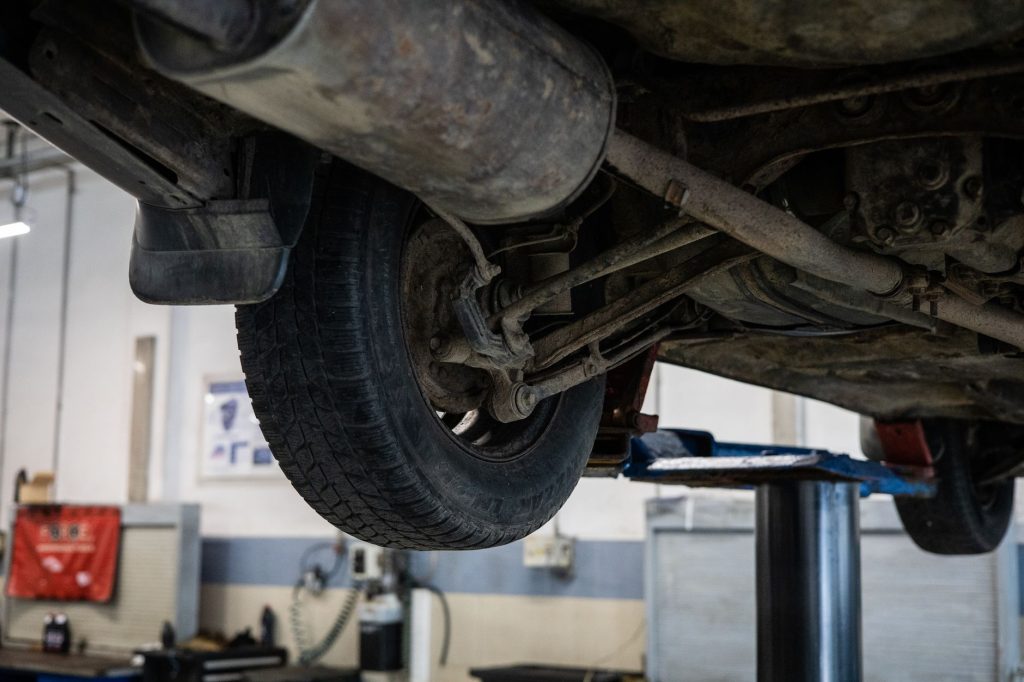
The check engine light is off, but the adaptive suspension warning is on. The front end sits two inches higher on the driver’s side. Your scan tool confirms a fault in the ride height sensor circuit on the left front. You pull up the part number from the dealer—8R0941285G—and brace for the quote. Then the parts guy says something interesting: that same sensor number appears in the system for three different Audi platforms spanning nearly a decade.
That’s not a parts catalog glitch. It’s platform sharing doing what it’s supposed to do.
For Audi technicians, fleet managers, and DIY owners alike, understanding how one ride height sensor can bridge multiple models is the difference between a $40 aftermarket fix and a $180 dealer-only replacement. Here’s what’s actually going on under the fender liner.
The Platform Sharing Reality: One Sensor, Many Badges
Audi’s modular longitudinal platform—the MLB architecture—has been the backbone of the brand’s larger vehicles since the Q5 debuted in 2008. The beauty of this system, from an engineering standpoint, is that suspension hardpoints, electronic control modules, and even sensor mounting bosses are shared across vehicles that look nothing alike on the outside.
The OE number 8R0941285G isn’t unique to one car. It’s the factory ride height sensor used on:
- Audi Q5 (8R) — 2009-2017
- Audi A6 (4G) — 2012-2018
- Audi A7 (4G) — 2012-2018
- Audi Q7 (4L) — 2010-2015 (with adaptive air suspension)
That’s a substantial cross-section of Audi’s lineup. The physical sensor—a Hall-effect unit that converts suspension arm position into a voltage signal—is mounted identically in each application. The connector is the same. The output curve is the same. The mounting bolt pattern is the same.
What changes is the vehicle’s software calibration. The control module reads the sensor’s voltage and applies model-specific ride height maps. But the hardware itself? Interchangeable.
This is precisely why aftermarket manufacturers like OSRAM can produce a single ride height sensor SKU that covers multiple Audi models. The OS-HSA007 is designed around the 8R0941285G footprint, meaning it drops into any vehicle that the factory part fits.
What Cross-Reference Actually Means
When a parts list says “OE Cross Reference: 8R0941285G, 4G0616005, 4L0616005,” it’s not claiming those numbers are identical in every way. It’s saying the mounting, electrical connector, and signal output are compatible. The internal sensing element and the mechanical linkage arm are the same length and travel.
In practice, this cuts both ways. For the technician, it means you can stock one part number and service multiple Audi platforms. For the owner, it means you’re not paying a premium for a part that’s specific to a single trim level.
Inside the OS-HSA007: What to Look For
The OS-HSA007 from OSRAM isn’t just a clone of the Audi factory sensor. It’s a direct replacement engineered to match the original’s specifications while addressing the common failure modes that plague these units.
Build Quality and Construction
The original Audi sensor uses a plastic housing that’s susceptible to cracking at the mounting ears, particularly in colder climates where road salt accelerates degradation. The OS-HSA007 uses a glass-filled nylon housing with reinforced mounting points. It’s a subtle difference, but one that matters when you’re torquing the bolt back in after a suspension repair.
The internal Hall sensor is sealed against moisture ingress. This is the number one killer of OEM ride height sensors—water seeps past the connector seal, corrodes the PCB, and produces erratic voltage readings that manifest as suspension warning lights or a vehicle that randomly raises and lowers itself.
Electrical Specifications
| Parameter | OS-HSA007 Specification |
|---|---|
| Supply Voltage | 5V DC (regulated from vehicle) |
| Output Signal | 0.5V – 4.5V analog |
| Operating Temperature | -40°C to +125°C |
| Connector | 3-pin (matches OE) |
| Mounting | 2-bolt flange, same dimensions as OE |
| Sweep Angle | 90° ± 2° |
The output curve matches the factory sensor within 1% across the full sweep. That’s critical. If the aftermarket sensor’s voltage curve diverges from the OE unit, the adaptive suspension control module will misinterpret the signal and adjust ride height incorrectly.
Fitment Notes for the 8R and 4G Platforms
The sensor mounts to the upper control arm and the body on most applications. The linkage arm connects to the lower control arm. On the Q5, you’ll need to remove the wheel and the fender liner to access it—plan for about 30 minutes of labor if you’ve done it before.
On the A6/A7, the sensor is mounted slightly higher and requires a 10mm socket with an extension. You can reach it without removing the wheel, but it’s tight. A swivel socket helps.
Pro Tip: Before condemning the sensor, check the linkage arm. These plastic arms wear at the ball socket and can bind, which causes the sensor to output a constant voltage even as the suspension moves. A $10 linkage arm failure looks exactly like a $100 sensor failure.
Common Mistakes When Replacing Ride Height Sensors
Even experienced technicians make errors on these systems. Here are the three most frequent ones I see:
1. Skipping the Calibration Procedure
After installing a new ride height sensor, the vehicle’s control module needs to learn the new sensor’s zero point. On VAG vehicles, this requires a scan tool with access to the suspension module. You can’t just bolt the sensor on and clear the code.
The procedure involves:
- Setting the vehicle on level ground
- Ensuring tire pressures are correct
- Using the scan tool to command the suspension to “learn” the current height as nominal
- Performing a full range of motion test
If you skip this, the vehicle may ride at the correct height initially, but the control module will eventually command adjustments based on faulty baseline data. The result: a car that settles too low on one corner or bounces on the highway.
2. Replacing the Sensor Without Checking the Wiring Harness
The connector on these sensors is known for water ingress. If the connector pins are corroded, a new sensor won’t fix the problem. The voltage drop across corroded pins will trigger the same fault code.
Check the harness side of the connector for green corrosion or bent pins. If you see any, replace the pigtail or repair the harness before installing the new sensor.
3. Assuming All Four Corners Use the Same Sensor
This is a big one. The front sensors and rear sensors on Audi’s adaptive suspension are not the same part. The rear units have a different mounting angle and linkage length. The OS-HSA007 is specifically for the front suspension positions. Don’t order two and expect them to work in the rear.
Aftermarket vs. Dealer: The Price Reality
Audi’s factory ride height sensor carries a dealer price that fluctuates between $120 and $180 depending on the model and region. The aftermarket equivalent from a reputable brand like OSRAM typically lands in the $40-60 range. That’s a significant savings, especially when you realize the aftermarket unit uses better housing material and equal-or-better internal components.
But price isn’t the only consideration. Warranty matters. OSRAM backs their sensors with a standard one-year replacement warranty, which is comparable to what you’d get from a dealer on a factory part. The difference is that the dealer part has to be returned through a dealership network, while the aftermarket warranty is handled by the seller.
For a shop, stocking the OS-HSA007 makes sense because it covers the Q5, A6, and A7 with a single SKU. That’s three platforms, one part number, less shelf space dedicated to suspension components.
Market Outlook: What the Growing Aftermarket Options Mean
The expansion of cross-compatible aftermarket sensors is a direct response to two pressures. First, Audi owners are keeping their vehicles longer. The Q5 from 2012-2015 is now in its second or third owner, and those owners are more price-sensitive than the original buyers. Second, the supply chain for OEM sensors has tightened post-2020, with longer lead times from dealer networks.
Aftermarket manufacturers have stepped into that gap. OSRAM’s decision to produce the OS-HSA007 with broad Audi platform coverage is smart engineering and smart marketing. It acknowledges that the physical part is identical across models, even if the dealership catalog prices them differently.
For the buyer, the takeaway is simple: when a part number like 8R0941285G crosses multiple platforms, you don’t need to pay a platform-specific premium. The hardware is the hardware. The software calibration is handled by the vehicle’s control module, not the sensor itself.
Who Should Consider the OS-HSA007
- Independent shops servicing multiple Audi models — one SKU covers your Q5, A6, and A7 customers
- Fleet managers with mixed Audi fleets — simplified parts inventory
- DIY owners with a 2012-2017 Q5 or A6/A7 — the savings justify the slightly longer installation time
- Anyone replacing a sensor that’s failed due to water ingress — the improved sealing is worth the upgrade
Who Should Skip It
- Dealership techs required to use OEM parts under warranty — you don’t have a choice
- Owners of 2018+ Audi models — the newer MLB Evo platform uses a different sensor design entirely
- Those with rear suspension faults — this is a front-only sensor
Bottom Line
Cross-brand compatibility in the automotive parts world isn’t a marketing gimmick. It’s a function of platform engineering and manufacturing efficiency. The OS-HSA007 ride height sensor from OSRAM proves that point by covering multiple Audi models with a single, well-built part. When you’re looking at a suspension fault on a 2014 Q5 or a 2016 A6, this is the sensor that makes financial sense—and it’s the one that won’t leave you waiting on a dealer backorder.
Check the linkage arm, verify your wiring, run the calibration, and you’re done. The OS-HSA007 | OSRAM Ride Height Sensor | Fits Audi | OE# 8R0941285G is your direct replacement for the 8R0941285G, built to handle the same conditions as the factory unit without the factory price. For shops and owners alike, that’s a worthwhile upgrade.

Recommended Part: OS-HSA007 – OE-quality aftermarket part, ready to ship.