
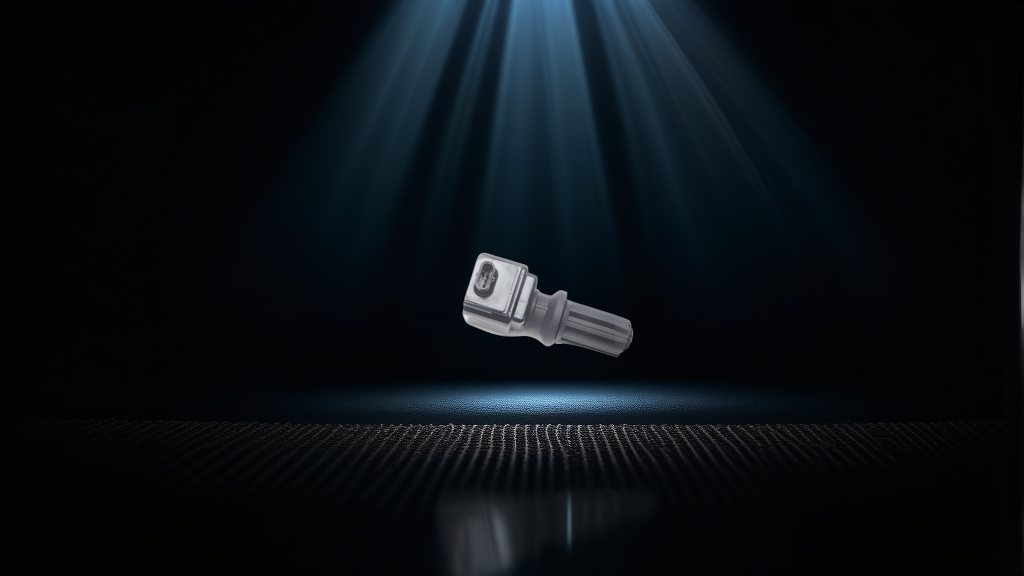
Ford’s modular engine family has been the backbone of the American lineup for two decades, and with that longevity comes a predictable problem: ignition coil failures. The OS1081, sold under the OSRAM brand and cross-referenced to OE number CM5E12A366BC, has become a staple answer for that problem—but only if you know exactly what you’re buying. And that’s where things get interesting.
The aftermarket ignition coil space is crowded with parts that claim broad compatibility. The OS1081 takes a different approach: it’s listed for a single application, which is either frustratingly narrow or refreshingly specific, depending on how you look at it. For shop owners and DIYers who’ve been burned by “universal” coils that fit everything and work properly in nothing, that specificity is a feature, not a bug.
The Fitment Reality Check
Here’s the deal with the OS1081: it’s designed for a specific subset of Ford vehicles running the 3.5L and 3.7L V6 engines, most commonly found in the Fusion, Edge, and MKX from roughly 2013 through 2016. The OE reference CM5E12A366BC tells you this is a Genuine Ford part number, and the aftermarket replacement market for this coil is substantial because the factory units do fail—usually with a P0351 through P0356 code, depending on which cylinder gives up.
But here’s where you need to pay attention. When I say “specific subset,” I mean it. The coil-on-plug design in these engines looks nearly identical across multiple Ford platforms, but the internal circuitry and dwell characteristics aren’t always interchangeable. You can physically bolt an OS1081 into a 2018 F-150 with the 3.5L EcoBoost—the connector will click, the bracket will align—but the coil will not deliver the correct output characteristics for that ignition system. It’ll run, but it’ll run poorly, and you’ll be chasing misfires for weeks.
This is the single most common fitment mistake I see in shops: physical compatibility mistaken for electrical compatibility.
Key Specs at a Glance
| Specification | OS1081 Value |
|---|---|
| Part Type | Ignition Coil (Coil-on-Plug) |
| Brand | OSRAM |
| OE Reference | CM5E12A366BC |
| Primary Application | Ford 3.5L / 3.7L V6 (Naturally Aspirated) |
| Known Fitments | Ford Fusion (2013–2016), Ford Edge (2013–2015), Lincoln MKX (2013–2015) |
| Connector Type | Pencil-style, 2-pin |
| Warranty | Standard aftermarket warranty (varies by seller) |
Note: This is not the same coil used in EcoBoost (turbocharged) applications. The turbo engines use a different part number with different heat handling requirements.
How to Verify Fitment Before You Buy
Here’s the practical part, and honestly, this applies to any ignition coil purchase, not just the OS1081:
Step 1: Check the VIN, Not the Model Year
Model years lie. This is not a knock on Ford—it’s reality across the industry. A 2015 Ford Edge built in September 2014 might have different engine management components than one built in April 2015. The VIN is the only way to be certain. Decode the 8th character—it identifies the engine. If it doesn’t decode to the 3.5L or 3.7L naturally aspirated V6, the OS1081 is not your coil.
Step 2: Read the Old Coil’s Part Number
Before you even open a browser to order, pull the coil and read the part number stamped on the housing. If it says CM5E12A366BC or shows a Ford logo with DG521 (the Motorcraft equivalent), you’re in the right ballpark. If it shows anything ending in “BD” or “BE,” those are superseded revisions, and the OS1081 will generally cover those. But if it shows a different base number entirely—something like DG508 or CM5Z-12A366-B—stop. You’ve got a different coil family.
Step 3: Use the Parts Store’s Fitment Tool, Then Verify Independently
Every online parts store, including ours, has a fitment checker. Type in your year/make/model and it’ll tell you if the OS1081 fits. Use it. But then cross-reference with the OE number and the physical inspection you did in Step 2. The fitment tool is a starting point, not a guarantee. It relies on database accuracy, and databases have gaps.
Step 4: Check the Connector Orientation
This is the trick one. On the 3.5L in the Fusion, the coil sits at an angle, and the connector faces toward the intake side. On the Edge, the connector orientation is slightly different due to the engine bay layout. The OS1081 is built with a specific lead length and connector angle. If your application needs the connector to face the other direction, you’ll either strain the wiring harness or the connector won’t seat fully. This is rare, but it happens. When in doubt, look at the mounting position relative to the valve cover bolts.
What Happens When You Get It Wrong
Let’s talk about consequences, because that’s what separates a mildly annoying mistake from a costly one.
Physical mismatch: The coil won’t seat properly, the rubber boot tears on install, and you get arcing immediately. That’s a $5 boot replacement and 20 minutes of labor. Annoying, not catastrophic.
Electrical mismatch: This is the expensive one. If you force a coil with the wrong dwell characteristics into an engine that demands different timing, the coil runs hot. The internal insulation degrades, the primary winding shorts, and you’re not just replacing the coil again—you’re also potentially frying the driver circuit in the PCM. That’s a $400+ repair on top of the coil cost. I’ve seen it happen.
Thermal mismatch: The turbo engines run significantly hotter under the hood. A coil designed for the naturally aspirated engine may not have the thermal margin for forced induction environments, leading to premature failure, usually around 15,000 to 20,000 miles. You’ll think you got a bad part. You didn’t. You got the right part for the wrong application.
The Aftermarket vs. OE Decision
Here’s my honest take as someone who’s been in this industry for a long time: for ignition coils, the aftermarket has gotten dramatically better in the last decade. The old reputation for aftermarket coils being “Chinese garbage” is outdated. The reality is that many of the OE coils are manufactured in the same Chinese factories as the aftermarket ones, just with different labels and a 300% price markup.
The OS1081 from OSRAM is a solid middle-ground choice. It’s not the cheapest coil on the market—you can find no-name coils for half the price—but it’s also not carrying the Ford OEM premium. What you’re paying for is the brand’s quality control and the confidence that the internal winding specs actually match the OE design. For a part that sits in a high-vibration, high-heat environment and directly affects driveability, that’s worth something.
Who Should Buy the OS1081
If you’re working on a 2013-2016 Ford Fusion with the 3.5L, a 2013-2015 Edge, or the Lincoln MKX variant, and you’ve verified the connector orientation and the OE part number on your existing coil, this is a solid buy. It’s the kind of part you install and forget about—no need to revisit for another 60,000 to 80,000 miles.
If you’re working on an EcoBoost engine, a 2.5L four-cylinder, or any vehicle outside that specific engine family, skip it. Not because it’s a bad coil, but because it’s the wrong coil. Buy the part designed for your specific application.
The Bottom Line
Ford’s 3.5L and 3.7L engines are good powerplants that outlast their ignition components. When those coils fail, you have options, and the OS1081 is one of the more reliable aftermarket choices available. But fitment is king. Verify the VIN, check the old part number, confirm the connector orientation, and you’ll have a repair that lasts. Skip those steps, and you’re gambling on a part that looks right but might not be right.
For the shop owner or the serious DIYer, the OS1081 deserves a spot in your inventory—just make sure you’re stocking it for the right vehicles. When in doubt, pull the old coil first and compare. It takes five minutes and saves you a world of headache.

Recommended Part: OS1081 – OE-grade replacement, in stock now.