
You’ve got a 2022 Forthing T5 on the lift. Customer says the tire pressure light has been blinking for three days straight. You scan it, confirm the sensor battery is dead, and quote a replacement. Standard job — until you install the new sensor and the damn light keeps flashing. The customer is tapping their foot. The service writer is asking for a timeline. This is where most TPMS jobs go sideways, not because the sensor is bad, but because the relearn procedure wasn’t done right.
For FRIDAY-badged vehicles — and the Forthing models they share platforms with — the relearn is straightforward if you know which method matches your scan tool. Here’s the practical breakdown.
Why the BL-ST-052 Makes This Job Easier
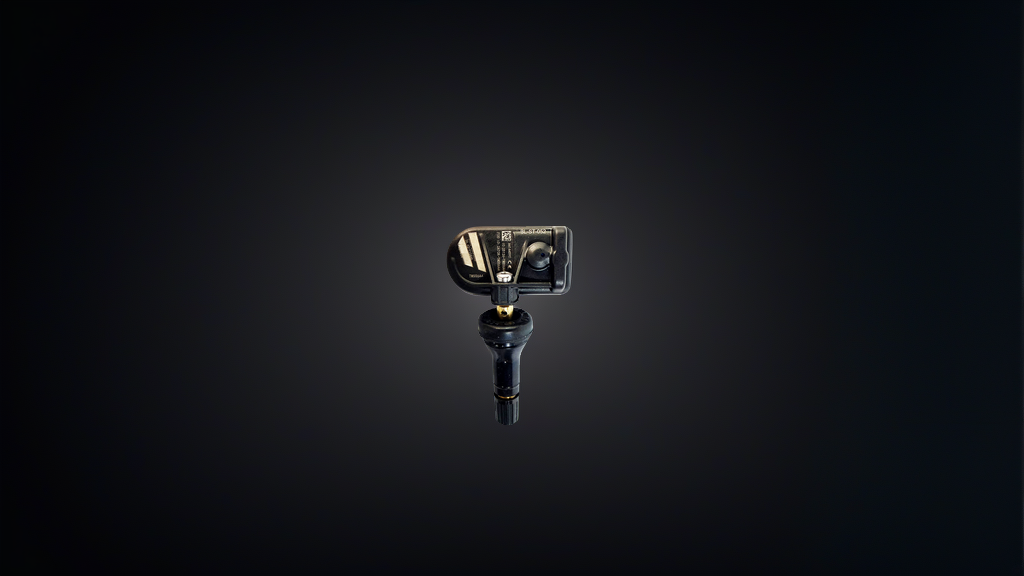
Before we get into the relearn steps, let’s talk about the part you’re installing. The BL-ST-052 | BH-Sens 433MHz TPMS Tire Pressure Sensor | Fits Forthing | OE# CM5B3685020, CM5B3685020S, SX5G3685020B is a pre-programmed, clamp-in 433MHz sensor from BH-Sens, which is Baolong Technology’s aftermarket brand. Baolong supplies OE sensors to a long list of Chinese automakers, so this isn’t some no-name import. It covers 16 dedicated OE fitments across the Forthing lineup, with OE cross-references including CM5B3685020, CM5B3685020S, and SX5G3685020B.
Because it’s pre-programmed to those OE part numbers, you don’t need a programming tool to clone IDs. You install it, trigger a relearn, and the car picks up the new ID. That alone saves you 15–20 minutes per corner compared to blank sensors.
The Three Relearn Paths on FRIDAY/Forthing
FRIDAY vehicles — and their Dongfeng/Forthing cousins — typically support three relearn methods. You’ll use whichever one your shop’s equipment supports.
Method 1: OBD Relearn (Fastest)
This is the one you want. Plug in an Autel TS508, MaxiTPMS TS601, or equivalent that supports OBD TPMS relearn for Dongfeng/Forthing. Navigate to TPMS → Relearn → OBD. Follow the prompts: the tool reads the vehicle’s current sensor IDs, you install the new sensor, then the tool transmits the new ID to the ECU. Done. Takes about 90 seconds per vehicle. No tire removal needed.
Method 2: Auto Relearn (No Tool, But Patience Required)
If you don’t have a TPMS tool on hand, FRIDAY vehicles with this sensor family support a stationary auto relearn. Here’s the sequence:
- Install the new sensor. Inflate the tire to the door sticker pressure.
- Turn the ignition to ON (don’t start the engine). Wait for the TPMS light to blink twice.
- Turn ignition OFF, then back to ON. Repeat this cycle three times within 10 seconds.
- On the third cycle, leave the ignition ON. The vehicle enters relearn mode — the horn will beep once.
- Starting at the left front, use a TPMS trigger tool (even a basic EL-50448 style) to activate the sensor. The horn beeps when that corner is learned.
- Repeat for right front, right rear, left rear.
- Horn beeps twice when all four are done. Shut the ignition off. Relearn complete.
Method 3: Stationary Relearn with a Trigger Tool Only
Some early Forthing models don’t support the OBD write method. For those, you need a trigger tool, but you can put the vehicle into learn mode manually:
- Turn ignition ON. Press the TPMS reset button (located under the dash, left of the steering column) for 3 seconds.
- Horn beeps once. Use your trigger tool on each tire in the same order as above.
- Horn beeps twice at the end.
I’ve seen techs skip the trigger tool and try to relearn by letting air out of each tire. Don’t do that. It works on some Fords and Toyotas, not on these.
Common Mistakes That Cost You a Comeback
Pro Tip: The biggest mistake we see is techs installing a blank sensor and expecting the vehicle to auto-learn it. FRIDAY/Forthing ECUs do not auto-learn new IDs on this platform. You must trigger a relearn, or the light will keep blinking. The BL-ST-052’s pre-programmed IDs eliminate the cloning step, but the relearn is still mandatory.
Also, check the sensor frequency before you install. The BH-Sens is 433MHz. If someone hands you a 315MHz sensor that “looks right,” it won’t communicate. FRIDAY models sold in North America, Europe, and most of Asia use 433MHz. Double-check the OE number against the vehicle’s VIN if you’re unsure.
One more thing: torque the clamp-in sensor to 4.5 N·m. Over-tightening cracks the housing and gives you intermittent signal loss six weeks later. Under-tightening causes air leaks at the valve stem.
What the Relearn Actually Solves
The blinking TPMS light means the ECU has lost communication with one or more sensors. A steady light means low pressure. When you swap in the new sensor, the ECU doesn’t know it’s there until you complete the relearn. Skipping this step is the number one reason customers come back saying “you didn’t fix it.”
For shop owners, the practical takeaway is this: the BL-ST-052 | BH-Sens 433MHz TPMS Tire Pressure Sensor | Fits Forthing | OE# CM5B3685020, CM5B3685020S, SX5G3685020B is a solid choice for FRIDAY and Forthing work because it cuts out the programming step. Pair it with an OBD-capable TPMS tool if you do more than a couple of these a month. If you’re a DIYer with a single vehicle, the auto relearn with a cheap trigger tool works fine — just budget 30 minutes and follow the sequence exactly.
FRIDAY’s TPMS platform isn’t exotic, but it’s not universal either. Knowing the three relearn paths and having the right sensor on the shelf makes the difference between a 20-minute job and a come-back that eats your afternoon.

Recommended Part: BL-ST-052 – OE-grade replacement, in stock now.