
It started with a dashboard warning that most Audi owners dread but few understand: “Audi adaptive air suspension: vehicle too low.” For a 2017 Audi A8 owner in Scottsdale, Arizona, that message appeared on a Tuesday morning after a week of erratic ride behavior. The front passenger corner sat noticeably lower than the rest of the chassis, and the ride quality had devolved from a magic-carpet glide into a jarring, clunky mess over the same speed bumps the car had once swallowed without comment.
The dealer quoted $2,300 for a full strut replacement and software recalibration. The local independent shop, however, had a different first move: check the ride height sensors before condemning the air springs. It was a smart call, and it saved the owner roughly $1,400. The culprit was the left-front ride height sensor, part number 4H0941286G, an electronic component that measures the distance between the control arm and the chassis and feeds that data to the suspension control module. The module uses that input to adjust air pressure in the struts, leveling the car and maintaining consistent ride quality.
The Sensor That Thinks It’s a Strut
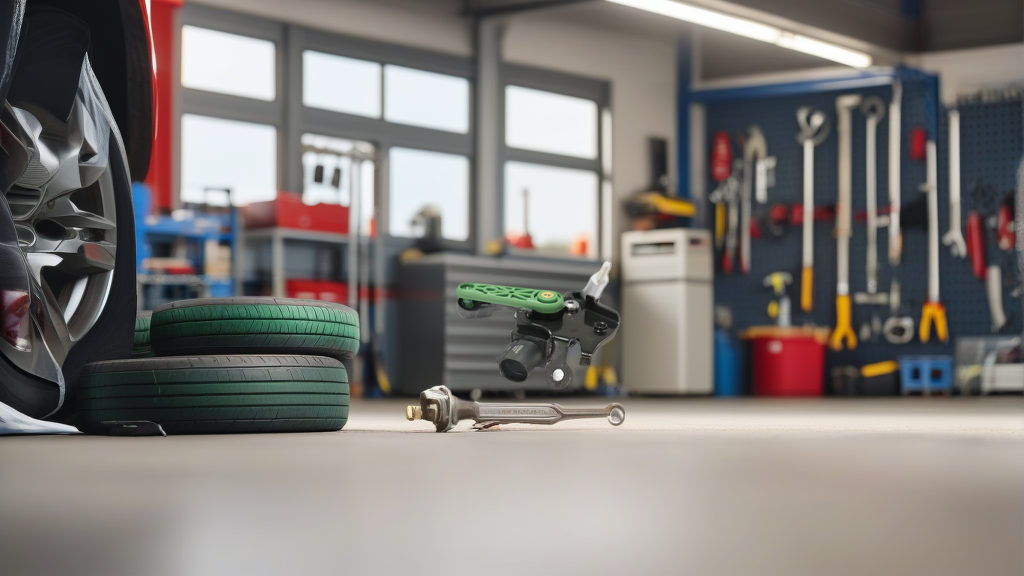
Here’s where things get interesting. The ride height sensor is a small, sealed potentiometer connected to a linkage arm. That arm rotates as the suspension compresses and extends, changing the sensor’s resistance and signaling the control module. Over time, the internal wiper contacts wear, or moisture ingress corrodes the circuit board. The result: erratic signals, intermittent faults, or a complete sensor failure that mimics a blown air spring. In this A8’s case, the sensor was outputting a voltage that occasionally jumped outside the acceptable range, triggering the warning light and causing the control module to vent air from the affected strut as a safety failsafe.
That’s the key diagnostic insight many shop owners miss. The suspension module doesn’t always know the sensor is bad. It sees an implausible value and assumes the strut is malfunctioning. So it dumps air pressure, which drops the corner, which makes the sensor read even more out-of-range. It’s a feedback loop of confusion that often leads to unnecessary strut replacements.
In the Scottsdale case, the technician spent 20 minutes with a scan tool watching live data from all four height sensors while the car was raised on a lift. The left-front sensor showed a voltage spike every time the suspension was exercised. The other three were steady. The diagnosis was clear: replace the sensor, not the strut. The OE part from the dealer was listed at $410. The shop quoted an aftermarket replacement at $189. The owner, naturally, asked about the difference.
Why the OSRAM Replacement Makes Sense
The aftermarket option the shop recommended was the OSRAM ride height sensor, SKU OS-HSA002, which directly replaces the 4H0941286G for this generation of Audi A8 (and the related S8 models that use the same adaptive suspension system). OSRAM is a name most automotive professionals associate with lighting, but the brand’s expansion into electronic sensors carries the same manufacturing discipline. The housing is sealed to IP6K9K standards, the connector matches the OE plug exactly, and the linkage arm is machined from aluminum rather than stamped steel — a minor but meaningful durability upgrade over the factory part that had failed at 62,000 miles.
The installation itself was straightforward. The sensor mounts to the upper control arm bracket with two bolts, and the linkage clips onto the lower arm. The technician had the old unit swapped out in 35 minutes, including the time spent recalibrating the suspension via the scan tool. No special tools, no bleeding, no alignment needed. The car dropped off the lift, sat level, and the warning light stayed off.
| Spec | OS-HSA002 (OSRAM) |
|---|---|
| OE Cross-Reference | 4H0941286G |
| Sensor Type | Rotary Hall-effect, sealed potentiometer |
| Output | Analog voltage to suspension control module |
| Housing | Sealed polymer, IP6K9K rated |
| Linkage Arm | Aluminum, pre-installed |
| Fitment | 2014–2018 Audi A8 / S8 (air suspension) |
| Warranty | 12-month replacement |
The owner drove the car for a week before the shop called to follow up. The verdict: smooth, level, and no warning lights. The total bill came to $320 parts and labor. Compare that to the dealer’s $2,300 quote, and the value proposition becomes obvious. The real lesson isn’t just about the part — it’s about the diagnostic approach. A $15,000 air suspension system can be brought to its knees by a $180 sensor, and too many shops go straight for the expensive hardware before checking the cheap electronics.
A Broader Market Signal for Shops and DIYers
This isn’t an isolated anecdote. Across Audi forums and independent shop networks, the 4H0941286G sensor is a known failure point on the D4-generation A8. The part sits low in the wheel well, exposed to road spray, salt, and debris. Over five to seven years of service, the internal contacts wear down, and the failure mode is almost always the same: a “vehicle too low” warning that appears intermittently before becoming constant.
For shop owners, stocking a reliable aftermarket alternative like the OS-HSA002 makes sense from both a service and a margin perspective. The customer gets a quality part at a fair price, and the shop avoids the risk of losing the job to a dealer or a competitor who quotes lower. For DIY owners with access to a scan tool that can perform the suspension calibration, the job is well within reach. The sensor is accessible with the wheel removed, the bolts are torqued to 8 Nm, and the linkage clip snaps off without any special puller.
One cautionary note: don’t skip the calibration step. Some older guides suggest that simply replacing the sensor and clearing the code is sufficient, but on the D4 platform, the suspension module needs to learn the sensor’s zero-point and travel range. Without that step, the system may still log a fault, or the ride height may sit slightly off, causing premature tire wear. If your scan tool doesn’t have the guided function for Audi air suspension, either borrow one that does or take the car to a shop for the 20-minute setup. It’s a small step that prevents a big headache.
The Takeaway for Audi Owners
The Scottsdale A8 owner got lucky in two ways: the shop he chose took the time to diagnose properly, and the aftermarket part proved to be a direct, reliable replacement. That combination is becoming more common as the OE parts monopoly loosens. OSRAM’s entry into the sensor market is a signal that major manufacturers see the value in the aftermarket electronics space, and the OS-HSA002 is a solid example of why that’s good news for consumers.
If your Audi with adaptive air suspension is throwing a ride height fault, don’t assume the worst. Get the car scanned, watch the live data from all four sensors, and check the linkage arms for binding or damage before you order anything. If the diagnosis points to a bad sensor, the OSRAM OS-HSA002 is a proven fix that won’t leave you holding a $400+ OE bill for what is essentially a small electronic component. It’s the kind of smart, cost-effective repair that keeps a flagship sedan on the road without a flagship repair bill.

Recommended Part: OS-HSA002 – OE-grade replacement, in stock now.