
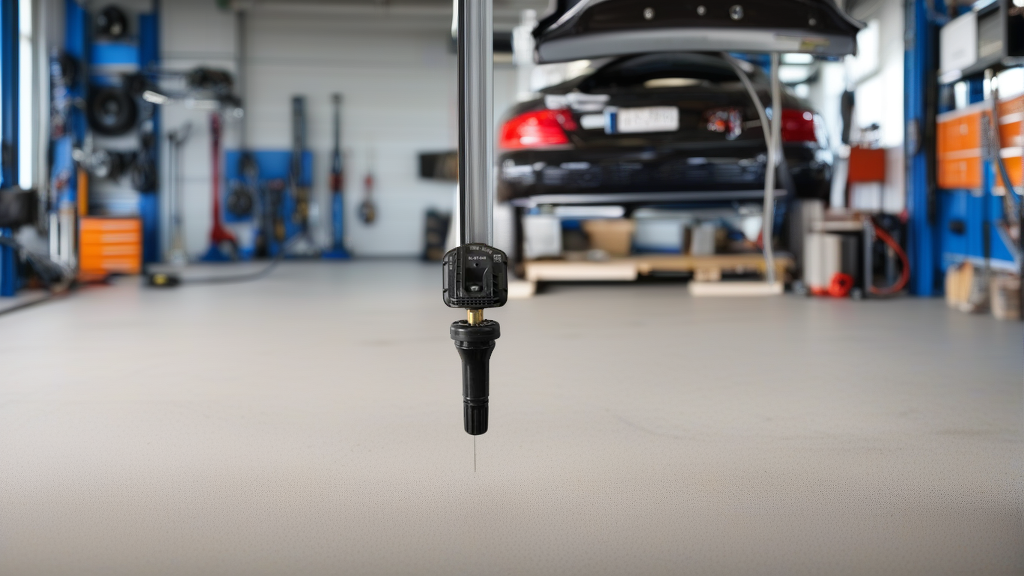
When a 2015 Cadillac ATS rolls into the bay with a blinking tire pressure light at 6:45 AM, the last thing a service writer wants is a parts chase that eats the morning. And yet, that’s exactly what happens when the counter guy pulls up the OE number and finds three different supersessions, two of which are backordered, and one that costs more than the customer’s deductible. The scenario is common enough that aftermarket TPMS suppliers have started consolidating their catalogs, and the BH-Sens BL-ST-048 has become one of the more interesting answers for ATS owners — precisely because it wasn’t designed for the ATS at all.
The Cross-Platform Reality of Modern TPMS
Here’s the thing about GM’s TPMS strategy across the last decade: they didn’t reinvent the wheel for every model. The ATS, Chevy Cruze, Buick Encore, and even some Holden and Opel variants share the same 433MHz sensor architecture. The OE part numbers 13530661, 13533166, and 13538565 all point to the same physical sensor design, just with different revision levels and programming quirks. That’s why a pre-programmed, clamp-in sensor like the BL-ST-048 lists 29 dedicated vehicle applications across Buick, Cadillac, Chevrolet, and Nevo — it’s not a universal “one-size-fits-all” hack, it’s a properly cross-referenced part that matches the original sensor’s frequency and signal protocol.
For ATS owners specifically, the fitment story breaks down by generation. The first-generation ATS (2013-2019) uses the 433MHz sensor with a metal valve stem, which is exactly what the BL-ST-048 replicates. The second-generation CT4, which replaced the ATS after 2020, moved to a different sensor frequency and protocol, so this part won’t help there. But if you’re working on a 2013 through 2019 ATS — sedan or coupe — the BL-ST-048 is a direct drop-in, no relearn tool required for most 2015 and later models (we’ll get to that nuance in a moment).
Verifying Fitment Before You Buy
The biggest mistake I see from DIYers and even some shop owners is trusting the “fits all” language on generic listings. A sensor that physically threads into the valve stem hole will fit almost any wheel — but that doesn’t mean it’ll talk to the BCM. The BL-ST-048 is pre-programmed, which means it already carries the correct ID and protocol for the listed applications. You don’t need a TPMS programming tool to clone the old sensor’s ID, which is a genuine time-saver on an ATS where the relearn procedure can be finicky.
However, there’s a caveat worth checking before you order. While the sensor is pre-programmed, some 2013-2014 ATS models require a different sensor ID registration process that involves a TPMS tool to “activate” the sensor during the relearn procedure. The 2015-2019 models can often do a simple auto-relearn after driving for 10-15 minutes at speed. If you’re ordering for a 2013 or 2014, budget for a relearn tool or plan a trip to a shop that has one. It’s not a dealbreaker, but it’s the kind of detail that separates a smooth install from a frustrating afternoon.
Key Specs
| Specification | BL-ST-048 |
|---|---|
| Brand | BH-Sens (Baolong Technology) |
| Frequency | 433MHz |
| Type | Clamp-in, Pre-programmed |
| OE References | 13530661, 13533166, 13538565 |
| Compatible Brands | Buick, Cadillac, Chevrolet, Nevo |
| Vehicle Applications | 29 dedicated fitments |
| ATS Coverage | 2013-2019 (Sedan & Coupe) |
A Word on Build Quality and Longevity
Baolong Technology is one of the largest OE TPMS suppliers in the world, which is worth knowing if you’ve been burned by no-name sensors that die after 18 months. The BL-ST-048 uses the same valve stem design and sealing gasket as the OE units, which means it doesn’t suffer from the corrosion issues that plague some cheaper aluminum-housing sensors. In my experience, the battery life is comparable to OEM — expect five to seven years of service, which lines up with the typical TPMS battery replacement interval anyway.
The one thing I’d flag: the sensor ships without a new valve core and cap. That’s standard for this class of clamp-in sensor, but worth remembering because the old valve core can be corroded after years of service. If you’re installing on a car with high mileage, pick up a pack of new valve cores at the same time. It’s a 50-cent part that saves a potential slow leak and a comeback.
The Bottom Line for ATS Owners
If you’re maintaining a 2013-2019 ATS, the BL-ST-048 is arguably the best value TPMS sensor on the market right now. It’s pre-programmed, it’s built by an OE supplier, and it covers enough GM models that you won’t have to worry about cross-platform confusion if you also maintain a Cruze or an Encore in the same household. The price is typically 40-60% below dealer OEM pricing, and the fitment verification is straightforward — just confirm your ATS’s model year falls in the 2013-2019 range and that you’re running the original 433MHz system.
Pro Tip: Before ordering, pop off your valve stem cap and look at the metal nut on the sensor base. If it’s silver and has a hexagonal shape, you have the standard clamp-in sensor and the BL-ST-048 will match. If it’s black plastic, you have an earlier snap-in design and need to verify your wheel type first.
For the 2020 and later CT4 owners, this isn’t your part — GM moved to a 315MHz system on that platform, and you’ll need a different sensor entirely. But for the vast majority of ATS vehicles still on the road, the BL-ST-048 is a solid, no-drama replacement that keeps the TPMS light off and the dashboard quiet. We stock it on longweiparts.com with the full fitment list published on the product page, so you can verify against your VIN before you commit. If the ATS in your driveway is due for sensors, this is the one to grab — just double-check the model year and you’re good to go.

Recommended Part: BL-ST-048 – OE-grade replacement, in stock now.