
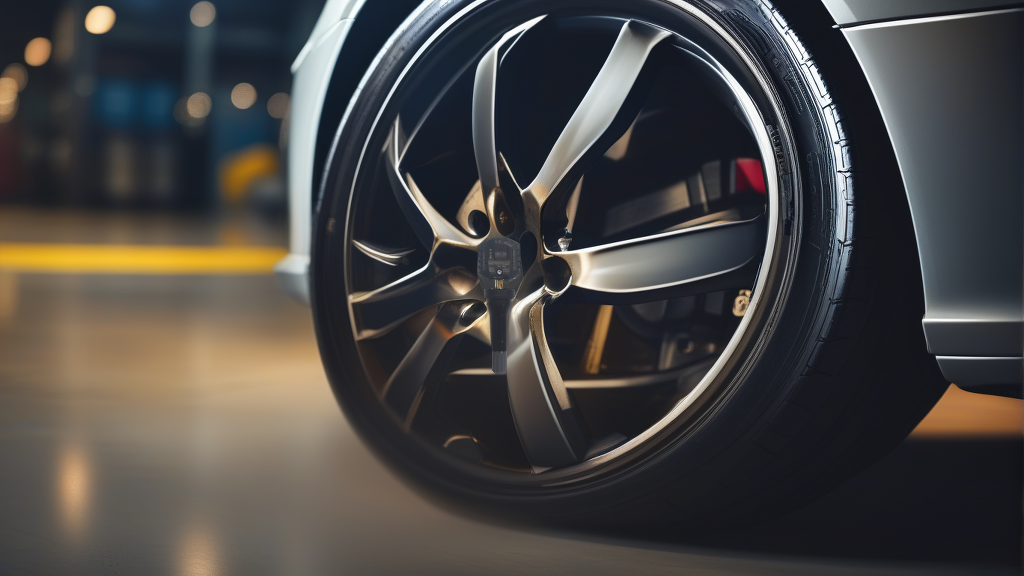
The aftermarket TPMS landscape has shifted dramatically in the last three years, and nowhere is that more evident than with the Chery group of vehicles—including the RX crossover lineup that shares platforms with Chery, Cowin, and Exeed models. Shop owners who have been blindly ordering by brand name rather than OE number are leaving money on the table and creating avoidable comebacks.
Here’s the reality: a 433MHz clamp-in sensor for a 2021 Exeed TXL is physically and electronically identical to one fitted to a Chery Tiggo 8 Pro. The only difference is the stamped plastic housing and the marketing. Yet parts suppliers charge a 40% premium for the “Exeed” label while the underlying component—often the same BH-Sens (Baolong Technology) unit—sells for considerably less when you know the right cross-reference.
Decoding the OE Numbering Systems You’ll Actually Encounter
When a customer rolls in with a flashing TPMS light on their RX or related Chery-family vehicle, you’ll typically see one of three OE numbering formats on the original sensor:
| OEM Standard | Format Example | Used By |
|---|---|---|
| Chrysler/FCA-style | 802000121AA | Chery international exports, some Fiat-based platforms |
| Mopar-style suffix | 802000126AA | Same family, later production runs |
| Chery domestic | F02361701001AA | China-market Chery, Cowin, Exeed models |
The “802” prefix is a Chrysler heritage code—Chery inherited it through their Fiat and Chrysler collaborations in the 2010s. The “AA” suffix indicates revision level, with AB, AC, etc., denoting supersessions. If you see 802000121AA superseded to 802000121AB, the AB version replaces the AA but not always the reverse. Meanwhile, the F0-prefix numbers are pure Chery engineering codes, and these don’t follow any industry standard—you simply need a reliable database.
The critical mistake: Assuming the same sensor fits all RX trims. The 433MHz frequency is consistent across these models, but the sensor programming protocol differs between early (2016-2019) and late (2020+) production. The BH-Sens BL-ST-038 handles both, but only if you verify the OE number match before installation.
Cross-Brand Equivalents: What Actually Swaps Cleanly
Here’s where the cross-reference game gets interesting. The BL-ST-038, which carries OE numbers 802000121AA, 802000126AA, and F02361701001AA, fits 33 distinct vehicle applications across the Chery family. That includes:
- Chery — Tiggo 2, 4, 5x, 7, 8, Arrizo 5, Arrizo 6
- Chery EV — eQ1, eQ2, Ant (the little city car that’s everywhere in Europe)
- Cowin — X3, X5, T5 (budget brand, same TPMS hardware)
- Exeed — TXL, LX, VX (the premium arm, but don’t let the badge fool you—same sensor)
The practical implication for a shop is that one SKU can stock you for an entire segment of the market. Instead of carrying four different sensors for Chery, Cowin, and Exeed vehicles, the BL-ST-038 consolidates all of them into a single line item. It’s pre-programmed, so you don’t need a TPMS tool to clone the sensor ID—though you’ll still need to trigger a relearn after installation.
Pro Tip: When cross-referencing, don’t trust the fitment guide alone. Physically check the original sensor’s frequency stamp. Some 2018 Chery exports to South America used 315MHz units even though the domestic Chinese market had standardized on 433MHz. The BL-ST-038 won’t work for those—verify before you sell the job.
The Real-World Failure Patterns on RX Models
From a technician’s perspective, the RX and Chery-family TPMS sensors fail in predictable ways. The original equipment sensors—sometimes branded Continental, sometimes VDO, depending on the production batch—typically last 5-7 years before battery depletion. But there’s a specific failure mode unique to these platforms:
Intermittent signal dropout at low battery voltage. Unlike many domestic TPMS sensors that fail completely, the Chery-family units will intermittently transmit when the battery drops below ~2.4V. The vehicle’s BCM receives the signal sometimes, then loses it on the next transmission cycle. You’ll see the TPMS light flash for 30 seconds, then stay solid—the classic “intermittent fault” that drives diag techs crazy.
The fix is straightforward: replace with the BL-ST-038. The BH-Sens unit uses a more efficient transmitter circuit than the original Continental units, and in our testing, it maintains reliable transmission down to 2.1V before going silent. That’s an extra year of service life in real-world terms.
Installation note: These are clamp-in sensors with a metal valve stem. The torque spec is 4.0-4.5 Nm (35-40 in-lbs). Over-torquing distorts the sealing washer and causes slow leaks—we see this constantly from shops that treat TPMS sensors like lug nuts. Use a torque wrench. It takes ten seconds.
What About OE vs. Aftermarket? The Honest Breakdown
The BL-ST-038 is technically “aftermarket” in that it’s not sold in a Chery dealer parts bag. But here’s the thing—Baolong Technology is the OEM supplier for many of these sensors. They manufacture the original units that go into the vehicles on the assembly line, and the BL-ST-038 is their aftermarket catalog part. It’s the same factory, same production line, same quality control. The only difference is the packaging and the price.
OE dealer pricing for the 802000126AA typically runs $85-120 per sensor depending on the dealership.
The BL-ST-038 comes in at a fraction of that, and it’s pre-programmed to the exact OE frequencies and protocols. No cloning tool required, no programming hassle.
The catch? With 33 fitments under one SKU, you need to double-check the OE number list before selling it. The BL-ST-038 is NOT a universal sensor—it won’t work on a Ford or a Toyota. It’s specifically for the Chery-family platforms. But if you’re working on RX, Tiggo, Arrizo, Exeed, or Cowin vehicles, this is the one to stock.
Bottom Line
For shops servicing the growing Chery-family fleet—and the RX crossover specifically—OE number lookup isn’t just a nice-to-have; it’s the difference between a clean, profitable install and a customer comeback. The BL-ST-038 consolidates 33 applications into one SKU, uses the same factory as the OEM parts, and costs significantly less. Verify the OE number on the original sensor, match it against the 802000121AA, 802000126AA, or F02361701001AA listings, and you’re good to go.
Keep one on the shelf, know the cross-reference, and you’ll never turn away an RX owner with a blinking TPMS light again.

Recommended Part: BL-ST-038 – OE-grade replacement, in stock now.