
It started as a subtle chime on a Tuesday morning. A 2015 Audi A4 2.0T rolled into the shop with the red oil canister icon flashing intermittently at low idle, then vanishing once the tach crept past 1,200 RPM. The owner had already replaced the oil pump control valve twice, spent $400 on synthetic oil changes, and was one warning chime away from trading the car in.
The shop’s first instinct was to check actual oil pressure with a mechanical gauge. At operating temperature, the engine showed 18 psi at idle — spec called for at least 23. The pump was healthy. The pickup screen was clean. The wiring to the instrument cluster checked out. So why was the ECU convinced there was no pressure?
The answer was hiding inside the oil filter housing. The factory pressure sensor had developed an internal short that only manifested when the sensor body heated up. Cold, it read fine. Hot, it drifted low and triggered a false fault. This is the classic Audi 2.0T TSI failure mode that sends owners chasing oil pumps, relief valves, and even engines — when the real culprit is a $30 part that takes eight minutes to swap.
Diagnosis: The 10-Minute Test Most Shops Skip
Before condemning the engine, do this: with the engine hot and idling, unplug the oil pressure sensor connector. If the warning goes away and the gauge reads normally, the sensor is lying to you. The ECU defaults to a safe mode when the sensor is unplugged, and the mechanical gauge will confirm actual pressure.
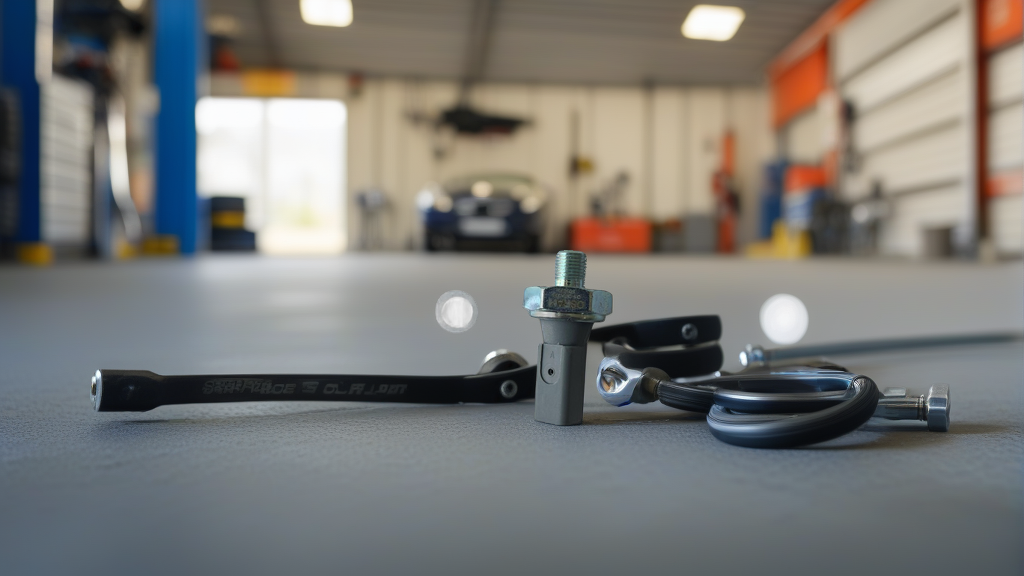
On this A4, the fix was straightforward. The OEM sensor (OE# L038919081H) was superseded multiple times by Audi due to exactly this failure mode. The aftermarket OSRAM replacement — the OS-OPA003 — is a direct-fit unit that addresses the thermal drift issue with a more stable internal diaphragm. It’s a piezoelectric-type sensor with a 0.5–4.5V analog output, which is pin-compatible with the factory harness.
Key Specs — OS-OPA003
| Parameter | Value |
|---|---|
| Brand | OSRAM |
| Type | Oil Pressure Sensor (piezoresistive) |
| Output | 0.5–4.5V analog |
| Thread | M10x1.0 |
| OE Cross | L038919081H |
| Fitment | Audi 2.0T TSI (A4, A5, Q5, A6, TT) |
The Before/After
Before the swap: intermittent warning at idle, 18 psi hot idle pressure, false P052A code, customer ready to dump the car.
After: 26 psi hot idle, no warning for 600 miles and counting, no codes. The customer’s only complaint now is that the repair was too cheap — they expected a four-figure invoice.
The Longwei Parts Take
Here’s the thing about Audi oil pressure sensors: the OE part isn’t bad, but it’s not infallible. The aftermarket has quietly caught up, and the OSRAM unit we stock at OS-OPA003 | OSRAM Oil Pressure Sensor | Fits Audi | OE# L038919081H is built with a thicker ceramic substrate than the factory piece. That matters in a sensor mounted directly to the oil filter housing, where heat soak from the turbocharger can hit 140°C.
If you’re a shop owner, keep one of these on the shelf. The 2.0T TSI is everywhere, and this sensor fails on a predictable timeline — usually between 60,000 and 90,000 miles. For the DIY crowd, it’s a 20-minute job with basic hand tools. No special scan tool needed. No coding. Just unplug, unscrew, replace, and torque to 18 Nm.
Pro Tip: Don’t reuse the copper washer that comes on the old sensor. The OSRAM unit ships with a new one, but if you’re sourcing from elsewhere, buy a fresh crush washer. A leaking seal here will drop oil pressure at idle and mimic a failing sensor.
For the A4 owner facing the same warning, the math is simple: a $30 sensor swap beats a $6,000 engine replacement. The OS-OPA003 is the part we’d put in our own cars — and after this repair, that customer is now a regular.

Recommended Part: OS-OPA003 – OE-grade replacement, in stock now.
