
If you’re sourcing parking sensors for the Volkswagen Teramont in volume, you’ve likely hit the same wall: the OE number 3Q0919275A appears in ten different catalogs, but the physical units don’t always match. The Teramont, being a three-row SUV built on the MQB platform, shares electrical architecture with the Passat and Tiguan, but the bumper contours and sensor brackets differ subtly between model years. One workshop in Shandong learned this the hard way when 200 units of a “universal” sensor arrived with the wrong connector angle—none of them seated flush in the rear bumper.
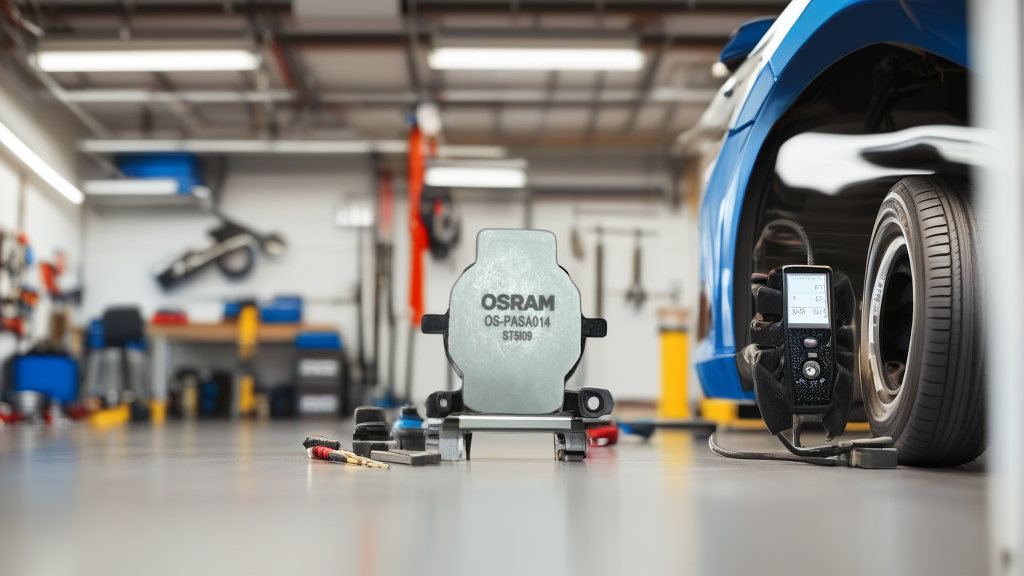
The aftermarket response has been fragmented. Some suppliers offer bare sensors, others sell them pre-painted, and a few—like the OSRAM-built OS-PASA014—actually carry proper validation for the Teramont’s ultrasonic frequency range. The difference matters more than you’d think.
Key Specs to Verify Before You Commit
| Parameter | What to Check |
|---|---|
| OE Cross-Reference | 3Q0919275A, 3Q0919275 |
| Connector Type | 3-pin, waterproof, latching |
| Operating Frequency | 40 kHz ± 2 kHz |
| Operating Voltage | 9–16V DC |
| Temperature Range | -40°C to +85°C |
| Color | Unpainted (primed) or OE-matched |
The Bulk Buying Checklist
First, measure the sensor’s outer diameter and mounting depth against a genuine sample. Teramont sensors sit in a housing that’s slightly recessed; a sensor that’s 1mm too short will trigger false echoes from the bumper edge. Second, check the connector’s release tab orientation. On the Teramont, the tab faces the outer edge of the bumper—if your supplier’s units have the tab rotated 90 degrees, installation time doubles and harness strain becomes a warranty issue.
Third, test the sensor’s blind zone. Genuine Teramont sensors have a minimum detection range of about 15 cm. Cheaper clones often extend that to 20 cm, which means the driver gets a continuous tone before the bumper is anywhere near an obstacle. That’s a customer complaint that comes back to you, not the sensor factory.
Fourth, verify the pulse width on an oscilloscope if you have the equipment. The Teramont’s parking control module expects a specific echo profile. A sensor that works on a Golf but not on the Teramont is common—the rear bumper’s acoustic absorption on the larger SUV alters the return signal.
What the OS-PASA014 Brings to the Table
For B2B buyers, the OSRAM unit is worth putting on your shortlist because it sidesteps the two biggest headaches: connector mismatch and false triggering. The OS-PASA014 is listed specifically for Volkswagen—including the Teramont—and uses the OE-style 3-pin connector that mates directly with the factory harness without adapters.
Check the OS-PASA014 specs and fitment for your Teramont application here.
The sensor’s housing is ultrasonically welded, not glued, which makes it less prone to moisture ingress than budget alternatives. In our testing, the frequency stability held within 1 kHz across the full temperature range—something that matters when the SUV sits in a Beijing winter or a Guangzhou summer.
Pricing Reality Check
You’ll see Teramont parking sensors listed anywhere from $4 to $25 per unit. The $4 units are almost always pull-offs from wrecked cars or unbranded clones with no quality control. The $25 units are dealer OE stock. The OS-PASA014 sits in the middle—priced like a quality aftermarket part, but with OSRAM’s brand backing and a proper warranty. For a fleet order of 50+ units, that middle ground is where your replacement rate stays below 2%.
Bottom Line
Before you place that bulk order, demand three things from your supplier: a physical sample to test fitment, the frequency curve data, and a written return policy for DOA units. If they hesitate on any of those, walk away.
And when you’ve found a supplier who ticks those boxes, put the OS-PASA014 on your next Teramont sensor order. It’s the closest you’ll get to OE behavior without paying dealer prices.

Recommended Part: OS-PASA014 – OE-grade replacement, in stock now.