
Audi’s parts catalog is a labyrinth of alphanumeric codes that can make or break a repair job. The OE number — or Original Equipment number — is the manufacturer’s fingerprint for every component that leaves Ingolstadt’s factories. For shop owners and DIYers alike, decoding these numbers isn’t just bureaucratic busywork; it’s the difference between a five-minute plug-and-play install and a return trip with a mismatched sensor that throws false alerts at every stoplight.
Take the parking sensor on the Audi A6, A7, and Q7 generations. The OE numbers 4H0919275, 5KD919275, and 5KD919275B look like minor variations on a theme, but they represent distinct revisions of the same ultrasonic sensor. The prefix “4H0” denotes the platform generation — in this case, the C7 A6/A7 chassis — while “5KD” points to a different production batch or supplier revision. The trailing letter, like the “B” suffix, signals a superseded version with updated internals or connector pinouts. Getting this wrong means ordering a sensor that physically fits but electrically communicates incorrectly with the Audi’s parking control module.
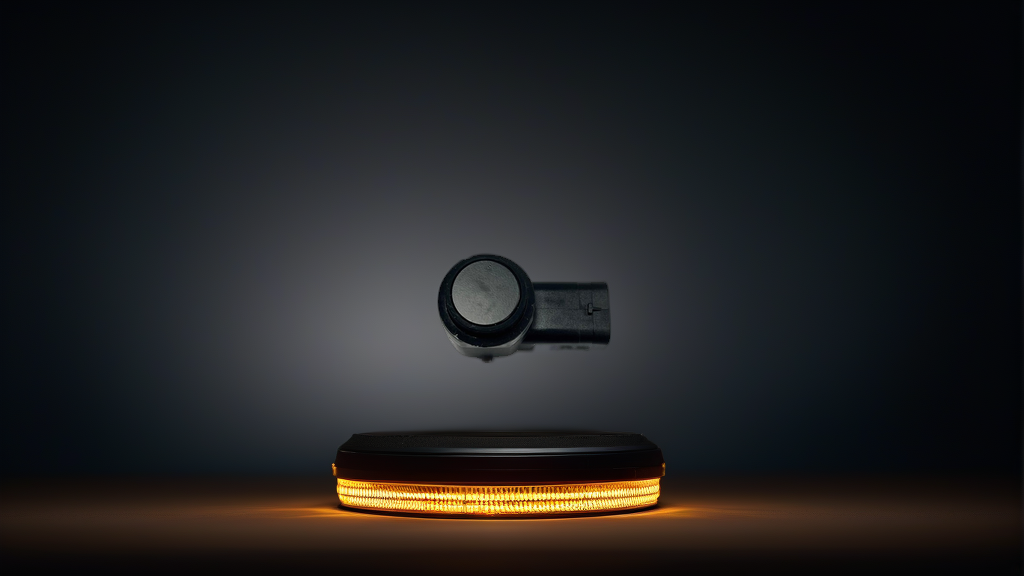
Cross-referencing becomes critical when you’re sourcing aftermarket parts. The OE number isn’t just a lookup tool; it’s a Rosetta Stone for compatibility across brands. OSRAM, the German lighting and electronics giant, manufactures sensors that carry multiple OE numbers because they supply different Audi assembly plants and aftermarket channels. The OS-PASA006, for instance, consolidates those three Audi part numbers into a single SKU — a practical shortcut for distributors who don’t want to stock three near-identical boxes.
Here’s where the numbering system gets tricky. Audi, like most German manufacturers, uses a structured code: the first four characters identify the vehicle platform or model series, the next three digits specify the component type, and any suffix letters indicate a revision. But that logic breaks down when you cross brands. A VW Group sibling like the Porsche Panamera uses a completely different prefix for the same physical sensor. And if you’re dealing with a Chinese-made aftermarket unit, many suppliers map their own part numbers to multiple OE references — which is why a single product listing can show three compatible Audi numbers.
Key Specs — OS-PASA006
| Parameter | Value |
|---|---|
| Brand | OSRAM |
| Type | Ultrasonic parking sensor |
| OE References | 4H0919275, 5KD919275, 5KD919275B |
| Compatible Models | Audi A6 (C7), A7 (4G), Q7 (4L) — 5 applications |
| Connector | OEM-matched plug, no wire splicing |
Cross-Brand Equivalents: Proceed With Caution
The aftermarket has embraced cross-referencing with mixed results. A sensor that fits an Audi A6 might share its electrical characteristics with a Volkswagen Touareg unit, but the mounting bracket and bumper hole diameter can differ. The OS-PASA006 is specifically engineered for Audi applications — the housing geometry matches the factory sensor’s press-fit design, so it sits flush in the bumper without shims or adhesive. That’s the kind of detail that doesn’t show up in a parts catalog but matters when the customer’s bumper is already painted and you don’t want to redo the job.
For technicians, the practical takeaway is this: always verify the OE number against the vehicle’s VIN before ordering. Audi’s MMI system can display the installed sensor’s part number through the diagnostic interface, but that requires a scan tool. The faster route is checking the sensor’s molded markings — Audi typically stamps the OE number on the sensor body itself. If the number is worn off, match the connector color and pin configuration to the vehicle’s wiring harness.
Common Mistake: Assuming that a sensor with a matching connector is automatically compatible. The frequency and sensitivity calibration of ultrasonic sensors varies between model years, even when the housing looks identical. A 2012 A6 sensor will physically plug into a 2015 A6, but the parking system may report false obstructions or fail to detect low objects.
—
When you’re ready to order, the OS-PASA006 OSRAM Parking Sensor for Audi covers the most common C7 and 4L applications in one box. It’s the kind of part that simplifies inventory management — one SKU replacing three OE numbers, with OSRAM’s quality control behind it. For shops handling multiple Audi generations, that’s a worthwhile simplification.

Recommended Part: OS-PASA006 – OE-grade replacement, in stock now.