
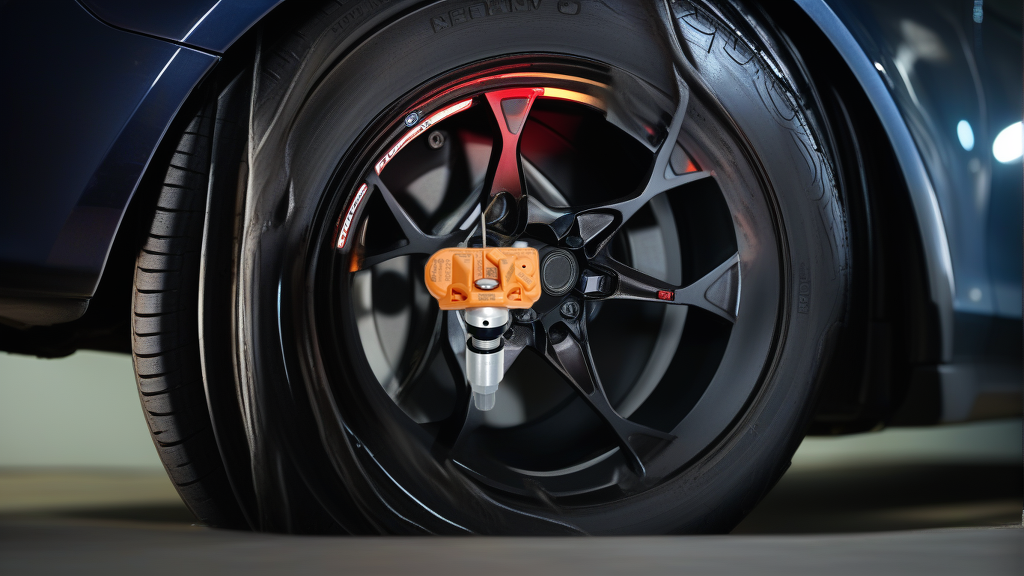
If you’ve spent any time in a parts catalog for a modern Jaguar or Land Rover, you know the OE number game is a mess. One sensor carries three different factory numbers depending on whether you walk into a Jaguar dealer, a Land Rover dealer, or check the sticker on the box. The RDE229V21, a BH-Sens 433MHz TPMS sensor that fits across the RDE229V21 | BH-Sens 433MHz TPMS Tire Pressure Sensor | Fits Jaguar, Land Rover | OE# C2D21599, C2D47173, LR021935 and its platform siblings, is a perfect case study—it lists under C2D21599, C2D47173, and LR021935. Same part, three numbers, three price points.
Why OE Numbers Multiply Like Rabbits
Here’s the dirty secret of automotive parts numbering: manufacturers don’t maintain one clean master list. They renumber parts for supersessions, for different assembly plants, for warranty claim routing, and sometimes just because the purchasing department changed suppliers. A Jaguar XEL TPMS sensor built in 2018 carries a different OE number than the same physical sensor built in 2021, even though the frequency, the valve stem length, and the internal electronics are identical.
The practical consequence? If you search only one number, you’ll miss half the cross-reference database. The RDE229V21 TPMS sensor covers 29 dedicated vehicle applications precisely because it consolidates three OE numbers into one SKU. That’s the entire point of cross-referencing—stop chasing ghosts through three separate catalogs.
Decoding the Jaguar Land Rover OE Numbering System
JLR’s numbering isn’t random, though it looks like it at first glance. Let’s break down C2D21599:
- C2D — This prefix indicates the component family. C-series numbers are typically body electronics and sensor systems. The “2” generation marker. “D” often points to a specific supplier code (in this case, the TPMS module family).
- 21599 — The sequential base number. The first two digits often indicate the model year program or platform generation. 21 here aligns with the 2021-2023 XEL/XD refresh cycle. The last three are the unique part identifier within that family.
Now compare that with C2D47173—same C2D prefix, but the “4” in the second position tells you this is a supersession or alternate supplier variant. And LR021935? That’s the Land Rover catalog number, which uses an entirely different convention (LR + five digits) even though it’s the same sensor body.
The takeaway for a shop owner or fleet manager: never trust a single OE number search. Always check at least two independent cross-reference databases before ordering. A part that shows “no match” under C2D21599 might pop right up under LR021935.
Cross-Brand Equivalents: The Platform Sharing Reality
Here’s where knowing the JLR platform architecture pays off. The XEL shares its D7a platform bones with the XF, XE, F-Pace, and the Discovery Sport. That means TPMS sensors are frequently interchangeable across these models, even when the catalog doesn’t say so explicitly.
The BH-Sens RDE229V21 leverages this platform sharing. It’s a 433MHz clamp-in sensor, pre-programmed with the JLR protocol, so it wakes up and transmits the correct data without any cloning tool work. The valve stem is metal, the torque spec for the nut is 4.0–4.5 Nm, and the battery is rated for roughly 7–10 years depending on driving cycles.
Why does this matter for cross-referencing? Because if you’re stuck with an older vehicle that lists a different OE number, the physical sensor hasn’t changed. The RDE229V21 will still talk to the same receiver module in the XEL’s BCM. The only variable is whether the original part was 433MHz or 315MHz—and JLR has stuck with 433MHz for the European and Asian markets across the entire D7a generation.
Key Specs at a Glance
| Parameter | RDE229V21 Specification |
|---|---|
| Brand | BH-Sens (Baolong Technology) |
| Frequency | 433MHz |
| Mounting Type | Clamp-in, metal valve stem |
| Programming | Pre-programmed (plug-and-play) |
| OE Equivalents | C2D21599, C2D47173, LR021935 |
| Fitment Coverage | 29 JLR applications |
| Weight | ~1 oz (28g) |
| Battery Life | 7–10 years typical |
| Torque Spec | 4.0–4.5 Nm (35–40 in-lb) |
The Practical Cross-Reference Workflow
When you’re looking up a sensor for an XEL, do this in order:
- Check the door jamb sticker — the OE number on a real JLR part has a specific font and spacing. Counterfeit parts often have slight digit spacing differences.
- Scan the old sensor’s label — if it’s still mounted, the number is right there. Don’t trust memory.
- Cross-reference via at least two independent databases — one that’s JLR-specific (like the factory parts system) and one aftermarket aggregator. If they agree, you’re done.
- Verify the frequency — if the vehicle is a 2020+ model, it’s almost certainly 433MHz. But verify. A 315MHz sensor in a 433MHz vehicle will throw a fault every single drive cycle.
- Check the valve stem length — the XEL uses a 35mm stem. Some Land Rover models use a longer 42mm stem for off-road tire clearance. The RDE229V21 fits the XEL’s standard stem length, but if you’re cross-fitting to a Discovery, double-check this dimension.
Common Mistake: Shops ordering by vehicle model alone and ignoring the OE number. The XEL and the XF share the same TPMS protocol, but the sensor bracket and valve stem angle differ. Ordering “fits XEL” without an OE cross-check can get you a sensor that reads the pressure but won’t thread into the wheel correctly. Always verify the OE number against the vehicle VIN if you’re unsure.
Market Outlook and Buyer Takeaway
The TPMS aftermarket for JLR vehicles is consolidating fast. The days of paying $85–$120 per OEM sensor for a 2019 XEL are fading—pre-programmed aftermarket units like the RDE229V21 deliver the same 433MHz signal, the same metal valve stem durability, and the same battery life at roughly a third of the dealer price. And because it’s pre-programmed, you don’t need a $600 TPMS tool to clone it. Install, torque to spec, and the car picks it up within 100 meters of driving.
If you’re running a shop that sees any JLR product, keep one of these on the shelf. The 29-application fitment list means you’ll likely cover whatever rolls in—XEL, XF, F-Pace, Discovery Sport, Range Rover Evoque—without a second order. For a DIY owner, the same logic applies: one sensor number, three OE cross-references, zero guesswork.
Bottom line: Stop memorizing OE numbers. Start understanding the cross-reference logic behind them. The RDE229V21 from BH-Sens is the practical answer for anyone tired of juggling C2D21599, C2D47173, and LR021935 as if they were different parts. They’re not. It’s one sensor, three labels, and a whole lot of markup if you buy the wrong way.

Recommended Part: RDE229V21 – OE-grade replacement, in stock now.